
E-Bike News
Stationary Bike Exercise for Weight Loss: How It Works and How to Use It Effectively

Direct Answer
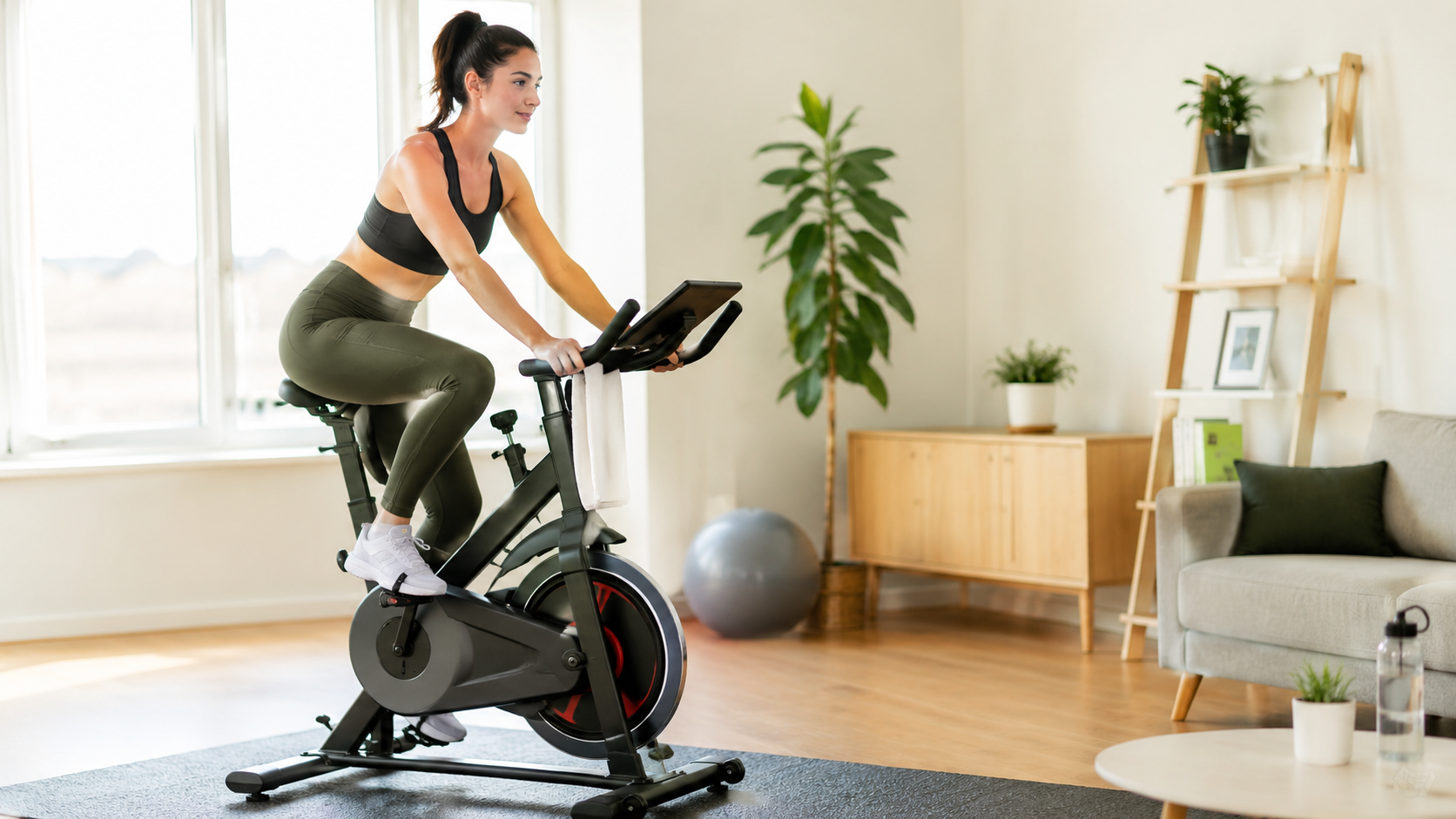
Stationary bike exercise supports weight loss by burning calories through sustained cardiovascular effort, which contributes to the calorie deficit needed to lose weight over time. A 30-45 minute session at moderate to vigorous intensity can burn roughly 200 to 500 calories depending on body weight, resistance level, and effort. On its own, it works best when combined with consistent overall activity and attention to diet, since exercise alone rarely accounts for weight loss without those other factors in place.
Why People Turn to Stationary Bikes for Weight Loss
A stationary bike is one of the more accessible pieces of cardio equipment because it’s low-impact, works regardless of weather, and lets someone control intensity precisely through resistance settings. For people dealing with joint pain, carrying extra weight, or returning to exercise after time away, it offers a way to get a real cardiovascular workout without the impact stress that running or other higher-impact activities can cause.
The appeal for weight loss specifically comes down to a simple mechanism: sustained moderate-to-vigorous exercise burns calories, and calorie burn plays a role in the overall energy balance that determines whether someone loses, maintains, or gains weight. A stationary bike makes it fairly easy to sustain that kind of effort for longer periods than many other forms of exercise, particularly for beginners.
How Stationary Bike Exercise Supports Weight Loss
Calorie Expenditure
The core mechanism is calorie burn. Cycling at a moderate pace typically burns somewhere in the range of 400 to 600 calories per hour for an average adult, though this varies significantly based on body weight, resistance level, and cycling cadence. Higher resistance and faster pedaling increase calorie burn per minute, which is why interval-style stationary bike workouts tend to burn more calories in less time than a steady, low-effort ride.
Building an Exercise Habit That Sticks
Weight loss over the long term depends more on consistency than on any single workout’s calorie count. A stationary bike is relatively easy to use consistently because it removes common barriers — no need to travel to a location, no dependence on weather, and a seated position that many people find easier to sustain than higher-impact cardio.
Supporting, Not Replacing, Other Weight Loss Factors
Cycling contributes to the calorie deficit side of weight loss, but it works alongside — not instead of — factors like overall diet and daily activity levels outside of structured workouts. Relying on stationary bike sessions alone, without attention to overall eating patterns, tends to produce much slower results than combining the two.
Key Concepts to Understand
Calorie deficit. Weight loss happens when the body consistently burns more calories than it takes in over time. Exercise like stationary biking contributes to that deficit, but the deficit itself is the driving mechanism, not the exercise alone.
Intensity versus duration. A shorter, higher-intensity ride can burn a comparable number of calories to a longer, lower-intensity one, though the two also produce different training effects. Interval training, which alternates high-effort bursts with lower-effort recovery periods, is often used specifically because it increases calorie burn in a shorter time frame.
Resistance level. Increasing resistance forces the muscles to work harder per pedal stroke, which raises calorie burn without necessarily requiring a faster pace. This matters especially for beginners who may not yet be able to sustain a fast cadence for long periods.
Heart rate zones. Different intensity levels correspond to different heart rate zones, which affect both calorie burn and the type of fitness adaptation the body makes. Moderate-intensity, sustained effort and shorter high-intensity intervals both have a place in a well-rounded routine.
Step-by-Step: Building a Stationary Bike Routine for Weight Loss
Step 1: Start with a sustainable frequency. Three to five sessions per week is a common starting point for most people. Starting too aggressively often leads to burnout or overuse discomfort, particularly for beginners.
Step 2: Choose a duration you can maintain consistently. Twenty to thirty minutes per session is a reasonable starting point, with duration increasing gradually as fitness improves.
Step 3: Vary intensity across the week. Mixing steady, moderate-intensity rides with one or two higher-intensity interval sessions tends to be more effective than doing the same pace every time.
Step 4: Track resistance and effort, not just time. Simply pedaling for a set amount of time without adjusting resistance or effort level over time can plateau results. Gradually increasing resistance or intensity as fitness improves keeps the workout challenging.
Step 5: Pair it with attention to daily eating patterns. Since calorie burn from exercise is only part of the weight loss equation, tracking or simply paying closer attention to overall eating habits alongside a consistent bike routine tends to produce more noticeable results than exercise alone.
Step 6: Reassess every few weeks. As fitness improves, the same workout burns fewer calories relative to effort. Periodically increasing duration, resistance, or intensity helps maintain progress.
Benefits of Stationary Bike Exercise for Weight Loss
- Low-impact on joints, making it accessible for people with knee, hip, or back concerns.
- Adjustable intensity, allowing beginners and experienced exercisers to use the same equipment effectively.
- Convenient and weather-independent, which supports consistency.
- Suitable for interval training, which can improve cardiovascular fitness efficiently.
- Lower injury risk compared to higher-impact cardio like running, particularly for people newer to exercise.
Limitations to Keep in Mind
It’s not a complete weight loss solution on its own. Exercise contributes to a calorie deficit, but for most people, changes in eating patterns have a larger overall effect on weight loss than exercise alone.
Calorie burn estimates on equipment are approximate. Built-in calorie counters on stationary bikes are estimates based on general formulas and don’t account for individual differences precisely, so they’re useful as a general guide rather than an exact number.
Progress can plateau. As cardiovascular fitness improves, the same workout burns relatively fewer calories, which is why gradually increasing intensity or duration over time matters for continued results.
It doesn’t build significant muscle mass. Stationary biking is primarily a cardiovascular activity. Pairing it with resistance training can support a more balanced approach to body composition changes over time.
Common Mistakes and Misconceptions
Mistake: Believing more time on the bike always equals more weight loss. Without corresponding attention to intensity or overall diet, simply increasing time on the bike has diminishing returns.
Misconception: Sweating more means burning more calories. Sweat is the body’s cooling mechanism and doesn’t directly correlate with calories burned.
Mistake: Ignoring resistance and only tracking time. A low-resistance, low-effort ride for 45 minutes may burn fewer calories than a higher-resistance, higher-effort 20-minute session.
Misconception: Spot reduction is possible through cycling. Cycling doesn’t selectively burn fat from specific body areas; overall weight loss happens throughout the body based on genetics and other individual factors, not the specific muscles being worked.
Real-World Example
Someone new to exercise might start with three 20-minute sessions per week at a moderate, steady pace. After a few weeks of consistency, they might introduce one interval session per week — alternating one minute of higher resistance with two minutes of easier pedaling — while keeping the other sessions steady. Over a couple of months, gradually increasing session length and resistance, combined with more consistent attention to daily eating habits, tends to produce more noticeable results than sticking with the same 20-minute routine indefinitely.
Key Facts
- A 30-45 minute stationary bike session can burn roughly 200 to 500 calories, depending on body weight, resistance, and intensity.
- Weight loss depends on an overall calorie deficit, not exercise alone.
- Interval training on a stationary bike can burn more calories in less time than steady, low-intensity riding.
- Stationary biking is low-impact, making it accessible for people with joint concerns.
- Built-in calorie counters on exercise bikes are estimates, not precise measurements.
FAQ
How many calories does a stationary bike burn?
Roughly 400 to 600 calories per hour at a moderate pace for an average adult, though this varies based on body weight, resistance, and cycling intensity.
Is a stationary bike good for weight loss?
Yes, when used consistently and combined with attention to overall diet. It contributes to the calorie deficit needed for weight loss but works best as part of a broader approach rather than a standalone solution.
How often should I use a stationary bike for weight loss?
Three to five sessions per week is a common, sustainable starting point for most people, with duration and intensity increasing gradually over time.
Is cycling better than running for weight loss?
Neither is inherently better; running tends to burn more calories per minute but has higher impact on joints, while cycling offers a lower-impact option that many people can sustain longer or more consistently.
Can I lose belly fat specifically by cycling?
No single exercise targets fat loss in one specific area. Overall weight loss from a sustained calorie deficit affects the whole body, with where fat is lost from largely determined by individual factors outside of exercise choice.
Is it safe to start stationary bike workouts without medical guidance?
For most generally healthy adults, starting gradually is fine, but anyone with existing health conditions, joint issues, or concerns about starting a new exercise routine should check with a healthcare provider first.
Key Takeaways
- Stationary bike exercise supports weight loss primarily by contributing to an overall calorie deficit.
- Intensity and resistance matter as much as duration when it comes to calorie burn.
- Consistency over time tends to matter more than any single workout.
- Cycling alone rarely accounts for significant weight loss without corresponding attention to overall eating habits.
- Gradually increasing resistance, intensity, or duration helps avoid a plateau as fitness improves.
Conclusion
Stationary bike exercise can be an effective, low-impact part of a weight loss approach, particularly for people who need a joint-friendly option or want a convenient way to stay consistent. The exercise itself burns calories and supports cardiovascular fitness, but it works best as one part of a broader picture that includes attention to overall eating habits and daily activity, rather than as a standalone fix. Building a routine gradually, adjusting intensity over time, and staying consistent tend to matter more than any single workout’s calorie count.
If you have underlying health conditions or are new to exercise, it’s worth checking with a healthcare provider before starting a new routine.
Introduction
Skate parks, dirt tracks, and neighborhood streets all share one common sight: riders on small, tough-looking bikes performing jumps, spins, and quick turns. That bike is almost always a BMX bike, a design that’s been part of youth and action-sports culture for decades.
People look up information on this type of bicycle for different reasons. Some are parents trying to understand what their kid is asking for. Others are new riders curious about racing or freestyle tricks. And some are simply comparing it to mountain bikes or road bikes before deciding what to buy.
This guide covers what makes a BMX bike different, how it’s built, what it’s used for, and what to consider before choosing one.
Direct Answer: What Is a BMX Bike?
A BMX bike is a small, sturdy bicycle designed for racing, jumping, and performing tricks. It features a compact frame, small 20-inch wheels, no suspension, and a single gear. The design prioritizes strength, control, and maneuverability over speed or comfort, making it suited for dirt tracks, skate parks, and street riding rather than long-distance travel.
What a BMX Bike Is: Definition and Background
BMX stands for Bicycle Motocross. The style began in Southern California in the early 1970s, when kids started racing modified bicycles on dirt tracks, imitating motocross racing they saw on motorcycles. The trend spread quickly, and by the late 1970s, manufacturers were producing bikes purpose-built for the sport rather than repurposed models.
Over time, the sport split into distinct disciplines. Racing versions focus on speed and lightweight frames for dirt track competition. Freestyle versions, used for tricks at skate parks or on streets, are built heavier and tougher to handle repeated impact. Both share the same core design: small wheels, a compact frame, and simple mechanics.
Key Physical Features
- Small 20-inch wheels — smaller than standard bike wheels, giving the rider more control during tight turns, jumps, and tricks.
- Compact frame geometry — shorter and lower than most bikes, which improves maneuverability and makes it easier to lift the front or back wheel.
- Single-speed drivetrain — most models use one gear, since gear-shifting isn’t practical during jumps or fast direction changes.
- No suspension — the frame is rigid, which keeps the bike lightweight and responsive, though it transmits more shock from landings.
- Reinforced frame and fork — built from steel or aluminum with extra strength at stress points, since the bike regularly absorbs hard landings and impacts.
- Small, simple seat — the seat is often lower and less cushioned than on other bikes, since riders spend much of their time standing on the pedals rather than seated.
How a BMX Bike Works
The design choices behind a BMX bike all serve one purpose: control under stress. Small wheels reduce the bike’s turning radius and make it lighter to maneuver in the air or through tight spaces. A road bike’s larger wheels roll more efficiently over long distances, but they resist the fast, sharp direction changes that BMX riding demands.
The rigid frame, without suspension, keeps the bike’s response direct and predictable. Suspension would absorb some of the rider’s input, which works well for smoothing out rough trails on a mountain bike but gets in the way when a rider needs precise control while airborne or landing a trick.
Single-gear drivetrains simplify the mechanics and reduce weight, both useful when a bike needs to survive constant jolts and impacts. Since races are short and freestyle riding doesn’t require sustained pedaling over distance, there’s little need for multiple gears.
Why It Matters: Benefits of a BMX Bike
Durability under repeated impact. The reinforced frame and simple mechanical design hold up well to jumps, drops, and hard landings that would damage a standard bike over time.
Maneuverability in tight spaces. Small wheels and a compact frame make it easier to navigate ramps, tracks, and obstacles that require sharp, controlled movement.
Low maintenance requirements. With no suspension and a single gear, there are fewer components that need adjustment or repair compared to multi-gear bikes.
Accessibility for skill-building. The stripped-down design helps new riders focus on balance, control, and technique without the added complexity of gear shifting.
Versatility across disciplines. The same core design supports racing, freestyle park riding, and street riding, with only minor adjustments in frame weight or geometry between styles.
Limitations and Considerations
Not built for long-distance riding. Small wheels and a single gear make it inefficient over extended distances, since each pedal stroke covers less ground than a bike with larger wheels or multiple gears.
Limited comfort on rough or uneven terrain. Without suspension, the rider feels every bump and impact directly through the frame, which becomes tiring on long or rough rides.
Steeper learning curve for tricks and jumps. While riding casually is straightforward, performing tricks safely requires practice, proper technique, and often protective gear.
Sizing matters more than expected. Frame size, standover height, and top tube length affect control significantly, and an ill-fitting bike can make tricks and racing harder or less safe.
BMX Bike vs. Other Bicycle Types
BMX bike vs. mountain bike: Mountain bikes use suspension and larger wheels to handle rough trails at speed, while a BMX bike sacrifices trail comfort for compact control suited to jumps and tricks.
BMX bike vs. road bike: Road bikes are built for speed and efficiency over pavement and long distances, using narrow tires and multiple gears. A BMX bike trades that efficiency for strength and agility in short bursts.
BMX bike vs. dirt jump bike: Dirt jump bikes share some BMX characteristics but typically have larger wheels and slightly different geometry, aimed at bigger jumps on dirt trails rather than skate park riding.
Choosing the Right BMX Bike: Step-by-Step
- Identify your riding style. Decide whether you’re racing, doing freestyle tricks at a park, or riding casually on the street, since frame weight and geometry vary by discipline.
- Check the frame size. Match the top tube length to your height and riding style, since a poor fit affects control and comfort.
- Consider the frame material. Steel frames are heavier but more affordable and durable, while chromoly steel or aluminum frames are lighter and often preferred by experienced riders.
- Inspect the wheel and tire setup. Confirm tire width and tread suit your riding surface, whether that’s smooth skate park concrete or looser dirt track terrain.
- Test the brake setup. Some freestyle riders remove rear brakes for certain tricks, while beginners and racers typically benefit from keeping brakes installed for control.
- Review the gearing ratio. A higher gear ratio suits speed on flat tracks, while a lower ratio makes it easier to accelerate quickly out of turns or jumps.
Common Mistakes and Misconceptions
Mistake: Assuming any small-wheeled bike is a BMX bike. Kids’ bikes and folding bikes may share wheel size but lack the reinforced frame and geometry built for jumps and impact.
Misconception: A BMX bike is only for children. While closely tied to youth culture historically, adult riders make up a large share of competitive racers and freestyle athletes.
Mistake: Skipping protective gear. Because the bike is compact and looks simple, riders sometimes underestimate the impact forces involved in jumps and tricks, making helmets and pads important regardless of skill level.
Misconception: More gears would make it better. Adding multiple gears would increase weight and complexity without meaningful benefit, since races and tricks don’t require sustained high-speed pedaling.
Mistake: Buying based on looks rather than frame size and geometry. Riders often prioritize color or brand over fit, which affects control far more than appearance.
Real-World Examples
A twelve-year-old practicing at a local skate park might start with an entry-level freestyle model, focusing on balance and basic jumps before attempting more advanced tricks.
A competitive racer training for regional dirt track events might choose a lightweight chromoly frame with a higher gear ratio, prioritizing speed out of the starting gate and through tight turns.
An adult rider commuting short distances through a city might use a street-style BMX bike for quick, agile movement through traffic and curbs, even without competing in organized events.
Key Facts
- BMX stands for Bicycle Motocross, a term coined from the sport’s motocross racing origins in the early 1970s.
- Standard wheel size is 20 inches, smaller than the 26- to 29-inch wheels common on mountain bikes.
- Most models use a single-speed drivetrain rather than multiple gears.
- BMX racing has been part of the Summer Olympics program since 2008.
- Freestyle BMX riding includes disciplines such as park, street, dirt, and flatland, each with distinct terrain and trick styles.
Frequently Asked Questions
What is a BMX bike used for?
It’s used for racing on dirt tracks, performing tricks at skate parks, and riding on streets, with design features suited to jumps, sharp turns, and hard landings.
How does a BMX bike differ from a regular bike?
It has smaller wheels, a more compact frame, no suspension, and typically a single gear, prioritizing control and durability over speed or comfort.
Why is a BMX bike important in cycling culture?
It helped establish freestyle and racing disciplines that grew into organized competitive sports, including Olympic BMX racing, and it remains a common entry point into action sports for younger riders.
Is a BMX bike safe to ride?
It can be ridden safely with proper technique, a well-fitted frame, and protective gear such as a helmet and pads, especially when attempting jumps or tricks.
Is BMX riding legal on public streets?
Riding on public roads and sidewalks generally follows the same bicycle traffic laws as any other bike, though skate parks and dirt tracks often have their own rules for freestyle or racing activity.
What are the alternatives to a BMX bike?
Mountain bikes suit rough trail riding, dirt jump bikes handle bigger jumps on dirt terrain, and standard bikes work better for long-distance travel or commuting.
What should someone know before buying a BMX bike?
It helps to know your intended riding style, the correct frame size for your height, and whether you’ll need reinforced components for jumps and tricks versus a lighter setup for racing.
Key Takeaways
- A BMX bike is built for racing, tricks, and durability rather than speed or long-distance comfort.
- Its compact frame, small wheels, and single gear support tight control and hard use.
- Riding styles range from dirt track racing to freestyle park and street riding.
- Frame size, material, and gearing all affect performance and should match the rider’s goals.
- Protective gear matters regardless of experience level, given the impact involved in jumps and tricks.
Conclusion
A BMX bike serves a clear purpose in the world of cycling: durability and control for racing, tricks, and rough handling. Its compact size and simple mechanics make it different from bikes built for comfort or long-distance travel, and that difference is exactly what makes it effective for the terrain and activities it’s designed around. Understanding these design choices makes it easier to decide whether this bike fits the kind of riding you have in mind.
Introduction
Most people’s first encounter with a tandem bike is visual: two riders, one long bicycle, moving in perfect sync down a bike path. It looks simple, but the mechanics and coordination behind it raise real questions. How do two people pedal the same bike without getting in each other’s way? Who steers? Is it actually harder to ride than a regular bike?
People search for information on tandem bikes for a range of reasons. Some are considering one for riding with a partner, child, or visually impaired rider. Others are curious about the mechanics after seeing one in action. And some are trying to figure out if the reputation for being difficult to ride is actually true. This guide covers all of it clearly, without any sales pitch attached.
Direct Answer
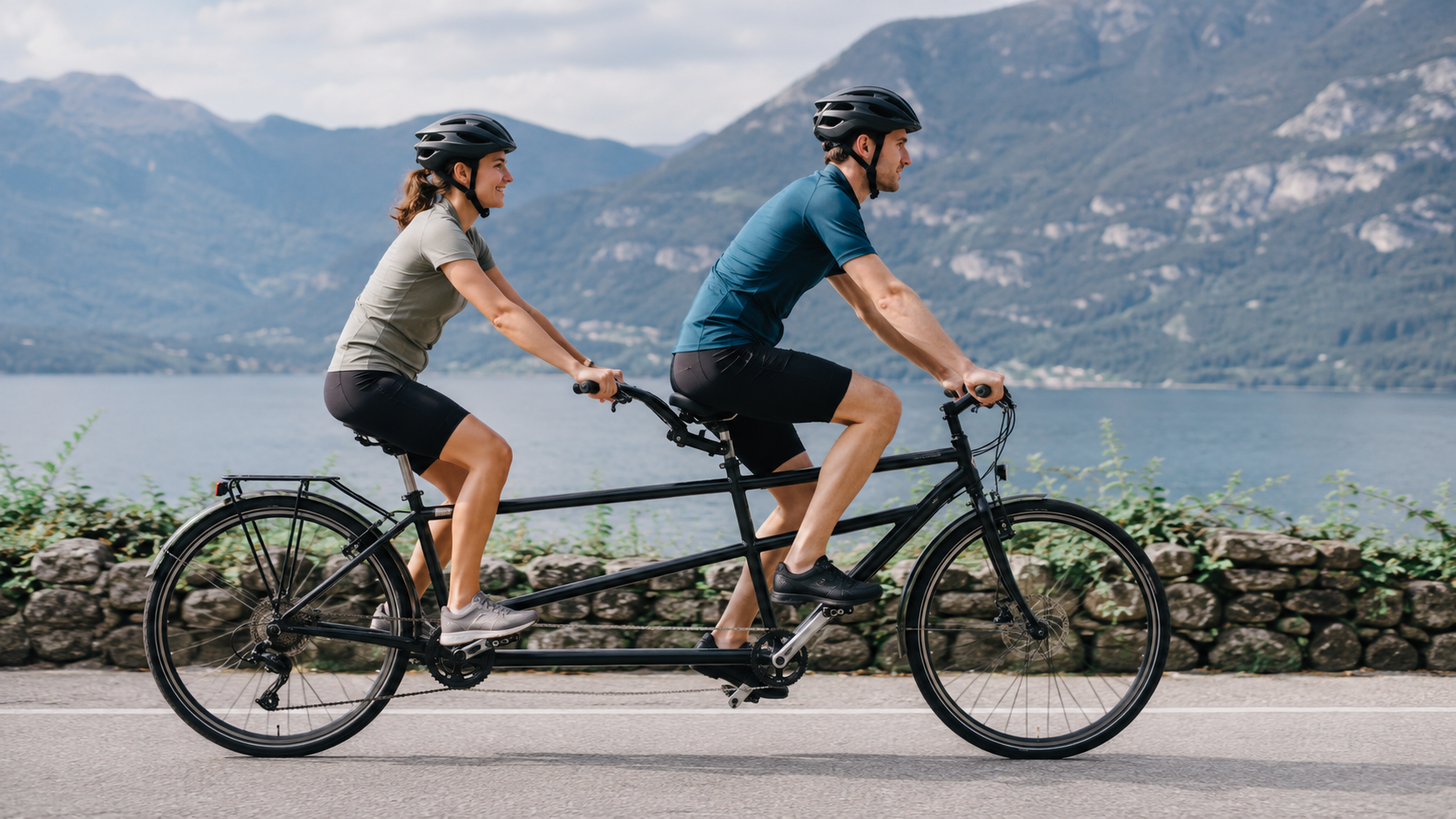
A tandem bike is a bicycle built for two or more riders, with seats, pedals, and handlebars arranged in a line along an extended frame. The front rider, called the captain, steers and controls the brakes, while the rear rider, called the stoker, pedals in sync but doesn’t steer. Both riders contribute pedaling power, and the bike requires coordinated timing to ride smoothly.
What Makes a Tandem Bike Different
A tandem bike shares most components with a standard bicycle, frame, wheels, pedals, brakes, but stretches the frame to accommodate two seating positions instead of one. The drivetrain connects both sets of pedals through a chain system, so when either rider pedals, the bike moves, and ideally, both riders pedal together for maximum efficiency.
The front position, known as the captain, holds full control over steering, shifting, and braking. The rear position, called the stoker, pedals and can shift on some models, but has no steering input and limited visibility of the road ahead since the captain’s body blocks much of the forward view. This division of responsibility is what makes a tandem bike function more like a coordinated team effort than two people simply riding the same frame.
A Look at How Tandem Bikes Developed
Two-person bicycles date back to the late 1800s, originally built to allow one strong rider to assist a less experienced one, often used by couples or family members riding together. Early tandem bikes used similar frame materials and gearing to standard bikes of the era, just elongated to fit two riders. Over the past century, the design has been refined for better weight distribution, stronger frame materials, and drivetrain systems capable of handling the combined power output of two riders.
Today, tandem bikes serve several specific communities: couples who want to ride together at a matched pace, parents riding with children too young to keep up independently, and visually impaired riders paired with a sighted captain. This variety of use cases has shaped modern tandem design, with different frame styles suited to touring, racing, or casual riding.
How a Tandem Bike Works
Frame construction: Tandem frames are longer and typically built from stronger materials or thicker tubing than standard bike frames, since they need to support the combined weight and pedaling force of two riders without excessive flex.
Drivetrain and timing chain: Most tandem bikes use two chains. One connects the captain’s and stoker’s pedals directly, known as the timing chain, ensuring both riders’ pedal strokes stay synchronized. A second chain connects to the rear wheel and gearing system, similar to a standard bike’s drivetrain.
Steering and control: Only the captain’s handlebars connect to the front wheel. The stoker’s handlebars, if present, are fixed and used only for hand positioning and stability, not steering.
Braking: The captain controls the brakes, though some tandem bikes include a rear brake lever for the stoker as a backup, particularly on touring models where extra stopping power helps on long descents.
Weight distribution: Because a tandem bike carries two riders, weight distribution affects handling more than on a standard bike. Manufacturers account for this with frame geometry and wheel placement designed to keep the bike stable under a heavier combined load.
Why Tandem Bikes Matter for Certain Riders
A tandem bike isn’t a general-purpose bike the way a hybrid or road bike is. It matters most to riders with specific needs:
- Couples or friends who want to ride together despite differences in fitness level or pedaling strength
- Parents introducing young children to longer rides without requiring independent pedaling stamina
- Visually impaired riders paired with a sighted captain for guided riding
- Riders training for endurance events who want the shared workload and drafting benefits of pairing with a partner
For these groups, the appeal isn’t just novelty. It solves a real coordination problem that a single bike or two separate bikes can’t fully address.
Benefits of Riding a Tandem Bike
Shared effort. Both riders contribute pedaling power, which can help a stronger rider assist a less experienced one without leaving them behind.
Matched pace riding. Since both riders are on the same bike, there’s no risk of one person pulling ahead or falling behind, which matters for couples or mixed-ability riding partners.
Accessibility for visually impaired riders. A tandem bike allows a sighted captain to safely guide a visually impaired stoker, giving them full access to cycling as a sport or activity.
Efficient drafting on the road. A tandem bike’s length and weight allow it to maintain higher speeds on flat terrain and descents compared to two separate bikes riding single file.
Shared experience. Beyond the mechanics, many riders choose a tandem bike specifically for the shared, cooperative nature of riding together rather than side by side.
Limitations and Considerations
A fair look at tandem bikes includes their real downsides.
Weight and size. A tandem bike is longer and heavier than a standard bicycle, making it harder to transport, store, and maneuver in tight spaces.
Coordination requirement. Riders need to synchronize pedaling, communicate about upcoming stops or turns, and adjust to sharing control, which takes practice compared to riding independently.
Cost. Because of the specialized frame and drivetrain components, a quality tandem bike often costs more than two separate standard bikes combined.
Limited maneuverability. The extended wheelbase makes tight turns and quick direction changes more difficult than on a standard bike, which matters in crowded urban riding conditions.
Communication demands. Since the stoker can’t see the road ahead clearly, the captain needs to communicate upcoming obstacles, stops, or turns clearly and consistently, which adds a layer of responsibility beyond normal cycling.
Step-by-Step: Getting Started on a Tandem Bike
- Decide on captain and stoker roles. Typically, the more experienced or stronger rider takes the captain position, though this can shift based on comfort with steering and balance.
- Practice starting and stopping together. Coordinated starts, where both riders push off and clip in around the same time, take practice before they feel smooth.
- Establish clear verbal cues. Simple phrases for stopping, turning, and standing to pedal help the stoker anticipate changes without needing to see them coming.
- Start on flat, open terrain. Learning basic balance and timing on a tandem bike is easier without traffic, hills, or tight turns to manage at the same time.
- Build up to more complex terrain gradually. Once starting, stopping, and steady-state riding feel comfortable, riders can progress to hills, turns, and busier routes.
Common Mistakes and Misconceptions
Myth: A tandem bike is twice as fast as a regular bike. While two riders contribute power, added weight and length offset some of that advantage, particularly on climbs.
Myth: Anyone can hop on the back without practice. The stoker position still requires learning to pedal in sync and trust the captain’s steering, which takes some adjustment for new riders.
Mistake: Assuming standard bike skills transfer directly. Balance, turning, and braking all feel different on a tandem bike due to its length and weight distribution, so treating the first ride like a normal bike ride often leads to wobbly starts.
Mistake: Skipping communication practice. Riders sometimes assume timing will sync naturally without verbal cues, which often leads to mismatched pedaling and awkward starts, especially early on.
Misconception: Tandem bikes are only for couples. While popular for couples, tandem bikes are also widely used by parents, visually impaired riders and their guides, and endurance training partners.
Real-World Examples
A couple with different fitness levels might choose a tandem bike specifically so the stronger rider’s extra effort helps maintain a shared pace, rather than one person constantly waiting for the other. A visually impaired athlete training for competitive cycling might rely on a tandem bike paired with a sighted captain to participate fully in the sport. A family with a young child too small to keep up on a standard bike might use a tandem to include them on longer rides that would otherwise be impossible for the child to complete independently.
Each of these examples reflects the same underlying value: a tandem bike solves a specific coordination or ability gap that riding separately can’t.
Key Facts
- A tandem bike uses two seating positions along one extended frame, with the captain in front and the stoker in back.
- Most tandem bikes use a timing chain to keep both riders’ pedal strokes synchronized.
- Only the captain controls steering and, in most cases, braking.
- Tandem bikes date back to the late 1800s and have been used historically to pair riders of different strength or ability levels.
- Tandem frames typically use stronger materials or thicker tubing to handle the combined weight and force of two riders.
- Tandem bikes are commonly used by couples, parents with young children, and visually impaired riders paired with sighted captains.
FAQ
What is a tandem bike? It’s a bicycle built for two or more riders, with a captain in front who steers and a stoker in back who pedals in sync but doesn’t control steering.
How does a tandem bike work? A timing chain connects both riders’ pedals to keep their strokes synchronized, while a second drivetrain chain connects to the rear wheel, similar to a standard bike’s gearing system.
Why do people ride tandem bikes? Reasons include riding with a partner or child at a matched pace, guiding a visually impaired rider, or sharing pedaling effort between riders of different fitness levels.
Is a tandem bike safe to ride? Yes, when both riders communicate clearly and practice basic coordination. Like any bike, safety also depends on proper maintenance and appropriate riding conditions.
Is a tandem bike harder to ride than a regular bike? It requires more coordination and communication between riders, but most people adjust within a few short rides on flat, open terrain.
What are the alternatives to a tandem bike? Riding two separate standard bikes together is the most common alternative, though it doesn’t offer the same matched pace or shared-effort benefits a tandem bike provides.
What should someone know before buying a tandem bike? Consider storage and transport needs given its size, budget for a higher cost than two standard bikes, and plan to practice basic coordination with your riding partner before longer rides.
Key Takeaways
- A tandem bike is built for two riders, with a captain controlling steering and a stoker contributing pedaling power.
- A timing chain keeps both riders’ pedal strokes synchronized during the ride.
- Tandem bikes suit couples, parents with young children, and visually impaired riders paired with a sighted captain.
- Coordination and communication between riders matter more on a tandem bike than on a standard bicycle.
- The bike’s added weight and length bring real trade-offs in maneuverability and transport compared to riding separate bikes.
Conclusion
A tandem bike offers something a standard bicycle can’t: a genuinely shared riding experience where two people move as one. It comes with real trade-offs in weight, cost, and the coordination it takes to ride smoothly, but for couples, families, and riding partners with different ability levels, those trade-offs are often worth it. Understanding how a tandem bike works and what it demands from both riders makes it much easier to decide whether it fits the way you want to ride together.
Introduction
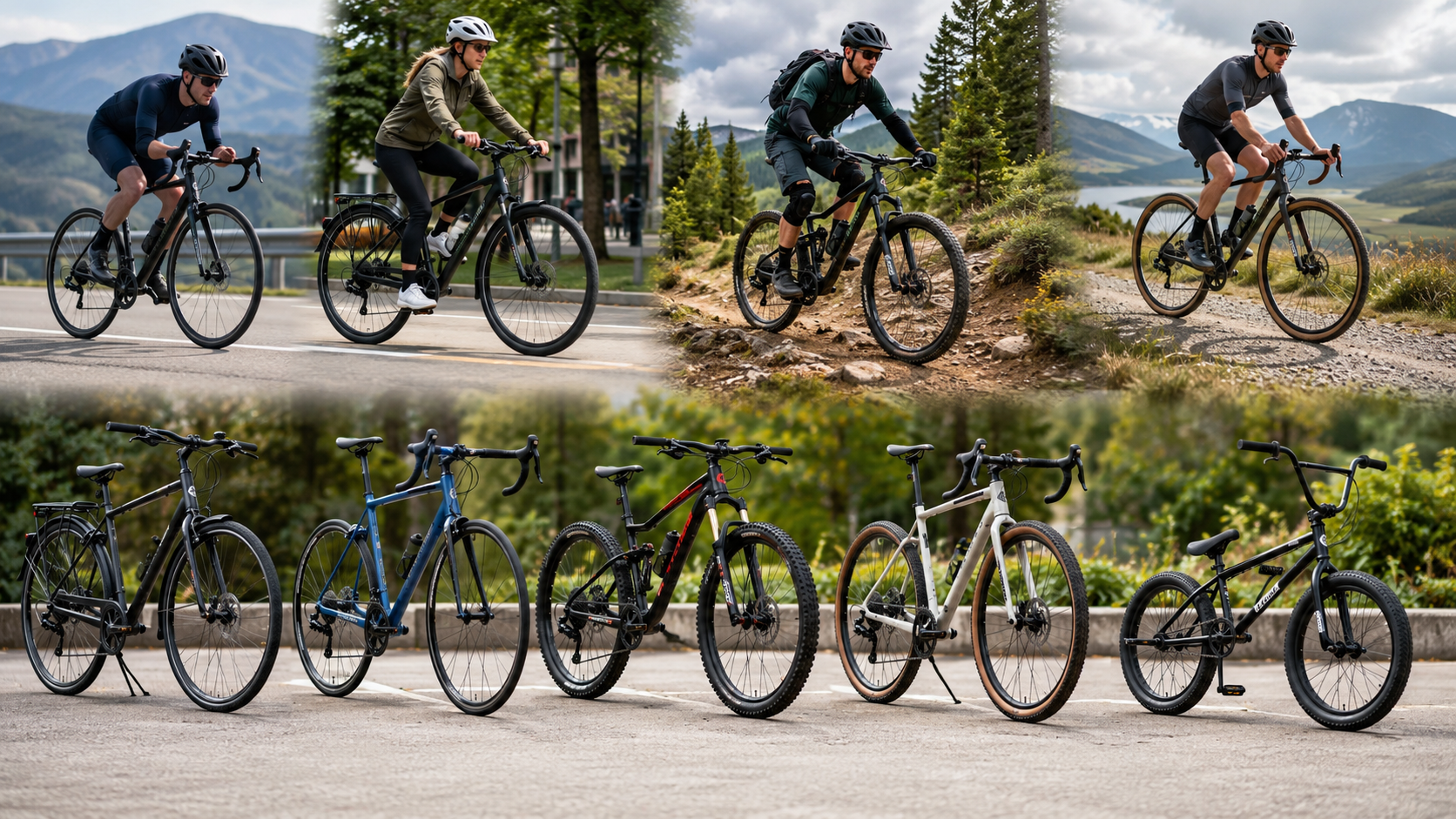
Walk into any bike shop and the options can feel overwhelming. Drop bars, flat bars, thick tires, thin tires, suspension forks, no suspension at all. Most people searching for information on bike categories aren’t trying to become mechanics. They’re trying to answer a much simpler question: which bike actually fits how they plan to ride?
This guide breaks down the major types of bikes, explains what separates them, and covers the practical trade-offs that matter when choosing between them. Whether you’re commuting, exercising, exploring trails, or just riding around the neighborhood, understanding these categories makes the decision much clearer.
Direct Answer
The main types of bikes include road bikes, mountain bikes, hybrid bikes, gravel bikes, cruiser bikes, folding bikes, electric bikes, BMX bikes, and touring bikes. Each is built for a specific riding style, terrain, and purpose. The right choice depends on where you’ll ride, how far, and whether comfort, speed, or durability matters most to you.
Why Bike Type Matters
A bike’s frame geometry, tire width, gearing, and suspension all affect how it performs in a given environment. A bike optimized for pavement speed handles very differently on a rocky trail, and a bike built for trail durability feels sluggish on a smooth road. Picking the right category isn’t about brand or price. It’s about matching the bike’s engineering to your actual riding conditions.
This matters because a mismatch leads to frustration. Someone who buys a road bike for gravel trails will deal with harsh vibrations and limited traction. Someone who buys a mountain bike for daily street commuting will find it heavier and slower than necessary. Knowing the categories upfront prevents that kind of mismatch.
Road Bikes
Road bikes are built for speed and efficiency on paved surfaces. They feature narrow tires, lightweight frames, and drop handlebars that let riders lean forward into an aerodynamic position.
Key traits: Lightweight frames (often aluminum or carbon fiber), narrow tires with high air pressure, multiple gears for varied terrain, and a forward-leaning riding posture.
Best for: Riders focused on speed, fitness training, or long-distance paved rides.
Limitations: Narrow tires and a stiff frame make road bikes uncomfortable and risky on unpaved or rough terrain.
Mountain Bikes
Mountain bikes are designed for off-road riding, including trails, rocky paths, and steep terrain. Wide, knobby tires provide traction, while sturdy frames and suspension systems absorb impact.
Key traits: Wide, textured tires, front or full suspension, durable frame construction, and lower gearing for climbing.
Best for: Trail riding, rough terrain, and off-road adventure.
Limitations: The weight and rolling resistance of mountain bike tires make them noticeably slower and more tiring on smooth pavement compared to road bikes.
Hybrid Bikes
Hybrid bikes sit between road and mountain bikes, combining features from both. They typically use a flat handlebar for an upright posture, along with tires that are wider than road bike tires but narrower than mountain bike tires.
Key traits: Balanced tire width, upright riding position, moderate weight, and versatile gearing.
Best for: Commuting, casual exercise, and mixed-terrain riding where neither speed nor rugged trail capability is the top priority.
Limitations: Because they’re a compromise between two extremes, hybrid bikes don’t match a road bike’s speed or a mountain bike’s off-road capability.
Gravel Bikes
Gravel bikes have grown into their own category in recent years. They resemble road bikes but use wider, more durable tires and a sturdier frame designed to handle unpaved surfaces, gravel roads, and light trails.
Key traits: Drop handlebars similar to road bikes, wider tire clearance, durable frame geometry, and gearing suited to mixed terrain.
Best for: Riders who want road bike speed with more flexibility for dirt roads, gravel paths, or light off-road conditions.
Limitations: While more versatile than a road bike, gravel bikes still can’t match a mountain bike’s capability on technical, rocky trails.
Cruiser Bikes
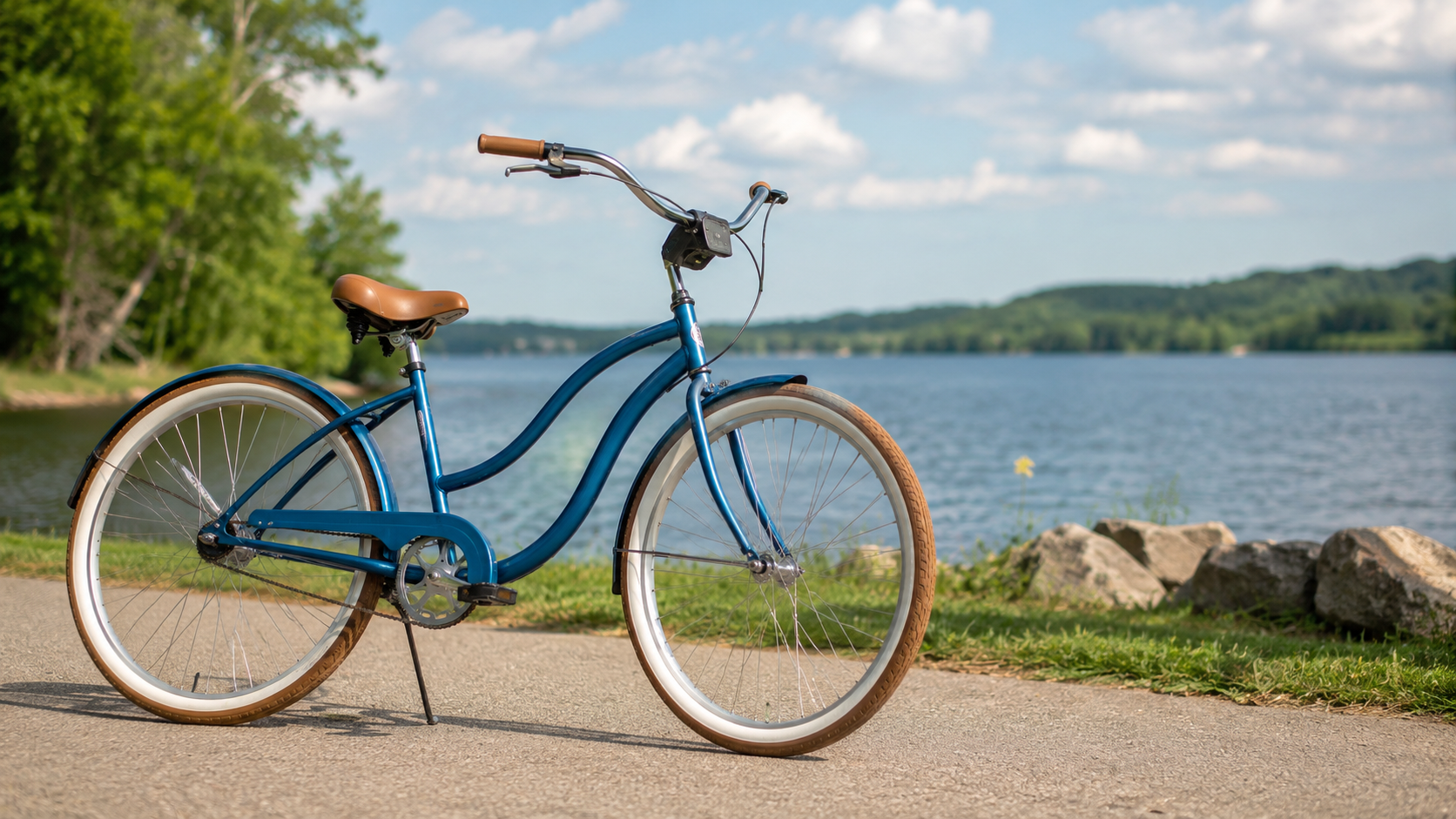
Cruiser bikes prioritize comfort over speed. They use a relaxed frame geometry, wide seats, and an upright riding position, often paired with a single-speed drivetrain and coaster brake.
Key traits: Curved frame design, wide comfortable seat, upright posture, and simple mechanics with few or no gears.
Best for: Short, casual rides on flat terrain, such as neighborhood streets, boardwalks, or beach towns.
Limitations: Limited gearing makes hills difficult, and the heavier frame isn’t suited for long-distance riding.
Folding Bikes
Folding bikes are designed around portability. A hinge mechanism, usually located on the main frame tube, lets the bike collapse into a compact size for storage or transport.
Key traits: Smaller wheels (commonly 16 to 20 inches), a folding frame hinge, and a compact folded size suited for public transit or small storage spaces.
Best for: Commuters combining biking with trains or buses, apartment dwellers with limited storage, and travelers.
Limitations: Smaller wheels can feel less stable at higher speeds, and folding mechanisms add mechanical complexity compared to a standard frame.
Electric Bikes
Electric bikes, often called e-bikes, include a battery-powered motor that assists pedaling. They come in nearly every style listed above, meaning there are electric road bikes, electric mountain bikes, and electric hybrids.
Key traits: Integrated motor and battery, pedal-assist or throttle control, and added weight from the electrical components.
Best for: Riders who want extra assistance on hills, longer commutes, or reduced physical strain during rides.
Limitations: Higher price point, added weight, and the need for regular battery charging and maintenance.
BMX Bikes
BMX bikes are compact, sturdy bikes built for tricks, jumps, and racing on dirt tracks or skate parks. They use small frames, a single gear, and durable components built to handle impact.
Key traits: Small, strong frame, 20-inch wheels, no suspension, and a single-speed drivetrain.
Best for: Trick riding, BMX racing, and skate park use.
Limitations: The small frame and single gear make BMX bikes impractical for long-distance riding or commuting.
Touring Bikes
Touring bikes are built for multi-day travel with heavy loads. They resemble road bikes but use a sturdier frame, wider tires, and mounting points for racks and panniers to carry gear.
Key traits: Durable frame construction, wider tire clearance than road bikes, relaxed geometry for comfort over long distances, and cargo-carrying capacity.
Best for: Long-distance travel, bikepacking, and multi-day rides with gear.
Limitations: The added weight and stability-focused geometry make touring bikes slower than road bikes on short, unloaded rides.
How to Match a Bike Type to Your Riding Needs
Choosing between these types of bikes comes down to a few practical questions.
Where will you ride most often? Paved roads point toward road, hybrid, or gravel bikes. Trails point toward mountain bikes. Mixed terrain often suits gravel or hybrid options.
How far will you typically ride? Short trips favor cruisers or folding bikes. Long-distance riding favors road, touring, or gravel bikes with efficient gearing.
Do you need to store or transport the bike in tight spaces? Folding bikes solve this problem directly, while other types generally require more storage room.
Is comfort or speed the priority? Cruisers and hybrids favor comfort. Road and gravel bikes favor speed and efficiency.
Do you need extra assistance on hills or long commutes? An electric version of nearly any bike type can reduce physical strain.
Step-by-Step: Narrowing Down Your Options
- List your typical riding terrain. Pavement, trails, gravel, or a mix.
- Estimate your usual ride distance. Short trips, daily commutes, or long-distance rides.
- Consider storage and transport needs. Home storage space, public transit use, or travel plans.
- Decide on comfort versus speed priorities. An upright, relaxed ride or a faster, more aerodynamic one.
- Factor in budget. Specialized frames, suspension systems, and electric components all affect price.
- Test ride a few types if possible. Riding feel varies more than most specs suggest, especially between hybrid, gravel, and road categories.
Common Mistakes and Misconceptions
Myth: A more expensive bike is always a better choice. Price often reflects materials and components, not necessarily suitability for your specific riding needs.
Myth: Mountain bikes are the most versatile option because they can go anywhere. They can handle rough terrain, but their weight and tire resistance make them inefficient for road riding or long commutes.
Mistake: Choosing based on appearance rather than geometry. Riding comfort and performance depend heavily on frame geometry and tire width, not just style.
Mistake: Ignoring gearing needs for local terrain. Riders in hilly areas sometimes choose single-speed or low-gear bikes without accounting for the physical effort required.
Misconception: All types of bikes require similar maintenance. Suspension systems, electric components, and folding mechanisms each introduce maintenance needs that simpler bike types don’t have.
Real-World Examples
A city commuter who takes a train partway to work might choose a folding bike specifically for its compact size on public transit. A weekend rider exploring both paved paths and light trails near a rural home might choose a gravel bike for its versatility. A parent looking for a low-maintenance option for short trips to a nearby park might choose a cruiser bike because of its simple single-speed design. Each of these decisions reflects the same underlying logic: matching the bike category to the actual riding conditions and goals.
Key Facts
- Road bikes typically use narrow, high-pressure tires optimized for pavement speed.
- Mountain bikes use wide, knobby tires and suspension systems for off-road traction and impact absorption.
- Hybrid bikes combine features of road and mountain bikes for versatile, moderate-terrain riding.
- Gravel bikes have become one of the fastest-growing categories due to their mix of speed and terrain flexibility.
- Folding bikes commonly use 16- to 20-inch wheels to allow compact storage.
- Electric bikes are available across nearly all other bike types, adding motor assistance to existing designs.
FAQ
What are the main types of bikes? The main categories include road bikes, mountain bikes, hybrid bikes, gravel bikes, cruiser bikes, folding bikes, electric bikes, BMX bikes, and touring bikes, each built for different terrain and riding goals.
How do I know which type of bike is right for me? Consider your typical riding terrain, distance, storage needs, and whether comfort or speed matters more, then match those priorities to the bike category built for them.
Why do types of bikes vary so much in tire width? Tire width affects rolling resistance, traction, and comfort. Narrow tires suit smooth pavement and speed, while wider tires suit rough terrain and stability.
Are certain types of bikes safer than others? Safety depends more on maintenance, rider skill, and appropriate use than on category alone, though mismatched bikes, like a road bike on rocky trails, can increase risk of accidents or mechanical failure.
Are electric versions available for all types of bikes? Most categories, including road, mountain, hybrid, and folding bikes, now offer electric versions with pedal-assist motors.
What are the alternatives if none of these types of bikes fit my needs? Specialized subcategories exist, such as fat bikes for snow and sand or cargo bikes for hauling goods, which address more specific use cases beyond the main categories.
What should I know before buying a bike from any of these categories? Test ride if possible, confirm the frame size fits your height, and make sure the tire width and gearing match your typical terrain and distance.
Key Takeaways
- Different types of bikes are engineered for specific terrain, distance, and comfort priorities.
- Road bikes favor speed on pavement, while mountain bikes favor traction on trails.
- Hybrid and gravel bikes offer middle-ground versatility for mixed riding conditions.
- Cruiser and folding bikes prioritize comfort and portability over speed.
- Electric versions exist across most categories, adding assistance without changing the core riding style.
- Matching bike type to your actual riding habits matters more than price or appearance.
Conclusion
Understanding the different types of bikes makes it much easier to choose one that actually fits your life instead of guessing based on looks or price. Each category, from road bikes built for pavement speed to cruisers built for casual comfort, solves a specific set of riding needs. Thinking through your typical terrain, distance, and priorities before buying helps ensure the bike you choose fits the way you actually plan to ride it.
-
 E-Bike News1 week ago
What Is an Elliptical Bike? A Complete Guide to How It Works, Benefits, and What to Know Before You Try One
-
 E-Bike News1 week ago
What Is a Bike Stand? A Complete Guide to Types, Uses, and How to Choose One
-
 E-Bike Technology1 week ago
What Is a Sirrus Bike? A Complete Guide to the Specialized Sirrus Line
-
 E-Bike News1 week ago
Electric Commuter Bike: What It Is and How to Choose the Right One
-

 E-Bike Technology1 week ago
Films About Bikes: The Best Movies Where Bicycles Take Center Stage
-
 E-Bike News3 days ago
What Is a Beach Cruiser? A Complete Guide to Comfort Bikes for Easy Riding
-
 E-Bike News2 days ago
Types of Bikes: A Complete Guide to Choosing the Right One
-
 E-Bike News2 days ago
Tandem Bike: How Two-Person Bicycles Work and What to Know