
E-Bike Technology
Yoga Bike: How Combining Yoga and Cycling Improves Flexibility, Recovery, and Performance

Direct Answer
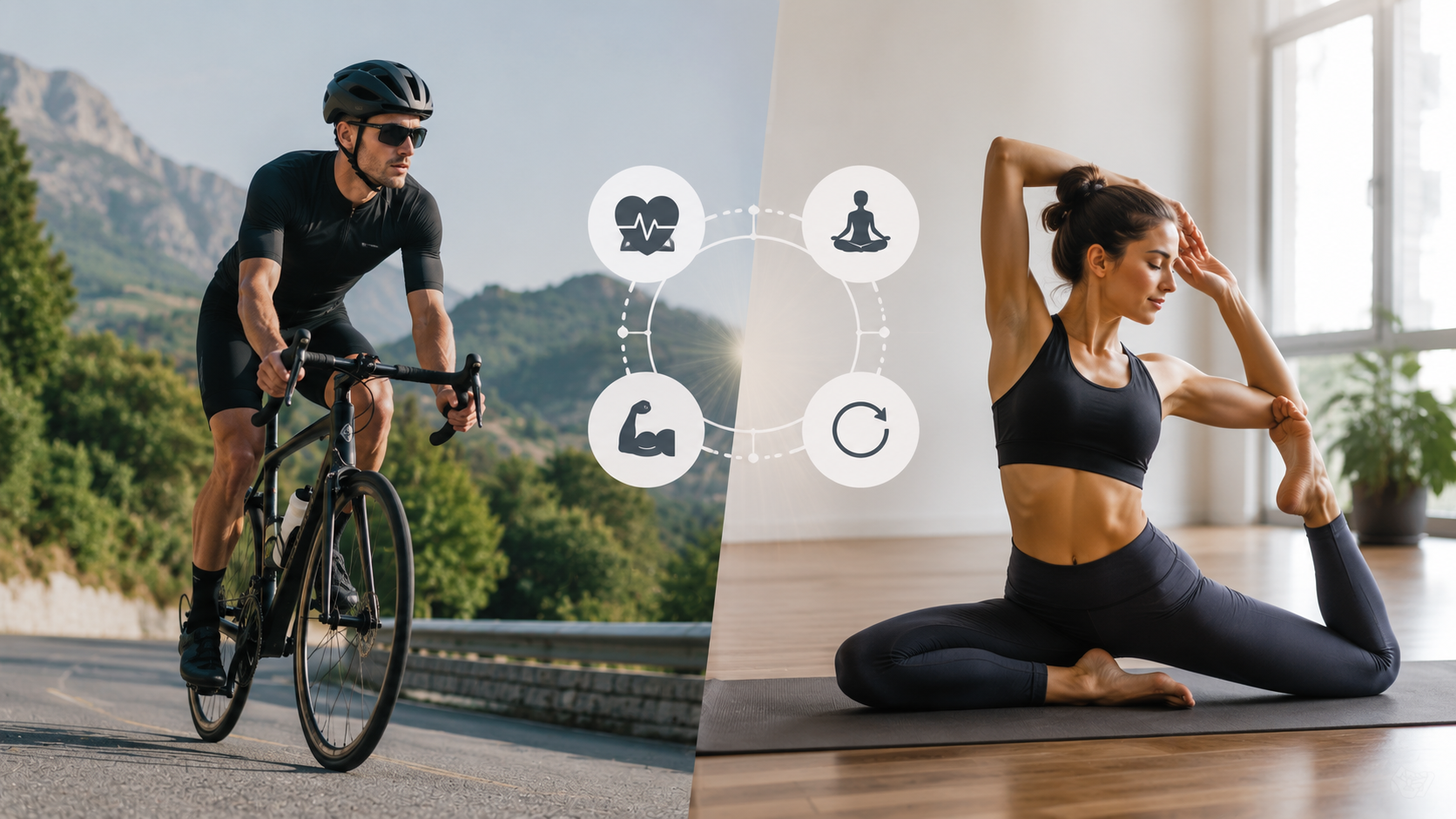
A yoga bike routine combines regular cycling with yoga practice done before or after rides, aimed at improving flexibility, correcting posture imbalances caused by pedaling, and speeding up recovery. Cycling primarily works the legs in a repetitive, forward-flexed position, while yoga counters that pattern by opening the hips, chest, and shoulders and building core stability, making the two activities complementary rather than competing.
Why Cyclists Turn to Yoga
Cycling is a repetitive, single-plane motion. Hour after hour, the body stays in roughly the same hunched-forward position, pushing through the same muscle groups: quadriceps, hamstrings, hip flexors, and calves. Over time, that repetition tends to shorten and tighten those muscles while leaving others, particularly around the back, chest, and shoulders, underused and weak by comparison.
This is where a yoga bike approach comes in. Rather than treating cycling and yoga as separate, unrelated activities, riders pair them intentionally, using yoga to address exactly the imbalances that cycling tends to create. It’s a practical response to a specific problem: long stretches in a flexed, forward-leaning position that most cyclists eventually feel in their lower back, hips, neck, or shoulders.
How Yoga Complements a Cycling Routine
Counteracting the Cycling Posture
The seated, forward-hinged position on a bike shortens the hip flexors and rounds the upper back and shoulders. Yoga poses that open the chest, extend the spine, and stretch the hip flexors directly counter this pattern, which is a large part of why cyclists report less stiffness and pain when they add yoga to their routine.
Building Core and Stabilizer Strength
Cycling relies heavily on the legs, but efficient pedaling and bike handling also depend on a stable core and strong stabilizer muscles. Yoga’s use of isometric holds and balance-based poses builds exactly this kind of functional strength, which can translate into steadier handling and better power transfer on the bike.
Improving Breathing and Focus
Yoga places a strong emphasis on breath control, which carries over directly to cycling. Riders who practice controlled, steady breathing in yoga often find it easier to manage their breathing and stay mentally focused during long or difficult rides, particularly climbs or high-effort efforts.
Supporting Recovery
Gentle, slower styles of yoga practiced after a ride can help shift the body out of a high-stress training state and into a more relaxed one, which supports the physical recovery process. This is different from yoga used for strength or flexibility building, and it’s worth treating the two purposes separately when planning a routine.
Key Concepts to Understand
Timing matters. Dynamic, active yoga styles work well as a pre-ride warmup, helping to mobilize joints and activate muscles. Static stretching held for a long time immediately before a ride, on the other hand, can temporarily reduce power output, so it’s generally better suited to after a ride or on a rest day.
Not all yoga styles serve the same purpose. Flowing, movement-based styles like vinyasa are often used before rides to wake up the body, while slower, longer-held styles like yin yoga are more commonly used afterward for deeper stretching and recovery.
Consistency outweighs session length. A short, regular yoga practice tends to produce more noticeable benefits over time than infrequent, longer sessions. Five to fifteen minutes done consistently is often more effective than an hour-long session done occasionally.
Yoga is not a substitute for a proper warmup. Especially before higher-intensity rides, brief, dynamic muscle activation tends to prepare the body better than long, static stretching, which is a common point of confusion for cyclists new to combining the two practices.
Step-by-Step: Building a Yoga Bike Routine
Step 1: Identify where you feel the most tightness or discomfort after riding. Most cyclists notice it in the lower back, hips, neck, or shoulders. This helps determine which yoga poses will be most useful to prioritize.
Step 2: Choose a short, dynamic sequence for before rides. A few minutes of gentle, flowing movement helps mobilize joints and activate muscles without overstretching cold tissue.
Step 3: Save deeper, static stretching for after rides or rest days. This is when muscles are warm and more receptive to longer holds, and when the goal shifts from activation to recovery.
Step 4: Start with a small, sustainable time commitment. Five to ten minutes a few times a week is a realistic starting point. Adding more time later is easier than starting with an ambitious routine and abandoning it.
Step 5: Track how your riding feels over several weeks. Improvements in posture, flexibility, and recovery tend to build gradually rather than appear after a single session, so it helps to judge the routine over a few weeks rather than one ride.
Benefits of Combining Yoga and Cycling
- Reduced stiffness in the lower back, hips, shoulders, and neck from long periods in a cycling position.
- Improved flexibility, particularly in the hip flexors, hamstrings, and chest, which tend to tighten with regular riding.
- Better core stability, supporting more efficient pedaling and steadier bike handling.
- Faster recovery between rides, particularly when slower yoga styles are used after training.
- Improved breath control, which can help manage effort and focus during demanding rides.
Limitations and Common Mistakes
Overstretching before a ride. Holding static stretches for an extended period right before cycling can temporarily reduce muscle power, working against performance rather than supporting it.
Ignoring proper alignment. Poor form in yoga poses, especially in poses involving deep hip or spinal positions, can create strain rather than relief. This matters more for cyclists newer to yoga, who may not yet recognize correct alignment.
Treating yoga as optional rather than routine. Occasional, inconsistent yoga sessions tend to produce far less noticeable benefit than a short but consistent practice built into a weekly routine.
Expecting immediate results. Flexibility and postural changes from yoga build gradually. A single session won’t meaningfully change long-standing tightness built up over months or years of cycling.
Skipping hydration considerations. Both cycling and yoga increase the body’s fluid needs, and combining the two in the same day is worth planning around rather than treating as a minor detail.
Real-World Example
A cyclist who regularly logs long weekend rides might notice recurring lower back stiffness by the final hour in the saddle. Adding a short, five-minute dynamic yoga sequence before the ride — gentle spinal twists, hip openers, and shoulder rolls — helps prepare the body for the position ahead. After the ride, a slower ten-minute sequence focused on hip flexor and hamstring stretches, held for longer periods, helps release the tightness built up during the ride. Over several weeks of doing this consistently, many cyclists notice the stiffness becoming less pronounced, rather than something a single session would resolve on its own.
Key Facts
- Cycling primarily shortens and tightens the hip flexors, hamstrings, quadriceps, and calves due to its repetitive, forward-flexed position.
- Dynamic yoga styles are generally better suited before a ride, while static, longer-held styles work better afterward.
- Consistency in a short yoga practice tends to produce better results than infrequent, longer sessions.
- Yoga supports core strength and stability, which can improve pedaling efficiency and bike handling.
- Breath control developed through yoga practice can carry over into better focus and effort management while cycling.
FAQ
What is a yoga bike routine?
It’s a fitness approach that combines regular cycling with yoga practiced before or after rides, aimed at improving flexibility, correcting posture imbalances, and supporting recovery.
Should I do yoga before or after cycling?
Dynamic, flowing yoga works well as a pre-ride warmup, while slower, deeper stretching is generally better suited to after a ride, when muscles are warm and the goal shifts toward recovery.
Do I need to be flexible to start a yoga bike routine?
No. Yoga can be adapted to any experience level, and the goal is gradual improvement rather than achieving advanced poses immediately.
How often should cyclists practice yoga?
A short, consistent practice, even five to fifteen minutes a few times a week, tends to be more effective over time than occasional, longer sessions.
Can yoga improve cycling performance, or is it just for recovery?
Both. Yoga supports recovery through gentle stretching and relaxation, while also building core strength, stability, and breath control that can directly support cycling performance.
Is static stretching before a ride a good idea?
Generally not immediately before higher-intensity riding, since holding static stretches for a long time can temporarily reduce power output. Dynamic movement is usually a better pre-ride choice.
Key Takeaways
- A yoga bike routine pairs cycling with yoga to address the specific muscle imbalances that repetitive pedaling creates.
- Dynamic yoga suits pre-ride warmups, while static, longer holds are better suited to post-ride recovery.
- Consistency matters more than session length for building noticeable, lasting benefits.
- Core strength, flexibility, and breath control developed through yoga can directly support cycling performance, not just recovery.
- Results build gradually over weeks, not after a single session.
Conclusion
Combining yoga bike and cycling isn’t about replacing one activity with the other — it’s about using yoga to address exactly the physical imbalances that regular riding tends to create. A short, consistent practice, timed appropriately around rides, can ease common problems like back and hip stiffness while supporting core strength and better breathing on the bike. Like most fitness routines, the benefits build gradually with consistency rather than appearing after a single session.

Introduction
If you’ve searched for a “bicicleta BMX bike,” you’re likely looking for one thing: clear information on what this small, rugged bicycle actually is and whether it fits what you want to ride. Many people search using this mixed term because they’re comparing English and Spanish-language listings, talking with family members who use different words for the same bike, or simply typing what they’ve heard others call it.
Whatever brought you here, this guide answers the core questions directly. It covers what a bicicleta BMX bike is built for, how its design works, what separates it from other bicycles, and what to think about before buying or riding one.
Direct Answer: What Is a Bicicleta BMX Bike?
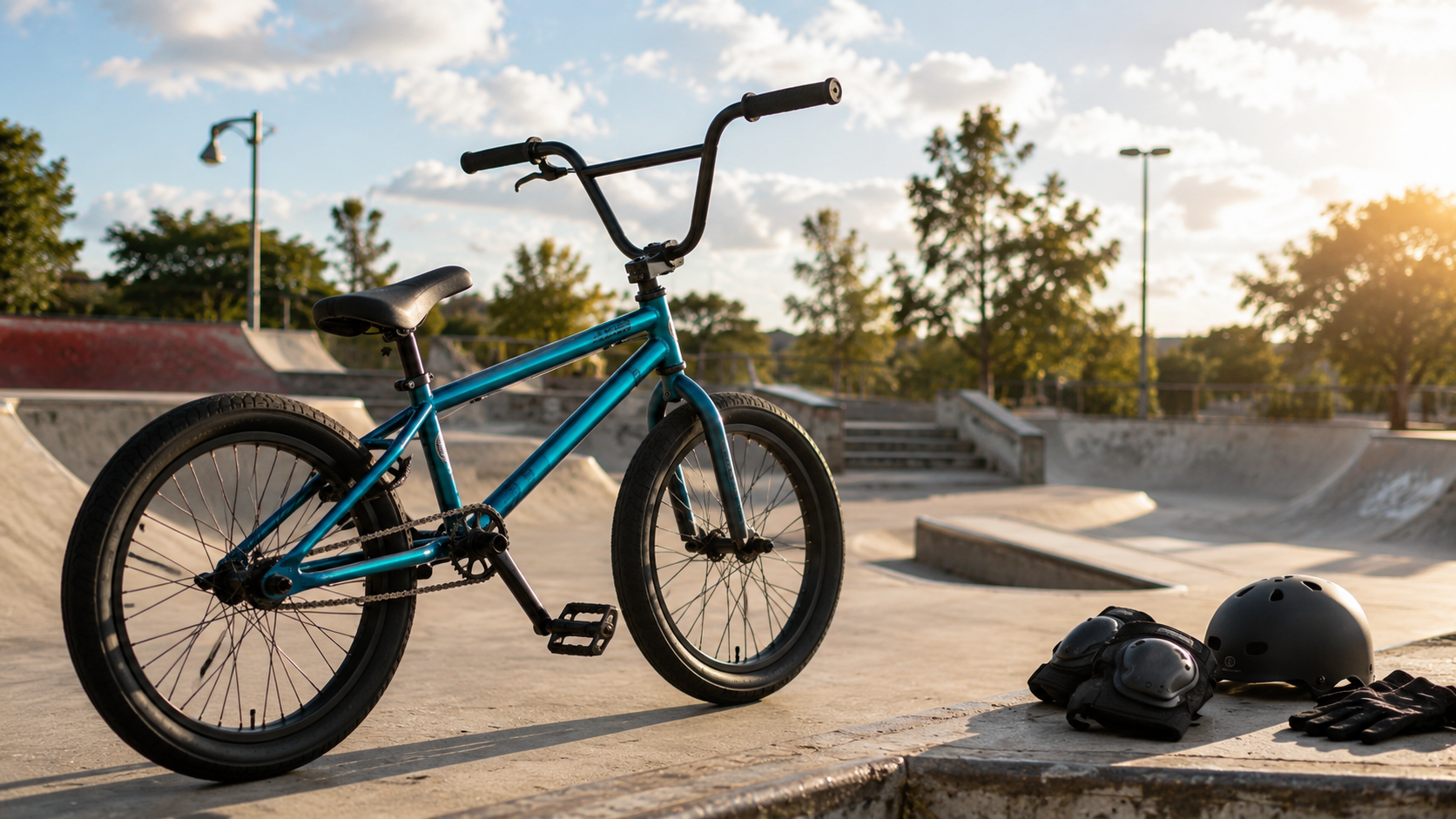
A bicicleta BMX bike is a small, sturdy bicycle designed for racing, jumping, and tricks. “Bicicleta” simply means “bicycle” in Spanish, so the term refers to the same bike known in English as a BMX bike. It features a compact frame, 20-inch wheels, no suspension, and a single gear, built for control and durability rather than speed or long-distance comfort.
What This Bike Is: Definition and Background
BMX stands for Bicycle Motocross. The design began in Southern California in the early 1970s, when young riders started racing modified bicycles on dirt tracks, copying the motocross racing they watched on motorcycles. Manufacturers noticed the trend and started building bikes specifically for it, rather than adapting standard models.
The sport eventually split into distinct styles. Racing versions are lighter and built for speed on dirt tracks. Freestyle versions, used at skate parks or on city streets, are built heavier to handle repeated jumps and hard landings. Despite these variations, the core bicicleta BMX bike design has stayed consistent: small wheels, a low compact frame, and simple mechanics that hold up under stress.
Key Physical Features
- 20-inch wheels — smaller than the wheels on most bikes, giving tighter control during turns, jumps, and tricks.
- Compact frame geometry — a shorter, lower frame that makes the bike easier to maneuver and lift.
- Single-speed drivetrain — most models use one gear, since shifting isn’t practical mid-jump or mid-turn.
- Rigid frame with no suspension — keeps the bike lightweight and responsive, though it transmits more shock on landings.
- Reinforced frame and fork — built from steel or aluminum with extra strength at stress points to withstand impact.
- Simple, low seat — riders spend much of their time standing on the pedals, so the seat is smaller and less cushioned than on comfort-focused bikes.
How a Bicicleta BMX Bike Works
Every design choice on this bike serves control and durability. Small wheels reduce the turning radius, making it easier to change direction quickly or maneuver through tight spaces. Larger wheels roll more efficiently over long distances, but that efficiency comes at the cost of the sharp handling a BMX-style bike needs.
The lack of suspension keeps the ride direct. Suspension absorbs some of the rider’s input, which helps smooth out rough trails on a mountain bike, but it works against the precise control riders need while airborne or landing tricks. A rigid frame transmits the rider’s movements straight through to the wheels.
Single-gear drivetrains reduce weight and mechanical complexity, both useful for a bike that regularly absorbs jolts and hard impacts. Since races are short bursts and freestyle riding doesn’t involve sustained pedaling over distance, extra gears add weight without meaningful benefit.
Why It Matters: Benefits of This Bike
Built to handle repeated impact. The reinforced frame and simplified mechanics hold up to jumps and hard landings that would wear down a standard bicycle over time.
Easy to maneuver in tight spaces. Small wheels and a compact frame allow sharp turns and quick direction changes on ramps, tracks, or narrow city spaces.
Simple to maintain. With no suspension and a single gear, there are fewer parts that need regular adjustment or repair.
Good for building riding skills. The straightforward mechanics let new riders focus on balance and control rather than managing gears.
Works across multiple riding styles. The same basic bicicleta BMX bike frame supports racing, park freestyle, and street riding, with only small adjustments in weight or geometry.
Limitations and Considerations
Not efficient for long distances. Small wheels and a single gear mean each pedal stroke covers less ground, making it tiring over extended rides compared to a road or hybrid bike.
Limited comfort on rough terrain. Without suspension, bumps and impacts transfer directly to the rider, which becomes uncomfortable on long or uneven routes.
Requires practice for tricks and jumps. Riding casually is simple to learn, but performing jumps and tricks safely takes time, technique, and often protective gear.
Frame size affects control more than expected. Standover height and top tube length change how the bike handles, and an ill-fitting frame makes both racing and freestyle riding harder to control safely.
Bicicleta BMX Bike vs. Other Bicycle Types
Bicicleta BMX bike vs. mountain bike: Mountain bikes use suspension and larger wheels for rough trail riding at speed. A BMX-style bike gives up that trail comfort in exchange for compact, precise control suited to tricks and jumps.
Bicicleta BMX bike vs. road bike: Road bikes use narrow tires and multiple gears built for speed and efficiency on pavement. This bike trades that efficiency for strength and agility during short, high-impact riding.
Bicicleta BMX bike vs. kids’ bike: Some children’s bikes use similarly small wheels but lack the reinforced frame, geometry, and durability built into a true BMX-style design meant for jumps and hard landings.
Choosing the Right Bicicleta BMX Bike: Step-by-Step
- Identify your riding style. Decide whether you plan to race, do freestyle tricks at a skate park, or ride casually on the street, since frame weight and geometry differ by use.
- Match the frame size to your height. Check the top tube length, since a poor fit reduces control regardless of riding style.
- Consider the frame material. Steel frames are heavier but more budget-friendly and durable, while chromoly steel or aluminum frames are lighter and often preferred by more experienced riders.
- Check the wheel and tire setup. Confirm tire width and tread match your riding surface, whether smooth skate park concrete or looser dirt track terrain.
- Decide on the brake setup. Some freestyle riders remove rear brakes for specific tricks, while beginners and racers generally benefit from keeping brakes for better control.
- Review the gear ratio. A higher ratio favors speed on flat, open tracks, while a lower ratio helps with quick acceleration out of turns or jumps.
Common Mistakes and Misconceptions
Mistake: Assuming any small-wheeled bicycle qualifies. Folding bikes and standard kids’ bikes may share wheel size but lack the reinforced frame built for jumps and impact.
Misconception: This bike is only for children. While closely associated with youth riding, adults make up a large share of competitive racers and freestyle athletes worldwide.
Mistake: Skipping protective gear. Because the bike looks simple and compact, riders sometimes underestimate the impact forces involved in jumps, making helmets and pads important at every skill level.
Misconception: More gears would improve performance. Adding multiple gears would increase weight and complexity without real benefit, since neither racing nor freestyle riding requires sustained high-speed pedaling.
Mistake: Choosing a bike based on appearance rather than fit. Color and styling get more attention than frame size, even though proper fit affects control far more than looks.
Real-World Examples
A twelve-year-old just starting out at a local skate park might begin with an entry-level freestyle model, focusing on balance and small jumps before attempting more advanced tricks.
A competitive rider training for regional dirt track racing might choose a lightweight chromoly frame with a higher gear ratio, prioritizing speed off the start gate and through tight corners.
A young adult navigating a busy city might use a street-style bicicleta BMX bike for quick, agile movement through traffic, curbs, and stairs, without competing in organized events.
Key Facts
- BMX stands for Bicycle Motocross, and the sport traces back to early 1970s Southern California.
- Standard wheel size is 20 inches, smaller than the 26- to 29-inch wheels typical on mountain bikes.
- Most models use a single-speed drivetrain instead of multiple gears.
- BMX racing has been part of the Summer Olympic Games since 2008.
- Freestyle riding includes disciplines such as park, street, dirt, and flatland, each suited to different terrain and trick styles.
Frequently Asked Questions
What is a bicicleta BMX bike used for?
It’s used for racing on dirt tracks, performing tricks at skate parks, and riding casually on streets, with a design built for jumps, sharp turns, and hard landings.
How does it differ from a regular bicycle?
It has smaller wheels, a more compact frame, no suspension, and usually a single gear, prioritizing control and durability over speed or comfort.
Why is this type of bike significant in cycling culture?
It helped establish organized racing and freestyle disciplines, including Olympic BMX racing, and remains a common entry point into action sports for younger riders.
Is it safe to ride?
It can be ridden safely with proper technique, a correctly fitted frame, and protective gear such as a helmet and pads, especially when attempting jumps or tricks.
Is it legal to ride on public streets?
Riding on public roads generally follows standard bicycle traffic laws, though skate parks and dirt tracks often have their own separate rules for freestyle or racing activity.
What are the alternatives to this bike?
Mountain bikes suit rough trail riding, dirt jump bikes handle bigger jumps on dirt terrain, and standard bicycles work better for long-distance travel or commuting.
What should someone know before buying one?
It helps to know your intended riding style, the correct frame size for your height, and whether you need reinforced components for jumps and tricks versus a lighter setup built for racing speed.
Key Takeaways
- A bicicleta BMX bike is the same bike known in English simply as a BMX bike, built for racing, tricks, and durability.
- Its compact frame, small wheels, and single gear support tight control and rough handling.
- Riding styles range from dirt track racing to freestyle park and street riding.
- Frame size, material, and gear ratio all affect performance and should match the rider’s goals.
- Protective gear matters at every skill level, given the impact forces involved in jumps and tricks.
Conclusion
A bicicleta BMX bike serves a clear purpose: durability and control for racing, tricks, and rough handling rather than comfort or long-distance travel. Its compact size and simple mechanics set it apart from bikes built for smoother, longer rides, and that difference is exactly what makes it effective for the terrain and activities it was designed around. Understanding these design choices makes it easier to decide whether this bike fits the kind of riding you have in mind.
Introduction
Walk along any beach boardwalk or quiet neighborhood street on a warm afternoon, and you’ll likely spot someone riding a cruiser bike. The upright posture, the wide tires, the unhurried pace — it’s a style of cycling built around comfort rather than speed.
People search for information on this type of bicycle for a few common reasons. Some are shopping for their first bike in years and want something low-maintenance. Others are curious whether a cruiser can handle their daily commute, a family outing, or a ride around a lakeside path. And some simply want to understand what separates this bike from a road bike, mountain bike, or hybrid before spending their money.
This guide answers those questions directly, covering how the bike is built, how it rides, what it’s good at, where it falls short, and how to decide if it fits your needs.
Direct Answer: What Is a Cruiser Bike?
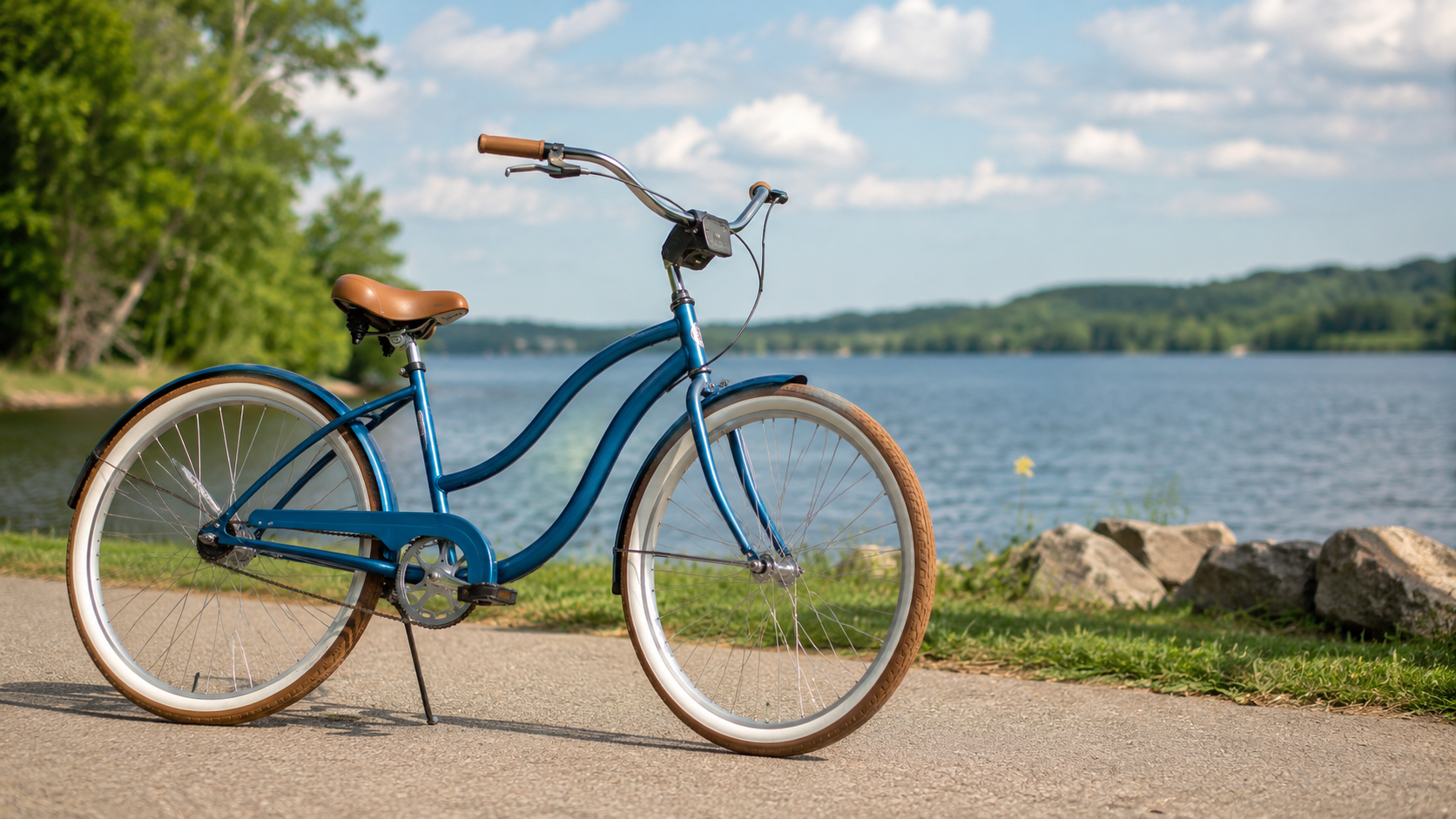
A cruiser bike is a bicycle designed for relaxed, comfortable riding at low to moderate speeds. It typically features an upright seating position, wide balloon-style tires, a padded seat, swept-back handlebars, and a simple gear system — often single-speed or a small number of gears. It’s built for casual rides on flat, paved terrain rather than long-distance travel, steep hills, or off-road trails.
What a Cruiser Bike Is: Definition and Overview
The bicycle originated in the United States in the 1930s, when manufacturers like Schwinn built heavier, sturdier frames meant for everyday riders rather than racers. That original design — wide tires, a curved top tube, and a comfortable saddle — is still the blueprint used today.
Modern versions keep that same relaxed character but often add small updates: lighter aluminum frames, coaster brakes or hand brakes, and sometimes a few gears for handling gentle inclines. The core idea hasn’t changed. It’s meant to be ridden sitting upright, at a comfortable pace, without much fuss over maintenance or tuning.
Key Physical Features
- Upright riding posture — the handlebars sit high and close to the rider, keeping the back straight and reducing strain on the neck and wrists.
- Wide, cushioned tires — usually between 2.0 and 2.6 inches wide, which absorb bumps and add stability at low speeds.
- Wide, padded saddle — designed for comfort during shorter rides rather than long-distance efficiency.
- Heavier steel or aluminum frame — steel versions are more common on traditional models and add durability, while aluminum versions are lighter and easier to handle.
- Simple gearing — many models use a single speed or a 3- to 7-speed internal hub, avoiding the complexity of a multi-gear derailleur system.
- Fenders and chain guards — common additions that keep clothing clean and reduce maintenance needs.
How a Cruiser Bike Works
Unlike a road bike, which is built to reduce wind resistance and maximize pedaling efficiency, a cruiser bike prioritizes stability and comfort over speed. The wide tires create more contact with the road, which improves grip and cushions rough pavement, but also increases rolling resistance. That trade-off means the bike feels stable and forgiving, though it takes more effort to pedal quickly or over long distances.
The upright seating position changes how body weight is distributed. Instead of leaning forward and putting weight on the hands and shoulders, as with a road bike, the rider’s weight rests more on the seat and lower back stays upright. This reduces pressure on the wrists and neck, which is one reason cruisers are popular with people managing joint pain or returning to cycling after time away.
Braking systems vary. Many traditional cruisers use a coaster brake, where pedaling backward slows the bike. Newer models often include hand brakes for more precise stopping control, particularly useful in traffic or on hills.
Why It Matters: Benefits of a Cruiser Bike
Comfort over long sessions of casual riding. The upright posture and cushioned seat reduce fatigue during short-to-moderate rides, making it a practical choice for people who want to enjoy the outdoors without physical strain.
Low learning curve. With simple or no gear-shifting to manage, new riders or those returning to cycling after years away can focus on balance and steering rather than mechanics.
Durability and low maintenance. Fewer components mean fewer things to break or adjust. A single-speed cruiser, in particular, requires minimal upkeep compared to multi-gear bikes.
Stability at low speeds. Wide tires and a longer wheelbase make the bike feel steady, which benefits riders navigating flat neighborhood streets, boardwalks, or bike paths.
Style and versatility for casual use. Many riders choose a cruiser bike for its classic look and use it for errands, beach trips, or leisurely weekend rides rather than serious training.
Limitations and Considerations
No bike design fits every situation, and a cruiser bike comes with trade-offs worth understanding before buying one.
Not built for hills or long distances. The heavier frame and wide tires increase effort needed to climb or maintain speed over extended rides. Riders in hilly areas may find a cruiser tiring compared to a bike with more gears and a lighter frame.
Limited gear range. Single-speed and low-gear-count models struggle on inclines or against strong headwinds, since there’s little flexibility to adjust resistance.
Heavier overall weight. Traditional steel-frame cruisers can weigh noticeably more than road or hybrid bikes, which matters if you need to carry the bike up stairs or load it onto a car rack frequently.
Less efficient for commuting over long distances. If your commute involves more than a few miles, varied terrain, or time pressure, a hybrid or road bike will typically get you there faster with less effort.
Cruiser Bike vs. Other Bicycle Types
Understanding how this bike compares to alternatives helps clarify where it fits best.
- Cruiser bike vs. road bike: Road bikes favor speed and efficiency with narrow tires, a forward-leaning posture, and multiple gears — ideal for fitness riding and longer distances. A cruiser trades that speed for comfort and simplicity.
- Cruiser bike vs. hybrid bike: Hybrid bikes blend upright comfort with lighter frames and more gears, making them a middle ground for commuting or mixed terrain. A cruiser leans further toward comfort and simplicity at the cost of versatility.
- Cruiser bike vs. mountain bike: Mountain bikes are built with suspension and rugged tires for off-road trails. A cruiser is meant strictly for paved, flat surfaces and isn’t designed to handle rough terrain.
Choosing the Right Cruiser Bike: Step-by-Step
- Identify your primary use. Decide whether you’ll ride mostly on boardwalks, neighborhood streets, or short errands, since this affects tire width and frame weight preference.
- Check the frame material. Steel frames are more durable and absorb road vibration well, while aluminum frames are lighter and easier to lift or transport.
- Consider the gearing. A single-speed suits flat areas with no hills. A 3- to 7-speed model offers more flexibility if your route includes gentle inclines.
- Test the seat and posture fit. Sit on the bike before buying if possible. Saddle comfort varies by body type, and an uncomfortable seat undermines the bike’s main advantage.
- Inspect the brake type. Coaster brakes are simple and low-maintenance, while hand brakes offer more precise control, especially useful in traffic.
- Confirm tire width and tread. Wider, smoother tires suit paved paths, while slightly knobbier tread helps on gravel or mixed surfaces.
Common Mistakes and Misconceptions
Mistake: Assuming a cruiser bike works well for long commutes. While comfortable for short rides, the extra weight and limited gearing make longer commutes more physically demanding than they need to be.
Misconception: All cruiser bikes are single-speed. Many modern models include multiple gears, making them more adaptable to gentle hills than the traditional single-speed design.
Mistake: Ignoring frame weight when buying for storage in an apartment or on stairs. A heavier steel-frame model can be difficult to carry regularly, so this matters more than shoppers often expect.
Misconception: A cruiser bike isn’t good exercise. While it won’t replicate the intensity of road cycling, an upright ride still offers cardiovascular benefit and low-impact movement, particularly valuable for people easing back into physical activity.
Mistake: Overlooking maintenance needs entirely. Even a simple design needs occasional tire pressure checks, chain lubrication, and brake inspection to stay safe and comfortable to ride.
Real-World Examples
A retired teacher living near a coastal town might use a cruiser bike for a daily ride along the boardwalk, valuing the upright seating for her back and the simple single-speed setup for a flat, predictable route.
A college student living a mile from campus on flat terrain might choose a lightweight aluminum cruiser bike with a few gears, using it for short daily trips where speed isn’t a priority but comfort and low upkeep are.
A family visiting a lakeside rental property for a week might rent cruiser bikes for casual group rides around the lake path, where stability and ease of use matter more than performance.
Key Facts
- A cruiser bike typically weighs between 30 and 45 pounds, heavier than most road or hybrid bikes.
- Tire widths generally range from 2.0 to 2.6 inches, wider than road bike tires, which usually measure under 1.5 inches.
- Many models use either a single-speed drivetrain or an internal hub with 3 to 7 gears.
- The design traces back to the 1930s, originating with heavier “balloon tire” bicycles built for everyday riders.
- Coaster brakes, activated by pedaling backward, remain common on traditional cruiser models.
Frequently Asked Questions
What is a cruiser bike used for?
It’s primarily used for casual, low-speed riding on flat, paved surfaces such as neighborhood streets, boardwalks, and bike paths, rather than fitness training or long-distance travel.
How does a cruiser bike differ from a regular bike?
Compared to road or mountain bikes, it prioritizes an upright seating position, wider tires, and simpler gearing, trading speed and efficiency for comfort and ease of use.
Why do people choose a cruiser bike over other styles?
Riders often choose one for the comfortable upright posture, low maintenance, and stable ride, especially for short, relaxed outings rather than serious exercise or commuting.
Is a cruiser bike safe to ride in traffic?
It can be ridden in traffic, but models with hand brakes offer better stopping control than coaster-brake-only versions. Visibility accessories and awareness of surrounding vehicles remain important regardless of bike type.
Is a cruiser bike legal to ride on public roads and paths?
Yes, in most areas it’s treated the same as any standard bicycle under local traffic laws, though specific rules on bike lanes, sidewalks, or shared paths vary by location.
What are the alternatives to a cruiser bike?
Hybrid bikes offer a lighter, more versatile middle ground for commuting, while road bikes suit speed-focused riding and mountain bikes suit off-road trails.
What should someone know before buying a cruiser bike?
It’s worth considering the terrain you’ll ride on, how far you’ll typically go, whether you need multiple gears for hills, and how much the bike’s weight matters for storage or transport.
Key Takeaways
- A cruiser bike is built for comfort and simplicity, not speed or long-distance efficiency.
- Its upright posture, wide tires, and padded seat reduce strain during casual rides.
- It performs best on flat, paved surfaces and struggles on hills or extended commutes.
- Frame material, gearing, and brake type are the main factors to compare when choosing one.
- It suits casual riders, beginners, and anyone prioritizing comfort over athletic performance.
Conclusion
A cruiser bike fills a specific role in the world of cycling: relaxed, low-effort riding for short trips and casual outings. Its upright design and wide tires make it comfortable and easy to handle, but that same design limits its usefulness on hills or longer distances. Understanding these strengths and limitations makes it easier to decide whether this style of bike matches how and where you plan to ride.
Introduction
Anyone who’s watched a rider glide through city traffic, pedaling smoothly without ever coasting, has probably seen a fixie bike in action. The style has a strong following in urban cycling circles, but it also raises a lot of practical questions for people considering one. How does a bike work if you can’t stop pedaling? Is it actually harder to ride, or just different? And is it even legal without hand brakes?
People search for information on fixie bikes for a mix of reasons. Some are curious after seeing one on the street. Others are shopping for their first one and want to understand what they’re getting into. And some already own one and want a clearer explanation of how the mechanics actually work. This guide answers all of that directly.
Direct Answer
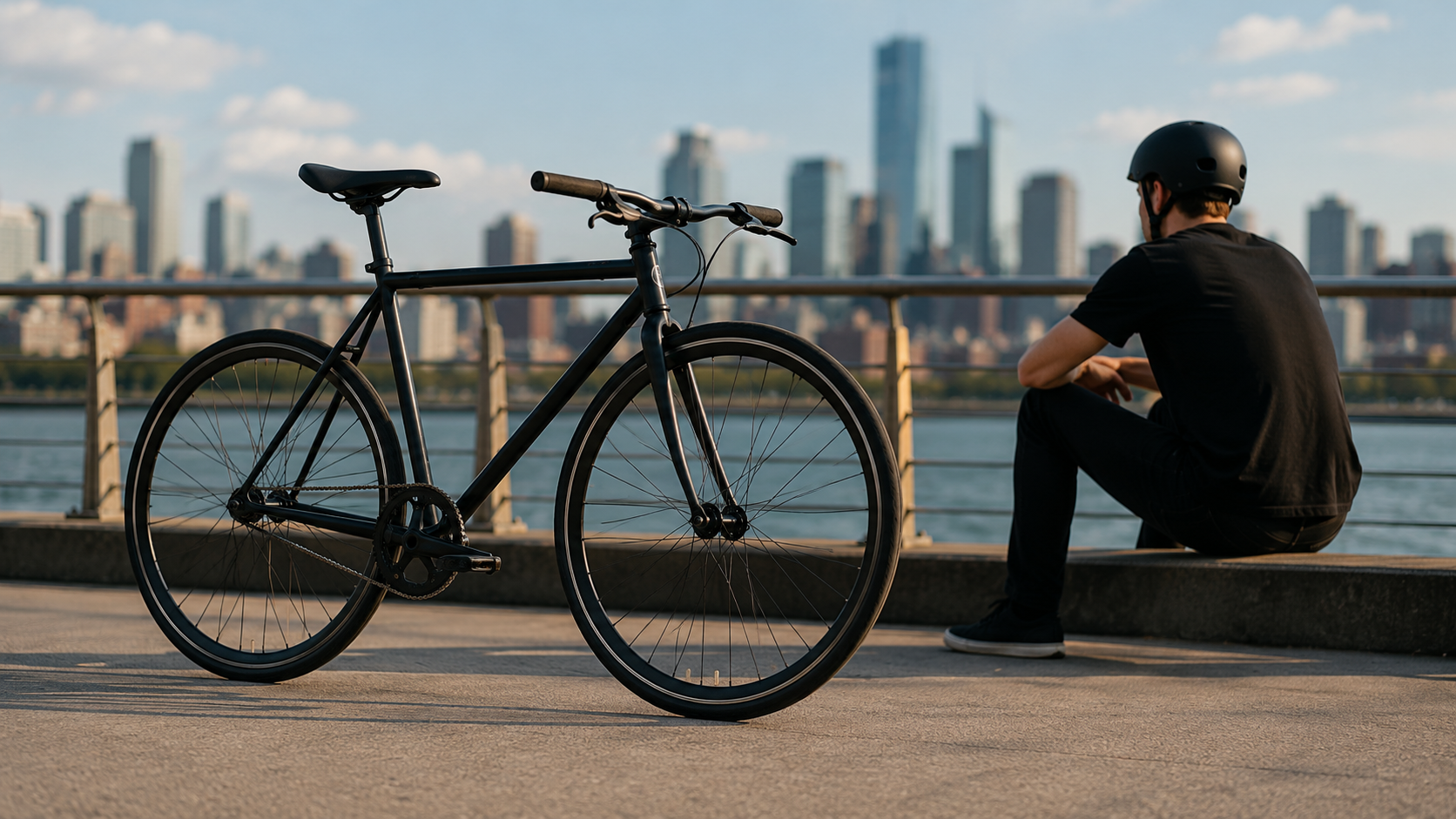
A fixie bike, short for fixed-gear bike, has a drivetrain with no freewheel mechanism, meaning the pedals are always connected to the rear wheel. As long as the bike is moving, the pedals turn, and riders can’t coast. Most fixie bikes use a single gear and minimal components, which makes them lightweight, low-maintenance, and popular for urban and track cycling.
What Makes a Fixie Bike Different
The defining feature of a fixie bike is the fixed-gear drivetrain. On a standard bike, a freewheel mechanism allows the rear wheel to spin freely while the pedals stay still, which is what lets you coast downhill or take a break from pedaling. A fixie bike removes that mechanism entirely. The chain, pedals, and rear wheel are mechanically locked together, so pedal motion and wheel motion are always connected in both directions.
This means riders can slow the bike down by resisting the pedals’ forward motion, and some experienced riders use this to stop the bike entirely without a hand brake, a technique often called a skid stop. Most fixie bikes also skip multiple gears, using a single fixed gear ratio instead, which keeps the drivetrain simple but limits flexibility on varied terrain.
A Brief Look at Where Fixie Bikes Came From
Fixed-gear drivetrains aren’t new. Track cycling has used fixed gears for over a century, since velodrome racing doesn’t require coasting or braking the way street riding does. Bike messengers in cities like New York and London later adopted fixed-gear bikes for their simplicity, low maintenance needs, and lightweight construction, all useful traits for riders covering many miles daily in stop-and-go traffic.
From there, the fixie bike grew into a broader urban cycling culture, valued as much for its stripped-down aesthetic as its mechanics. Today, it spans both dedicated track racing and everyday street riding, though the mechanical principle stays the same in both settings.
How a Fixie Bike Works
The fixed-gear drivetrain: A cog is threaded or bolted directly onto the rear hub without a freewheel mechanism in between. This locks the rear wheel’s rotation to the pedals at all times.
Single gear ratio: Most fixie bikes use one chainring and one rear cog, creating a fixed gear ratio. Riders can’t shift to a different ratio, so the bike’s pedaling difficulty stays constant regardless of terrain.
Braking without coasting: Slowing down happens by resisting the pedals’ rotation with leg strength, gradually reducing speed. Many fixie bikes also include a front hand brake, either by choice or by local law, as a more reliable stopping method.
Frame and build: Fixie bikes typically use simple, lightweight frames without the added components of multi-gear bikes, no derailleur, no shifters, and often minimal cabling, which keeps the bike lighter and easier to maintain.
Wheel and hub design: The rear hub is built specifically to accept a fixed cog, which differs from a standard freewheel-compatible hub used on geared bikes.
Why a Fixie Bike Matters to Certain Riders
A fixie bike isn’t built for every type of cyclist. It matters most to:
- Urban commuters who want a lightweight, low-maintenance bike for short, mostly flat routes
- Bike messengers and delivery riders who value simplicity and durability over gear range
- Track cyclists training or competing on velodromes, where fixed gears are standard
- Riders who want a more connected, feedback-heavy riding feel, since the pedals respond directly to speed changes
For these riders, the appeal isn’t about having fewer features. It’s about a specific kind of control and simplicity that geared bikes don’t offer.
Benefits of Riding a Fixie Bike
Simplicity and low maintenance. With no derailleur, shifters, or freewheel mechanism, there are fewer components that can wear out or need adjustment.
Lightweight build. Fewer parts generally mean a lighter overall bike, which matters for daily commuting or quick acceleration in traffic.
Direct pedaling feedback. Because the pedals stay connected to the wheel at all times, riders often describe a stronger sense of control and connection to the bike’s speed and momentum.
Improved pedaling technique. Riding fixed encourages a smoother, more consistent pedal stroke, since erratic pedaling directly affects the bike’s motion.
Durability. Simpler drivetrains tend to hold up well under daily urban riding conditions, including rain, potholes, and frequent stop-and-go traffic.
Limitations and Risks
A fair look at fixie bikes includes real downsides worth understanding before buying one.
No coasting. Riders must keep pedaling any time the bike is moving, which takes adjustment and can feel tiring on longer rides or fast descents.
Braking takes practice. Slowing down using leg resistance alone requires strength and technique that new fixed-gear riders don’t have right away, which is why many riders add a front hand brake.
Limited gear range. A single fixed gear ratio makes hills significantly harder to climb and fast, flat stretches harder to sustain, compared to a multi-speed bike.
Legal considerations vary by location. Some regions require at least one functioning brake on any bicycle used on public roads, which affects whether a brakeless fixie bike is legal to ride there. Local laws differ, so checking regional bicycle regulations matters before riding brakeless.
Not ideal for hilly or long-distance routes. The fixed gear ratio that works well on flat urban terrain becomes a serious limitation on routes with significant elevation change or long mileage.
Step-by-Step: Getting Started on a Fixie Bike
- Choose a gear ratio suited to your terrain. Flatter areas allow a higher gear ratio for speed; hillier areas benefit from a lower ratio for easier pedaling.
- Decide on brake setup. New riders generally benefit from a front hand brake while learning to manage a fixed-gear drivetrain.
- Practice in a low-traffic area first. Getting used to constant pedaling and resistance-based slowing is easier without cars or pedestrians to navigate around.
- Learn to anticipate stops early. Since slowing down takes more effort than squeezing a brake lever, planning stops further in advance becomes an important habit.
- Build leg strength and pedaling consistency gradually. Riding fixed regularly improves the smooth, consistent pedal stroke the style rewards.
Common Mistakes and Misconceptions
Myth: A fixie bike and a single-speed bike are the same thing. A single-speed bike has a freewheel, allowing coasting, while a fixie bike’s drivetrain stays locked to the wheel at all times. The two are related but mechanically different.
Myth: Riding fixed is only for experienced cyclists. While it takes some adjustment, many new riders learn to ride a fixie bike comfortably within a few short practice sessions on flat, open terrain.
Mistake: Skipping a front brake entirely. Even experienced riders often keep a front hand brake for emergency stops, since resistance-based braking alone isn’t always fast enough in unpredictable traffic situations.
Mistake: Choosing too high a gear ratio for local terrain. Riders sometimes prioritize speed potential over practicality, ending up with a gear ratio that’s exhausting to pedal on their actual daily route.
Misconception: Fixie bikes are only for style, not function. While the aesthetic is part of the culture, the mechanical simplicity offers real practical benefits for low-maintenance daily riding.
Real-World Examples
A bike messenger navigating dense city traffic all day might choose a fixie bike specifically for its low maintenance needs and lightweight frame, since fewer components mean fewer breakdowns during a demanding workday. A track cyclist training on a velodrome relies on a fixed gear because coasting isn’t part of that riding environment at all. A commuter living in a flat city neighborhood might choose a fixie bike for the simplicity of never worrying about shifting, accepting the trade-off of harder pedaling if their route ever includes an unexpected hill.
Each of these examples reflects the same underlying idea: a fixie bike rewards specific riding conditions and priorities rather than serving as an all-purpose bike.
Key Facts
- A fixie bike has no freewheel mechanism, so the pedals stay connected to the rear wheel at all times.
- Most fixie bikes use a single fixed gear ratio rather than multiple gears.
- Fixed-gear drivetrains originated in track cycling and were later adopted by urban riders and bike messengers.
- Slowing a fixie bike down without a hand brake requires resisting the pedals’ forward motion with leg strength.
- Local laws in some regions require at least one functioning brake on bicycles ridden on public roads.
- Fixie bikes are generally lighter and lower-maintenance than multi-gear bikes due to having fewer components.
FAQ
What is a fixie bike? It’s a bicycle with a fixed-gear drivetrain, meaning the pedals are always mechanically connected to the rear wheel, so coasting isn’t possible.
How does a fixie bike work? The rear cog is fixed directly to the hub without a freewheel mechanism, so pedal motion and wheel motion stay linked at all times, including while slowing down.
Why do people choose a fixie bike over a geared bike? Riders often choose one for its lightweight build, low maintenance, and the direct pedaling feedback that comes from having no freewheel or multiple gears.
Is a fixie bike safe to ride? It can be ridden safely with practice, though new riders should be prepared for the adjustment of resistance-based braking and consider adding a front hand brake.
Is a fixie bike legal without brakes? This depends on local regulations. Many places require at least one functioning brake on bicycles used on public roads, so checking regional laws matters before riding brakeless.
What are the alternatives to a fixie bike? Single-speed bikes offer similar simplicity with the added convenience of coasting, while geared road or hybrid bikes offer more flexibility for varied terrain.
What should someone know before buying a fixie bike? Consider your local terrain and hills, check regional brake laws, and think about whether you want to add a front hand brake while adjusting to fixed-gear riding.
Key Takeaways
- A fixie bike has no freewheel, so the pedals and rear wheel stay connected at all times.
- Slowing down requires resisting pedal motion with leg strength, though many riders also use a front hand brake.
- The single fixed gear ratio works well on flat terrain but struggles on hills.
- Fixie bikes are popular among urban commuters, bike messengers, and track cyclists for their simplicity and low maintenance.
- Local laws on brakeless bicycles vary, so checking regional regulations matters before riding without a hand brake.
Conclusion
A fixie bike offers a stripped-down riding experience built around one core mechanical principle: constant, connected pedaling with no coasting. That simplicity brings real benefits in weight, maintenance, and control, along with real trade-offs in braking, hill climbing, and the learning curve new riders face. Understanding how the fixed-gear drivetrain actually works, and being honest about the adjustment period it requires, makes it much easier to decide whether a fixie bike fits how and where you plan to ride.
-
 E-Bike News1 week ago
What Is a Bike Stand? A Complete Guide to Types, Uses, and How to Choose One
-
 E-Bike News1 week ago
What Is an Elliptical Bike? A Complete Guide to How It Works, Benefits, and What to Know Before You Try One
-
 E-Bike Technology1 week ago
What Is a Sirrus Bike? A Complete Guide to the Specialized Sirrus Line
-
 E-Bike News1 week ago
Electric Commuter Bike: What It Is and How to Choose the Right One
-

 E-Bike Technology1 week ago
Films About Bikes: The Best Movies Where Bicycles Take Center Stage
-
 E-Bike News2 days ago
What Is a Beach Cruiser? A Complete Guide to Comfort Bikes for Easy Riding
-
 E-Bike News1 day ago
Types of Bikes: A Complete Guide to Choosing the Right One
-
 E-Bike News1 day ago
Tandem Bike: How Two-Person Bicycles Work and What to Know