
Buying Guides
Folding Electric Bike: What It Is, How It Works, and What to Know Before Buying One

Direct Answer
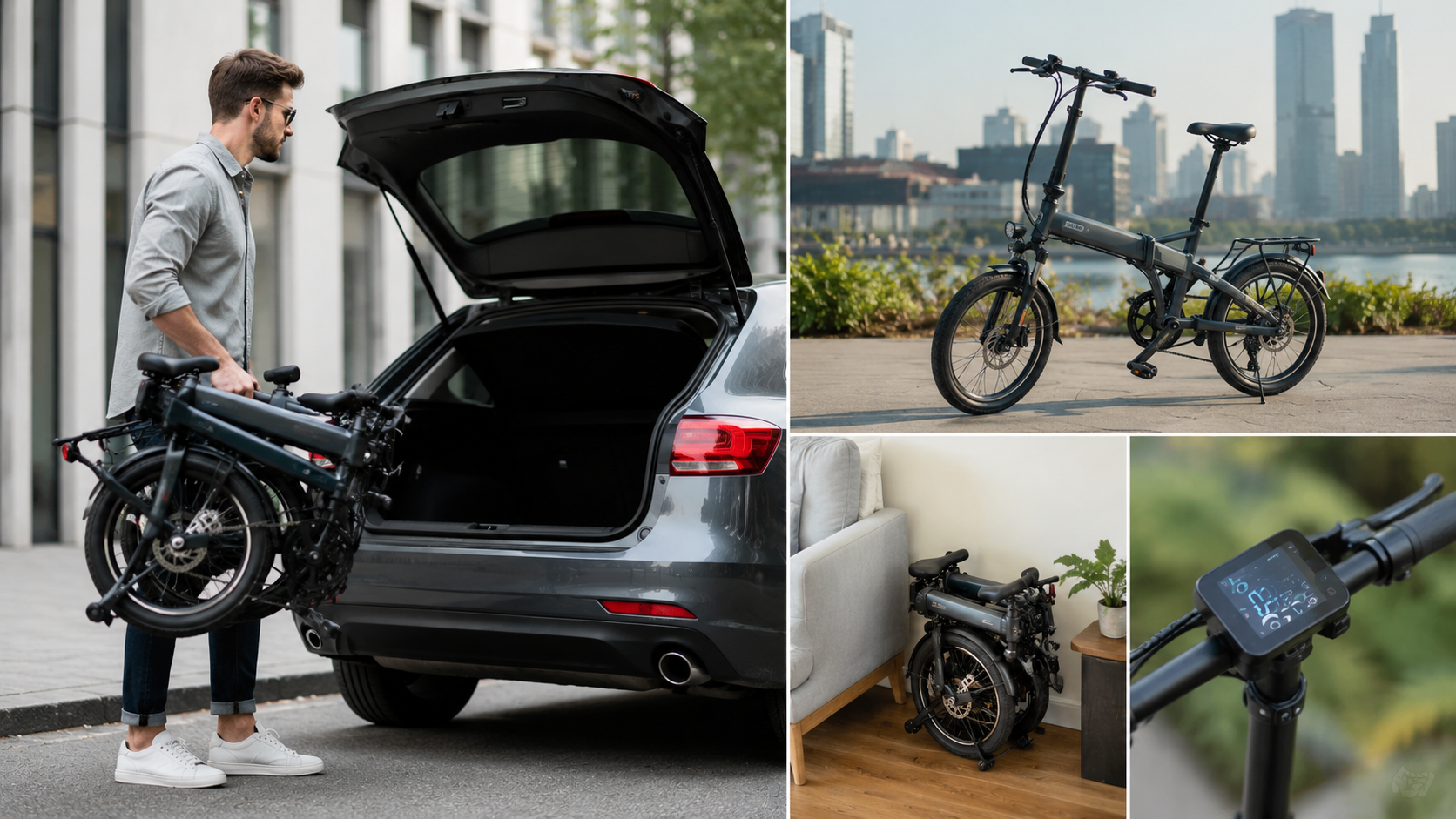
A folding electric bike is a bicycle with a battery-powered motor that assists pedaling, built with a hinge or collapsible frame so it can be folded down for storage or transport. It’s designed for people who need to combine a motorized commute with limited storage space, such as apartment dwellers, train commuters, or RV and boat owners who need a compact ride.
Why People Look Into Folding Electric Bikes
Someone searching for a folding electric bike is usually solving two problems at once: getting around without relying entirely on a car or public transit, and doing it in a way that doesn’t require a garage, bike room, or dedicated storage space. This is common among city dwellers with small apartments, commuters who need to combine biking with a train or bus ride, and people who want a bike they can store in a car trunk or closet.
The “electric” part solves a different problem: distance and effort. A folding electric bike lets someone cover more ground with less physical exertion than a standard folding bike, which matters for longer commutes, hilly routes, or riders who don’t want to arrive at work sweaty.
How a Folding Electric Bike Works
The Folding Mechanism
Most folding electric bikes use a hinge near the center of the frame, sometimes combined with a folding stem and folding pedals, allowing the bike to collapse into a smaller footprint. The folded size varies by model, but the goal across all of them is the same: reduce the bike’s dimensions enough to fit in a car trunk, under a desk, or in a closet.
The Electric Motor and Battery
A small electric motor, usually located in the front hub, rear hub, or the bike’s mid-drive (near the pedals), provides assistance when pedaling. Most folding electric bikes use a removable lithium-ion battery, which can be charged separately from the bike, a detail that matters for anyone who wants to charge it indoors rather than in a garage or shed.
Pedal Assist vs. Throttle Control
Folding electric bikes generally offer one or both of two ways to use the motor:
Pedal assist activates the motor while the rider is pedaling, amplifying their effort rather than replacing it. Most models let riders choose an assist level, from light support to near-full motor power.
Throttle control allows the motor to move the bike without pedaling at all, similar to a scooter, though not all folding electric bikes include this feature, and some regions restrict throttle-only use on public roads.
Key Concepts to Understand Before Buying
Motor wattage. This determines how much power assistance the bike provides, particularly on hills. Higher wattage generally means more assistance but often adds weight and cost.
Battery range. Manufacturers list a range estimate, usually based on ideal conditions — flat terrain, moderate assist level, average rider weight. Real-world range is often lower, particularly at higher assist levels or on hilly routes.
Weight. Folding electric bikes are heavier than standard folding bikes because of the motor and battery, often in the 35 to 55 pound range. This matters directly for anyone planning to carry the bike up stairs or lift it into a car trunk regularly.
Class designation. In many regions, electric bikes are categorized into classes based on top assisted speed and whether they include throttle control. These classifications can affect where a bike is legally allowed to be ridden, such as bike paths versus roads.
Frame size and fold dimensions. Folded size varies significantly between models. Someone storing the bike in a small closet or car trunk should check actual folded dimensions rather than assuming all folding bikes collapse to a similar size.
Step-by-Step: Deciding If a Folding Electric Bike Fits Your Needs
Step 1: Identify your primary use case. A daily commute, occasional errands, and multi-modal transit (bike plus train or bus) each have different priorities around range, weight, and fold speed.
Step 2: Check your actual storage constraints. Measure the space where the bike will be stored — closet, trunk, under a desk — before assuming a folding bike will fit.
Step 3: Estimate your typical distance and terrain. This affects how much battery range and motor power actually matters for your use, since a short, flat commute has very different requirements than a longer or hillier one.
Step 4: Consider how often you’ll need to carry it. If the bike will regularly go up stairs or into a vehicle, weight becomes a bigger factor than it would for someone who folds it up mainly for occasional storage.
Step 5: Confirm local regulations for e-bike classifications. Rules about where different classes of e-bikes can be ridden, and whether a license or registration is required, vary by location and are worth checking directly rather than assuming.
Benefits of a Folding Electric Bike
- Space efficiency for people with limited storage, whether at home or at a workplace.
- Multi-modal transportation, making it easier to combine biking with public transit.
- Reduced physical exertion compared to a standard bike, useful for longer commutes or hillier routes.
- Portability, allowing the bike to be stored in a car, RV, or boat when not in use.
- Lower ongoing cost compared to car commuting for shorter distances, since charging a battery costs far less than fuel.
Limitations and Considerations
Higher weight than non-electric folding bikes. The motor and battery add weight, which can make carrying the bike up stairs or lifting it into a car more physically demanding than a standard folding bike.
Battery range varies with real-world conditions. Listed range figures are usually based on optimal conditions and can be noticeably lower with hills, higher assist levels, or colder weather, which reduces battery efficiency.
Higher upfront cost. Folding electric bikes generally cost more than either a standard folding bike or a non-folding electric bike, since they combine both sets of components and engineering into a single design.
Charging logistics. While most batteries are removable and can charge indoors, this still requires planning around charging time, particularly for daily commuters who need the bike ready each morning.
Regulatory variation. Because e-bike classifications and rules differ by location, a bike that’s fully street-legal in one area may face restrictions in another, particularly around throttle use or top assisted speed.
Common Mistakes and Misconceptions
Mistake: Assuming all folding electric bikes fold to a similar size. Fold dimensions vary significantly between models, and a bike that looks compact in marketing photos may not fit a specific storage space.
Misconception: More battery range is always better. Larger batteries add weight and cost. For short commutes, a smaller battery may be entirely sufficient and result in a lighter, more portable bike.
Mistake: Ignoring motor placement. Hub motors and mid-drive motors behave differently in terms of weight distribution, hill performance, and how the bike feels while pedaling without assist. This is worth understanding rather than assuming all motor types perform the same.
Misconception: A folding electric bike doesn’t require the same maintenance as a regular bike. The added electrical components need occasional attention, but the mechanical parts — brakes, tires, chain — still require the same upkeep as any bicycle.
Real-World Example
Someone who commutes by train into a city center but lives a mile and a half from the nearest station might use a folding electric bike to cover that first and last mile of the trip, folding it to bring onto the train rather than relying on a second form of transit or a long walk. In this scenario, fold size and weight tend to matter more than long battery range, since the total distance covered by bike each day is short, while portability for train travel is the main requirement.
Key Facts
- Folding electric bikes typically weigh between 35 and 55 pounds due to the added motor and battery.
- Battery range estimates from manufacturers are usually based on ideal conditions and tend to be lower in real-world use.
- E-bike classifications, which affect where a bike can legally be ridden, vary by region.
- Pedal assist amplifies rider effort, while throttle control can move the bike without pedaling, though not all models include throttle control.
- Fold dimensions differ significantly between models, making it worth checking specific measurements against your storage space.
FAQ
What is a folding electric bike? It’s a bicycle with a battery-powered motor for pedal assistance and a folding frame design, allowing it to collapse into a smaller size for storage or transport.
How far can a folding electric bike go on one charge? This varies by battery size and riding conditions, but manufacturer estimates often range from 20 to 50 miles under ideal conditions, with real-world range typically lower.
Are folding electric bikes heavier than regular folding bikes?
Yes. The motor and battery add weight, typically bringing folding electric bikes into the 35 to 55 pound range, compared to lighter non-electric folding bikes.
Do I need a license to ride a folding electric bike?
This depends on local regulations and the bike’s classification, particularly around top assisted speed and throttle use. Rules vary significantly by location.
Can I take a folding electric bike on public transit?
Many transit systems allow folded electric bikes, though policies vary, and some systems have restrictions related to battery size or overall bike weight.
How long does it take to charge a folding electric bike battery?
Charging time varies by battery capacity and charger type, but many batteries take somewhere between three and six hours for a full charge.
Key Takeaways
- A folding electric bike combines a collapsible frame with a battery-powered motor for pedal assistance.
- Weight, fold dimensions, and battery range vary significantly between models and should be matched to your specific use case.
- Real-world battery range is often lower than manufacturer estimates, especially on hills or in cold weather.
- E-bike classifications and legal requirements differ by region and are worth checking before buying or riding.
- The bike’s added weight matters most for anyone who needs to carry it frequently, such as up stairs or into a vehicle.
Conclusion
A folding electric bike works well for people who need to combine motorized transportation with limited storage space, whether that’s a small apartment, a car trunk, or a daily train commute. Matching the bike’s weight, fold size, and battery range to your actual routine matters more than chasing the highest specs across the board, since the right choice depends heavily on how and where the bike will actually be used day to day.
-
 E-Bike News1 week ago
What Is an Elliptical Bike? A Complete Guide to How It Works, Benefits, and What to Know Before You Try One
-
 E-Bike News1 week ago
What Is a Bike Stand? A Complete Guide to Types, Uses, and How to Choose One
-
 E-Bike News1 week ago
Electric Commuter Bike: What It Is and How to Choose the Right One
-
 E-Bike Technology1 week ago
What Is a Sirrus Bike? A Complete Guide to the Specialized Sirrus Line
-

 E-Bike News3 days ago
What Is a Beach Cruiser? A Complete Guide to Comfort Bikes for Easy Riding
-
 E-Bike News2 days ago
Types of Bikes: A Complete Guide to Choosing the Right One
-

 E-Bike Technology1 week ago
Films About Bikes: The Best Movies Where Bicycles Take Center Stage
-
 E-Bike News2 days ago
Tandem Bike: How Two-Person Bicycles Work and What to Know