
Buying Guides
Bike Rack for Garage: The Complete Guide to Choosing and Installing One

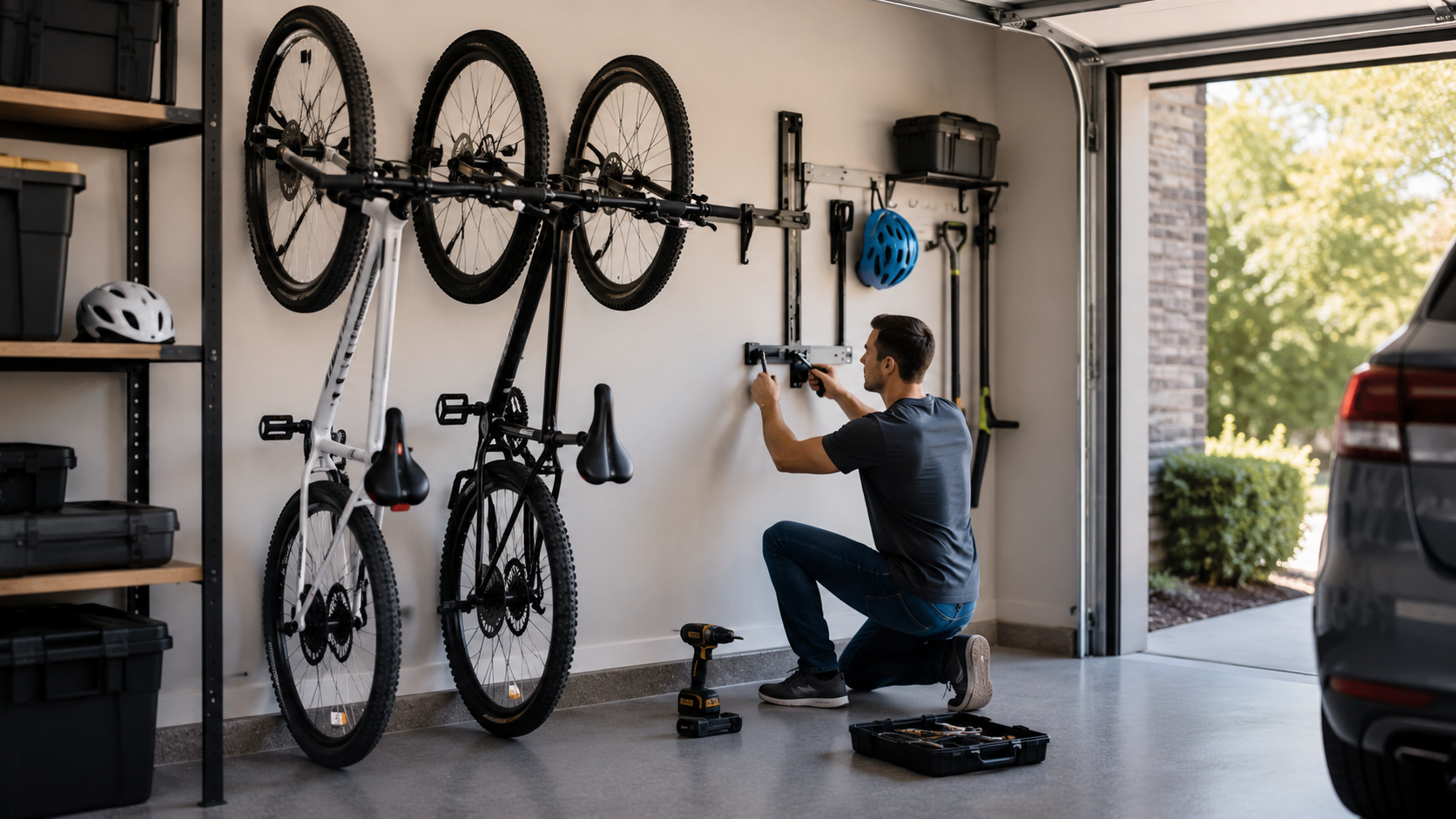
If your garage floor has turned into a tangle of handlebars, pedals, and tires, you’re not alone. Bikes are awkward to store. They’re long, they don’t stack well, and they tip over the moment you lean them against a wall. A bike rack for garage use solves this problem by giving each bike a fixed spot, off the ground and out of the way of your car, tools, or storage bins
This guide walks through the different types of garage bike racks, how they work, how to install them, and what to consider before buying one. Whether you own one bike or five, there’s a rack style that fits your space and budget.
Direct Answer
A bike rack for garage use is a wall-mounted, ceiling-mounted, or freestanding device that holds one or more bicycles in a fixed position, usually vertically or horizontally, to save floor space. Common types include wall hooks, vertical wall racks, ceiling hoists, and freestanding floor racks. The right choice depends on garage ceiling height, wall space, number of bikes, and how often the bikes get used.
Why People Look for a Garage Bike Storage Solution
Garages are often the default storage spot for anything that doesn’t fit inside the house. Bikes end up there because they’re too big for closets and too valuable to leave outside. The problem is that a bike leaned against a wall takes up more space than most people expect, and it’s an easy thing to knock over or trip on.
A dedicated rack for storing bikes in the garage addresses three practical problems at once. It frees up floor space for a car or workbench. It keeps bikes from getting scratched or tangled together. And it makes grabbing a bike for a quick ride faster, since you’re not digging through a pile of gear first.
Main Types of Garage Bike Racks
Wall-Mounted Hook Racks
This is the simplest option. A single hook, usually padded or rubber-coated, screws into a wall stud. The bike hangs by its front wheel or top tube. These are inexpensive and take only a few minutes to install, but each hook holds just one bike, and the bike sticks out from the wall while it’s hanging.
Vertical Wall Racks
Vertical racks hold the bike by its front wheel so the frame stands upright against the wall. This is a popular choice because it holds the bike close to the wall, keeping more open floor space than a horizontal hook. Some vertical racks include a locking mechanism or a tray to catch dirt from the tires.
Ceiling-Mounted Hoists
A ceiling hoist uses a pulley system to lift the bike up and out of the way, storing it horizontally near the garage ceiling. This works well for garages with high ceilings and limited wall space. The tradeoff is that lifting and lowering the bike takes more effort than pulling one off a wall hook, so it suits bikes that aren’t used daily.
Freestanding Floor Racks
These racks sit on the floor and don’t require any wall or ceiling mounting. They’re a practical option for renters or anyone who doesn’t want to drill into garage walls. Freestanding racks typically hold two to five bikes side by side or in a staggered pattern, though they take up more floor space than wall or ceiling options.
Multi-Bike Rail or Track Systems
For households with several bikes, rail or track systems mount horizontally along a wall and allow multiple hook attachments to slide along the same rail. This keeps bikes evenly spaced and adjustable without needing a separate stud for each hook.
How a Garage Bike Rack Actually Works
Most garage bike racks rely on one of two basic mechanics: gravity or tension.
Gravity-based racks, like wall hooks and vertical wheel racks, use the bike’s own weight to hold it in place once it’s set into the hook or slot. There’s little to adjust, and the bike simply rests until it’s lifted out again.
Tension or pulley-based racks, like ceiling hoists, use a rope-and-pulley or ratchet system to raise and lower the bike. The person lifts the bike partway, then uses the pulley mechanism to finish raising it and lock it in place at height.
Freestanding racks use a stable base, often with rubber feet or a wide footprint, so the rack itself doesn’t tip when a bike is set into one of its slots.
Benefits of Using a Garage Bike Rack
- Frees up floor space for parking, workbenches, or storage bins
- Reduces the risk of bikes falling over and getting damaged
- Keeps tires off the ground, which can reduce dirt and moisture buildup
- Makes it easier to organize multiple bikes without them leaning on each other
- Speeds up the process of grabbing a bike to ride
Limitations and Considerations
No single rack works for every garage. A few factors are worth thinking through before choosing one.
Ceiling height matters for hoists. If the garage ceiling is low, a hoist may not lift the bike high enough to clear a car underneath.
Wall material matters for anything mounted to drywall. Racks need to be anchored into wall studs, not just drywall alone, or the weight of the bike can pull the hardware loose over time.
Bike weight and frame style matter too. Heavier bikes, like electric bikes, need racks rated for higher weight limits. Step-through frames or bikes with fenders may not fit standard vertical wheel racks without some adjustment.
Frequency of use affects which type makes sense. A bike ridden daily is better suited to an easy-access wall hook or vertical rack. A bike used only occasionally is a better fit for a ceiling hoist, since it’s stored higher and takes a bit more effort to retrieve.
Step-by-Step: Installing a Wall-Mounted Bike Rack
- Find the wall studs. Use a stud finder to locate solid framing behind the drywall. Mounting into a stud is what actually holds the bike’s weight.
- Mark the mounting height. For a vertical rack, this is usually about waist to shoulder height so the front wheel sits comfortably in the slot.
- Pre-drill pilot holes. This keeps the mounting screws straight and reduces the chance of splitting the wood stud.
- Attach the mounting bracket. Use the screws provided with the rack, and make sure they’re driven fully into the stud.
- Test the rack before loading it. Pull on the bracket by hand to confirm it’s secure before hanging a bike on it.
- Hang the bike and check the fit. Adjust the angle or position if the bike doesn’t sit level or if it’s rubbing against a nearby wall or shelf.
Common Mistakes When Choosing or Installing a Garage Bike Rack
A common mistake is mounting a rack into drywall alone, without hitting a stud. Drywall anchors can hold light weight, but a loaded bike rack needs the support of solid framing.
Another common misunderstanding is assuming any wall rack fits any bike. Bikes with wide tires, fenders, or step-through frames sometimes need racks specifically designed for that shape, since a standard vertical hook may not accommodate them well.
People also frequently underestimate ceiling clearance. A ceiling hoist needs enough vertical space between the raised bike and the ceiling itself, plus clearance for anything parked underneath, like a car.
Finally, some buyers pick a rack based on price alone and end up with something rated for a lighter bike than what they own. Checking the weight rating before buying prevents this problem.
Real-World Examples
A two-car garage with limited wall space but a high ceiling is a good candidate for a ceiling hoist, since the vertical space above a parked car often goes unused. A single-car garage used daily for one commuter bike is better served by a simple vertical wall rack near the door, since it allows the bike to be grabbed quickly without lifting anything overhead. A shared garage storing four family bikes of different sizes often works best with a multi-bike rail system, since each hook can be repositioned along the rail to fit different frame sizes.
Key Facts About Garage Bike Racks
- Wall hooks and vertical racks are the least expensive and quickest to install.
- Ceiling hoists require more vertical clearance but free up wall and floor space entirely.
- Freestanding racks don’t require drilling, which makes them suitable for rented spaces.
- Racks should be mounted into wall studs whenever possible for long-term stability.
- Weight ratings vary by rack, so checking the specification against the bike’s actual weight avoids mismatched purchases.
Frequently Asked Questions
What is a bike rack for garage storage?
It’s a device, mounted to a wall, ceiling, or standing on the floor, designed to hold one or more bicycles in a fixed position so they’re off the ground and out of the way.
How does a garage bike rack work?
Most racks use either gravity, where the bike rests in a hook or slot, or a pulley system, where the bike is lifted and secured at height. The mechanism depends on the rack type.
Why is a garage bike rack useful?
It keeps floor space clear, prevents bikes from falling over or getting scratched, and makes bikes easier to organize and access, especially when a garage stores more than one bike.
Is a garage bike rack safe to use?
Yes, when installed correctly into wall studs or solid framing and rated for the bike’s weight. Improper installation into drywall alone, or exceeding a rack’s weight limit, can lead to the rack pulling loose.
Are there alternatives to a wall-mounted bike rack?
Yes. Freestanding floor racks and ceiling hoists are both alternatives that don’t require the same wall-stud installation as hook-style racks.
What should someone know before buying a garage bike rack?
It helps to measure available wall or ceiling space, check the bike’s weight and frame style against the rack’s specifications, and confirm whether the garage walls have accessible studs for mounting.
Key Takeaways
- A garage bike rack keeps bikes off the floor and organized in a fixed spot.
- Common types include wall hooks, vertical wall racks, ceiling hoists, and freestanding floor racks.
- Wall-mounted racks need to be anchored into studs, not just drywall, to safely hold a bike’s weight.
- Ceiling hoists work well in garages with high ceilings and limited wall space but take more effort to use.
- Checking weight ratings and frame compatibility before buying helps avoid a mismatched rack.
Conclusion
Choosing the right bike rack for garage storage comes down to matching the rack style to the space available and how often the bikes get used. Wall hooks and vertical racks work well for daily riders who want quick access, while ceiling hoists suit bikes that are stored for longer stretches. Freestanding and rail-based systems offer flexibility for garages with multiple bikes or limited wall access. Taking a few minutes to measure the space, check weight limits, and locate wall studs before installing a rack goes a long way toward keeping bikes secure and the garage usable for everything else it needs to hold.
Introduction
If you’ve searched for “Hey Bicycle,” there’s a good chance you came across the electric bike brand Heybike and want to know more before spending your money. Maybe a friend mentioned the name, or you saw an ad for a folding e-bike with fat tires and wondered if it’s worth the price. Either way, you’re not alone. Heybike has grown into one of the more recognizable names in the direct-to-consumer electric bike space, and people searching for it usually want the same things: what the brand actually makes, whether the bikes hold up, and how to pick the right model for their needs.
This guide walks through all of that in plain language, without any sales pitch.
Direct Answer
Hey Bicycle refers to Heybike, an electric bike company founded in 2021 that designs and sells e-bikes for commuting, city riding, off-road use, and folding portability. Heybike bikes typically feature pedal-assist motors, removable batteries, and frame styles ranging from step-through city bikes to fat-tire mountain e-bikes. The brand sells directly online and through select retail partners, positioning itself as an affordable alternative to premium e-bike brands.
What Is Heybike?
Heybike is an electric bicycle company that designs, manufactures, and sells e-bikes aimed at everyday riders rather than competitive cyclists. The company builds bikes for commuting to work, running errands, riding with family, and tackling light trails, and it markets itself around the idea of making electric biking accessible without a premium price tag.
Like many modern e-bike brands, Heybike sells primarily online, shipping bikes in large boxes that customers assemble at home with basic tools. Some models are also available through third-party retailers and online marketplaces.
Where the Name Comes From
The brand name blends “hey,” a casual greeting meant to feel friendly and approachable, with “bike.” This is a common naming pattern in the direct-to-consumer e-bike industry, where brands try to signal ease of use and everyday appeal rather than a purely technical or sporty image.
Key Concepts: How Electric Bikes Like These Work
Before comparing specific models, it helps to understand the basic technology behind any electric bicycle in this category.
Pedal-assist motor: A motor mounted at the front hub, rear hub, or crank area that adds power while you pedal. Most consumer e-bikes offer multiple assist levels, letting the rider choose how much help the motor provides.
Throttle mode: Some e-bikes include a throttle that can move the bike without pedaling at all, similar to a scooter. This is common on step-through and cruiser-style models aimed at casual riders.
Removable battery: Most modern e-bikes use a lithium-ion battery pack that can be taken out and charged separately from the bike, which is useful for people who can’t easily bring the whole bike near an outlet.
Battery range: The distance a bike can travel on a single charge, which varies based on rider weight, terrain, assist level, and weather. Manufacturer range estimates are usually based on ideal, low-assist conditions and tend to be higher than real-world results.
Motor wattage: A measure of the motor’s power output. Higher wattage generally means stronger acceleration and better hill-climbing, though it also draws more from the battery.
Understanding these basics matters because most marketing claims, including Heybike’s, are built around these same specs. Knowing what the numbers actually mean helps you compare models honestly instead of just looking at the biggest number.
Heybike’s Product Lineup
Heybike organizes its bikes around a few common use cases. While specific model names and specs change as the lineup updates, the categories tend to stay consistent.
Commuter and City E-Bikes
These are designed for paved roads, bike lanes, and daily transportation. They typically prioritize a comfortable riding position, lights for visibility, and fenders or racks for practical use. Step-through frame options are common in this category, making the bike easier to mount for riders with limited mobility or those wearing everyday clothing.
Folding E-Bikes
Folding models are built for people with limited storage space, apartment living, or a need to bring the bike on public transit or in a car trunk. These bikes usually sacrifice a small amount of range or top speed in exchange for a compact folded size.
Fat-Tire and Off-Road E-Bikes
Fat-tire models use wider tires for better traction and stability on sand, snow, gravel, or light trails. These bikes tend to have more aggressive suspension and higher ground clearance, appealing to riders who want to go beyond paved paths.
Cargo and Family E-Bikes
Some models are built with extended frames, larger racks, or higher weight capacities to carry groceries, gear, or a passenger. These are aimed at replacing car trips for short errands.
Why This Category of E-Bike Matters
E-bikes in this price and style range matter because they lower the barrier to entry for electric biking. Premium e-bike brands often price comparable bikes significantly higher, which puts them out of reach for many casual riders. Direct-to-consumer brands compete by cutting distribution costs and selling online, which can bring prices down substantially.
This matters for people considering an e-bike as:
- A car replacement for short trips
- A way to make hilly commutes more manageable
- A lower-impact form of exercise for people returning to activity after injury or with joint pain
- A more affordable alternative to owning a second car or relying on rideshare services
Benefits of This Type of E-Bike
Lower upfront cost compared to many established e-bike brands, since online sales cut out traditional bike shop markups.
Assembly and support built for beginners, often including instructional videos and customer support for first-time e-bike owners.
Variety of styles within one brand, so buyers can compare folding, fat-tire, and commuter options without switching brands.
Pedal-assist flexibility, letting riders choose how much physical effort they want to put in on a given day.
Limitations and Risks to Consider
Quality control varies by batch and model. Because these bikes are manufactured at scale and shipped internationally, individual units can differ in fit, finish, or component reliability, even within the same model line.
Customer service response times can be slow, particularly for warranty claims involving battery defects or replacement parts, based on patterns commonly reported by owners of direct-to-consumer e-bikes generally.
Self-assembly required. Most of these bikes arrive partially disassembled, and improper assembly, especially of brakes and wheels, can create safety issues if not done correctly.
Battery lifespan and safety. Lithium-ion batteries degrade over time and require proper charging habits. Cheaper or off-brand chargers, punctured batteries, or extreme heat exposure increase fire risk, which is true across the e-bike industry, not just one brand.
Local regulations vary. Depending on where you live, e-bikes are classified by motor wattage and top speed into different legal classes, which affects where you’re allowed to ride them, such as bike lanes, sidewalks, or off-road trails.
Step-by-Step: How to Choose the Right Model
- Identify your primary use case. Decide whether you mainly need a bike for commuting, errands, off-road riding, or a mix of these.
- Check your storage situation. If you live in an apartment or need to carry the bike upstairs, a folding model may fit better than a full-size frame.
- Consider your typical terrain. Hilly areas benefit from higher-wattage motors, while flat urban riding can work well with a standard motor.
- Estimate your realistic range needs. Calculate your round-trip commute or errand distance, then add a buffer, since real-world range is usually lower than advertised range.
- Factor in rider weight and cargo needs. Heavier riders or those planning to carry cargo should check the bike’s maximum weight capacity before buying.
- Review return and warranty policies. Since these are typically purchased online without an in-person test ride, understanding the return window and warranty coverage protects you if the bike doesn’t fit your needs.
- Plan for assembly. Set aside time, and if you’re not comfortable with basic bike mechanics, consider having a local bike shop complete the final assembly and safety check.
Common Mistakes People Make
Assuming advertised range applies to every ride. Range estimates are usually based on the lowest assist level, flat terrain, and a lighter rider, so actual range on hills or with heavier riders is often lower.
Skipping the safety check after assembly. Brakes, wheel quick-releases, and handlebar bolts need to be checked for proper tightness before the first ride, since shipping and self-assembly can leave components loose.
Ignoring local e-bike classification laws. Riding a higher-powered e-bike on a trail or path that only permits lower-classification bikes can result in fines or being asked to leave certain trails.
Buying based on top speed alone. A higher top speed doesn’t always mean a better bike for your needs. Comfort, frame fit, and battery range often matter more for daily use than maximum speed.
Not checking weight capacity before buying for a heavier rider or cargo use. Exceeding the bike’s rated capacity can affect handling, braking distance, and component wear.
Real-World Example
Consider a commuter who lives four miles from work, mostly on flat city streets, but stores their bike in a small apartment. A folding, step-through e-bike with a mid-range battery would likely fit this situation well, since the shorter commute reduces range concerns and the folding frame solves the storage problem.
Now consider a rider planning weekend trips on gravel trails outside a rural town. In this case, a fat-tire model with more suspension travel and a higher-wattage motor would be a better match, even though it’s bulkier and harder to store indoors.
These two riders have very different needs, which is why matching the bike category to actual use matters more than picking the most popular or most powerful model.
Key Facts
- Heybike was founded in 2021 and has grown into a widely recognized direct-to-consumer electric bike brand.
- The brand’s lineup spans commuter, folding, fat-tire, and cargo-style electric bikes.
- Most models use removable lithium-ion batteries and offer multiple pedal-assist levels.
- Bikes are typically sold online and shipped for at-home assembly.
- E-bike legal classifications are based on motor wattage and top speed, and these classifications vary by location.
- Real-world battery range is generally lower than manufacturer estimates due to terrain, rider weight, and assist level.
FAQ
What is Heybike?
Heybike is an electric bike company founded in 2021 that sells commuter, folding, fat-tire, and cargo-style e-bikes, primarily through direct online sales.
How does a Heybike e-bike work?
It uses a battery-powered motor to assist pedaling at adjustable levels, and some models include a throttle that can move the bike without pedaling.
Why do people choose this type of e-bike?
Many riders choose these bikes for their lower price point compared to premium e-bike brands, combined with a variety of styles suited to commuting, errands, or light off-road use.
Is it safe? These e-bikes can be safe when assembled correctly, maintained properly, and charged with the manufacturer-provided charger. As with any e-bike, battery care and correct assembly are essential to reduce fire and mechanical risks.
Is it legal to ride one?
Legality depends on local e-bike classification laws, which are based on motor wattage and top speed. Some areas restrict certain e-bike classes from bike lanes, sidewalks, or specific trails.
What are the alternatives?
Alternatives include premium e-bike brands with in-person retail support, traditional pedal bicycles with aftermarket conversion kits, and other direct-to-consumer e-bike brands offering similar categories of bikes.
What should buyers know before purchasing?
Buyers should understand realistic battery range, confirm the bike’s weight capacity fits their needs, check the warranty and return policy, and plan time for careful self-assembly before the first ride.
Key Takeaways
- Hey Bicycle commonly refers to Heybike, a direct-to-consumer electric bike brand founded in 2021.
- The lineup includes commuter, folding, fat-tire, and cargo e-bikes built around affordability.
- Real-world battery range is typically lower than advertised figures.
- Legal classification of e-bikes varies by location and affects where you can ride.
- Proper assembly and battery care are essential for safety, regardless of brand.
- Matching the bike category to your actual use case matters more than chasing the highest specs.
Conclusion
Hey Bicycle, in most searches, points back to Heybike and its range of commuter, folding, fat-tire, and cargo electric bikes built for everyday riders rather than competitive cyclists. Understanding how pedal-assist motors, battery range, and local e-bike laws work will help you evaluate any model in this category more clearly, whether you’re comparing Heybike to another brand or trying to decide if an e-bike fits your daily routine at all.
Why The Heybike Mars 3.0 Stands Out Among Folding E-Bikes
Folding e-bikes have a reputation problem. Most trade power and comfort for portability, leaving riders with a bike that folds neatly but rides like an afterthought — undersized suspension, weak motors, and a ride quality that falls apart the moment the pavement does. The Heybike Mars 3.0 was built specifically to challenge that trade-off, pairing a genuinely powerful motor and full suspension with a frame that still folds down for storage.
That combination has made the Heybike Mars 3.0 one of the more talked-about folding e-bikes in its price range. This guide breaks down what it actually offers, how its components perform, and where its limitations show up, so you can judge whether it fits your riding needs.
Direct Answer: What Is The Heybike Mars 3.0?
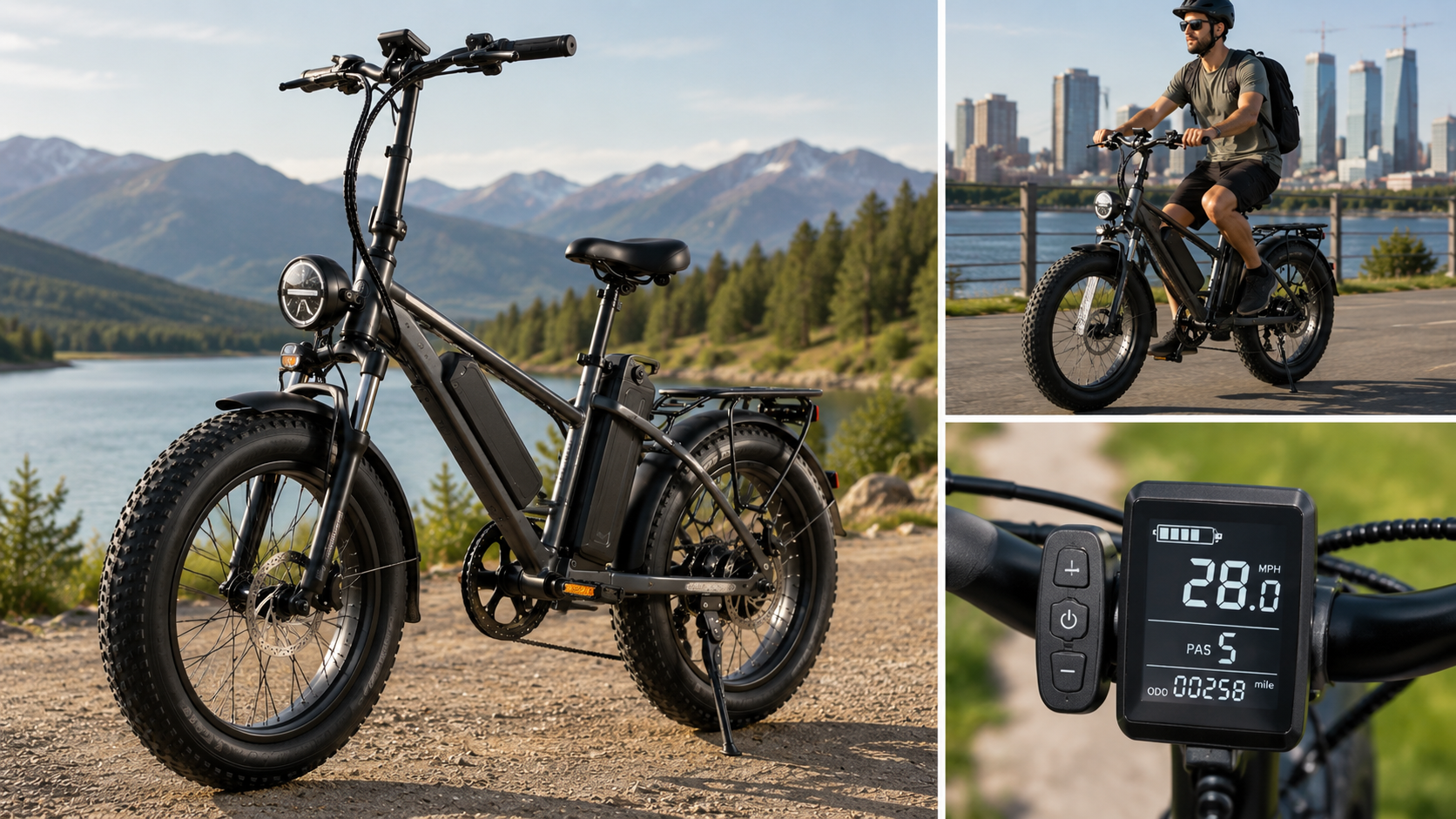
The Heybike Mars 3.0 is a full-suspension, fat-tire folding electric bike with a 750W rear hub motor (1,400W peak), 95 Nm of torque, and a top speed of up to 28 to 30 mph depending on configuration. It uses a 48V 624Wh battery for a claimed range of up to 65 miles, though real-world testing typically shows 27 to 30 miles under mixed riding conditions. It’s priced around $1,199 to $1,299.
What The Heybike Mars 3.0 Actually Offers
The Heybike Mars 3.0 is part of Heybike’s X Series, a line built around higher performance than the brand’s earlier folding models. Where the previous Mars 2.0 focused on being a capable budget folder, the Heybike Mars 3.0 was designed to compete with non-folding e-bikes on power and comfort, not just convenience.
That shows up most clearly in two areas: the motor system and the suspension. Full suspension is uncommon on folding e-bikes generally, since fitting shocks and pivots into a frame that also needs to collapse is a real engineering challenge. The Heybike Mars 3.0 includes both a front fork and a rear shock, which is a meaningful upgrade over the rigid or front-suspension-only setups found on most folders in its price range.
How The Heybike Mars 3.0 Works
Motor and Power Delivery
The Heybike Mars 3.0 uses a 750W nominal rear hub motor, built under Heybike’s “Galaxy Perform eDrive” system, with a peak output of 1,400W and 95 Newton-meters of torque. For comparison, many competing folding e-bikes with a similarly rated 750W motor top out around 80 Nm of torque, so the torque figure on the Heybike Mars 3.0 is genuinely higher than typical for its class.
Power is delivered through a torque sensor rather than a basic cadence sensor, meaning the motor responds to how hard you’re pedaling rather than simply detecting that you’re pedaling at all. In practice, most testers describe this as giving smoother, more natural-feeling assist, though a few reviewers have noted the response can feel slightly twitchy in stop-and-go city riding compared to open trail conditions.
Speed and Classification
The Heybike Mars 3.0 ships as a Class 2 e-bike out of the box, with throttle-only speeds up to 20 mph. With pedal assist engaged, it can reach up to 28 mph, placing it in Class 3 territory, and some configurations can be unlocked further to around 30 mph. Riders should confirm local e-bike class regulations before assuming full-speed use is allowed on shared paths, since Class 2 and Class 3 designations affect where a bike can legally be ridden in many areas.
Battery and Range
The Heybike Mars 3.0 runs on a 48V 13Ah (624Wh) battery integrated into the down tube, charged with a charger that typically takes around 6.5 hours for a full cycle. Heybike advertises up to 65 miles of range, but independent testing consistently lands closer to 27 to 30 miles under mixed pedal-assist and throttle use, with some testers reporting a range closer to 30 to 65 miles under lighter, lower-assist conditions. As with most e-bikes, hills, throttle use, and rider weight all pull real-world range down from the advertised maximum.
Suspension and Ride Comfort
Full suspension is the Heybike Mars 3.0’s clearest point of differentiation. The front fork offers around 50 to 65 mm of travel depending on the test unit, paired with a rear shock using a Horst-link design, a configuration more commonly seen on mountain bikes than folding e-bikes. Combined with 20-by-4-inch fat tires, the suspension setup handles gravel, dirt paths, and moderate off-road terrain noticeably better than most folding e-bikes, though deep, loose sand remains a challenge for any bike in this weight class.
Brakes, Drivetrain, and Tech Features
The Heybike Mars 3.0 includes an 8-speed Shimano Altus drivetrain, giving a wider gearing range than the single-speed or basic multi-speed setups found on many budget folders. It also includes a full-color display, NFC proximity unlocking, app-based tuning, and over-the-air update capability, along with integrated turn signals — features that go beyond what most folding e-bikes in this price range typically offer.
Weight and Portability
At around 72 pounds including the battery, the Heybike Mars 3.0 is heavy for a folding e-bike. It folds down to roughly 40 inches long by 21 inches wide by 32.5 inches tall, which is compact enough to store in a closet, car trunk, or small apartment, but the weight makes carrying it up stairs or lifting it into a vehicle a genuine effort rather than an easy task.
Why These Specs Matter For Real Riders
Torque versus typical folding e-bike power. The 95 Nm torque figure on the Heybike Mars 3.0 translates directly into stronger hill-climbing ability and quicker acceleration than most folding e-bikes offer, which matters for riders in hilly areas who’ve been frustrated by underpowered folders in the past.
Suspension versus terrain flexibility. Full suspension expands what kind of riding a folding e-bike can comfortably handle, moving the Heybike Mars 3.0 beyond pavement-only commuting into gravel paths, light trails, and rougher urban surfaces like potholed streets.
Weight versus fold-and-carry convenience. The trade-off for that power and suspension is portability. At 72 pounds, the Heybike Mars 3.0 folds for storage but isn’t the kind of bike someone carries up several flights of stairs daily without noticing the effort.
Rider fit versus frame limitations. Heybike lists a rider height range of about 4’11” to 6’2″, but the stock seat post’s 31.5-inch maximum inseam recommendation means taller riders with longer inseams may need an aftermarket seat post for full leg extension.
Step-by-Step: Deciding If The Heybike Mars 3.0 Fits Your Needs
Step 1: Confirm Your Terrain
If your riding includes gravel, dirt paths, or rough city streets, the Mars 3.0’s full suspension is a genuine advantage over rigid or front-suspension-only folders.
Step 2: Check Your Height And Inseam Against The Frame
Riders near or above 6 feet with a longer inseam should plan on checking seat post extension before assuming a comfortable fit out of the box.
Step 3: Weigh Portability Needs Against The Motor Power
If you need to carry the folded bike up stairs regularly, the 72-pound weight is worth testing in person, since it’s heavier than many folding alternatives with less power.
Step 4: Review Local E-Bike Class Rules
Since the Heybike Mars 3.0 can reach Class 3 speeds with pedal assist, confirm whether your local bike paths or trails restrict Class 3 e-bikes before relying on full-speed use.
Step 5: Set Realistic Range Expectations
Plan around the tested 27- to 30-mile range for mixed riding rather than the advertised 65-mile maximum, especially if your route includes hills or frequent throttle use.
Common Mistakes And Misconceptions
Assuming all folding e-bikes have similar suspension. The Heybike Mars 3.0’s full suspension setup, with a front fork and rear shock, is uncommon in this category. Buyers comparing it to typical folders with rigid frames or front suspension only should account for this genuine upgrade rather than assuming all folding e-bikes ride similarly.
Expecting the full 65-mile range in daily riding. That figure reflects ideal, low-assist conditions. Riders should plan around 27 to 30 miles for realistic mixed-terrain use, consistent with independent test results.
Overlooking the weight when prioritizing portability. At roughly 72 pounds, the Mars 3.0 folds for storage, but it’s not a bike suited to frequent stair-carrying or one-handed lifting, despite fitting into a compact footprint once folded.
Confusing Class 2 and Class 3 speed limits. The bike ships as Class 2 with a 20 mph throttle limit, but pedal-assist speeds up to 28 mph place it functionally in Class 3 territory. Riders should understand which classification applies to their local trail and path rules.
Assuming the torque sensor eliminates all sensitivity issues. While torque-sensor assist generally feels smoother than cadence-based systems, some testers have found the Mars 3.0’s response slightly abrupt in stop-and-go city traffic, which is worth test-riding before assuming a perfectly smooth experience in every riding condition.
Real-World Examples
Consider a rider in a hilly suburban area who previously owned a budget folding e-bike that struggled on inclines. Switching to the Heybike Mars 3.0’s 95 Nm torque motor and full suspension noticeably improves both hill-climbing power and comfort on cracked or uneven suburban pavement, addressing the two biggest frustrations with their previous bike.
Now consider an apartment dweller without elevator access who needs to carry the bike up two flights of stairs daily. For this rider, the Mars 3.0’s 72-pound weight becomes a real daily obstacle, even though the bike folds down to a manageable footprint for storage once inside.
A third scenario: a weekend rider who wants to combine paved commuting with light gravel trail exploration. The Heybike Mars 3.0’s full suspension and fat tires handle that mixed use well, a combination that a typical rigid-frame folding e-bike would struggle with on the rougher sections.
Key Facts About The Heybike Mars 3.0
- Motor: 750W nominal rear hub motor, 1,400W peak, 95 Nm torque
- Top speed: 20 mph throttle-only (Class 2), up to 28 mph with pedal assist
- Battery: 48V 13Ah (624Wh), integrated in the down tube
- Range: up to 65 miles claimed; approximately 27–30 miles in mixed real-world testing
- Charge time: approximately 6.5 hours
- Suspension: front fork (50–65mm travel) plus rear shock with Horst-link design
- Tires: 20 x 4 inch fat tires
- Drivetrain: 8-speed Shimano Altus
- Weight: approximately 72 pounds including battery
- Folded dimensions: approximately 40″ L x 21″ W x 32.5″ H
- Rider height range: approximately 4’11” to 6’2″, max recommended inseam 31.5 inches
- Price: approximately $1,199 to $1,299
- Warranty: 2-year warranty on most components
Frequently Asked Questions
What is the Heybike Mars 3.0?
The Heybike Mars 3.0 is a full-suspension, fat-tire folding electric bike with a 750W motor, 95 Nm of torque, and speeds up to 28 mph with pedal assist.
How does the Heybike Mars 3.0’s motor work?
It uses a torque sensor that detects pedaling force and adjusts motor assistance accordingly, delivering power through a 750W rear hub motor rated at up to 1,400W peak output.
Is the Heybike Mars 3.0 good for hills?
Yes. Its 95 Nm of torque is notably higher than most folding e-bikes in its class, and testers report it handles grades up to about 20% with pedal assist or throttle.
Is the Heybike Mars 3.0 heavy?
Yes, at around 72 pounds including the battery, it’s on the heavier end for a folding e-bike, which affects portability even though it still folds down for storage.
What is the real-world range of the Heybike Mars 3.0?
Heybike advertises up to 65 miles, but independent testing under mixed pedal-assist and throttle use typically shows 27 to 30 miles per charge.
Is the Heybike Mars 3.0 legal to ride on public roads and paths?
It ships as a Class 2 e-bike with a 20 mph throttle limit, but pedal-assist speeds up to 28 mph move it into Class 3 territory, so local class-based trail and path restrictions should be checked directly.
How does the Heybike Mars 3.0 compare to the Ranger 3.0 Pro?
Both are part of Heybike’s X Series, but the Mars 3.0 focuses on raw performance and all-terrain capability, while the Ranger 3.0 Pro emphasizes a smoother, more comfort-oriented ride.
What should I know before buying a Heybike Mars 3.0?
Buyers should check their height and inseam against the frame’s recommendations, set realistic range expectations, and consider the bike’s 72-pound weight if frequent stair-carrying is part of daily use.
Key Takeaways
- The Heybike Mars 3.0 pairs a high-torque 750W motor with full suspension, a rare combination in folding e-bikes.
- Its 95 Nm of torque outperforms most similarly rated folding e-bike motors, improving hill-climbing and acceleration.
- Real-world range typically lands around 27 to 30 miles, well under the advertised 65-mile maximum.
- At roughly 72 pounds, it folds for storage but isn’t easy to carry up stairs regularly.
- It ships as Class 2 but reaches Class 3 speeds with pedal assist, so local trail rules matter.
- Full suspension and fat tires make it notably more capable on gravel and rough terrain than typical folding e-bikes.
Conclusion
The Heybike Mars 3.0 earns its reputation by solving a problem most folding e-bikes don’t even attempt: delivering real hill-climbing torque and genuine suspension comfort in a frame that still collapses for storage. The trade-off is weight, which makes it less ideal for anyone needing to carry the bike frequently, and range figures that fall well short of the advertised maximum under real riding conditions. For riders prioritizing power and terrain versatility over featherweight portability, those trade-offs are reasonable; for anyone needing an easy daily carry, they’re worth weighing carefully before buying.
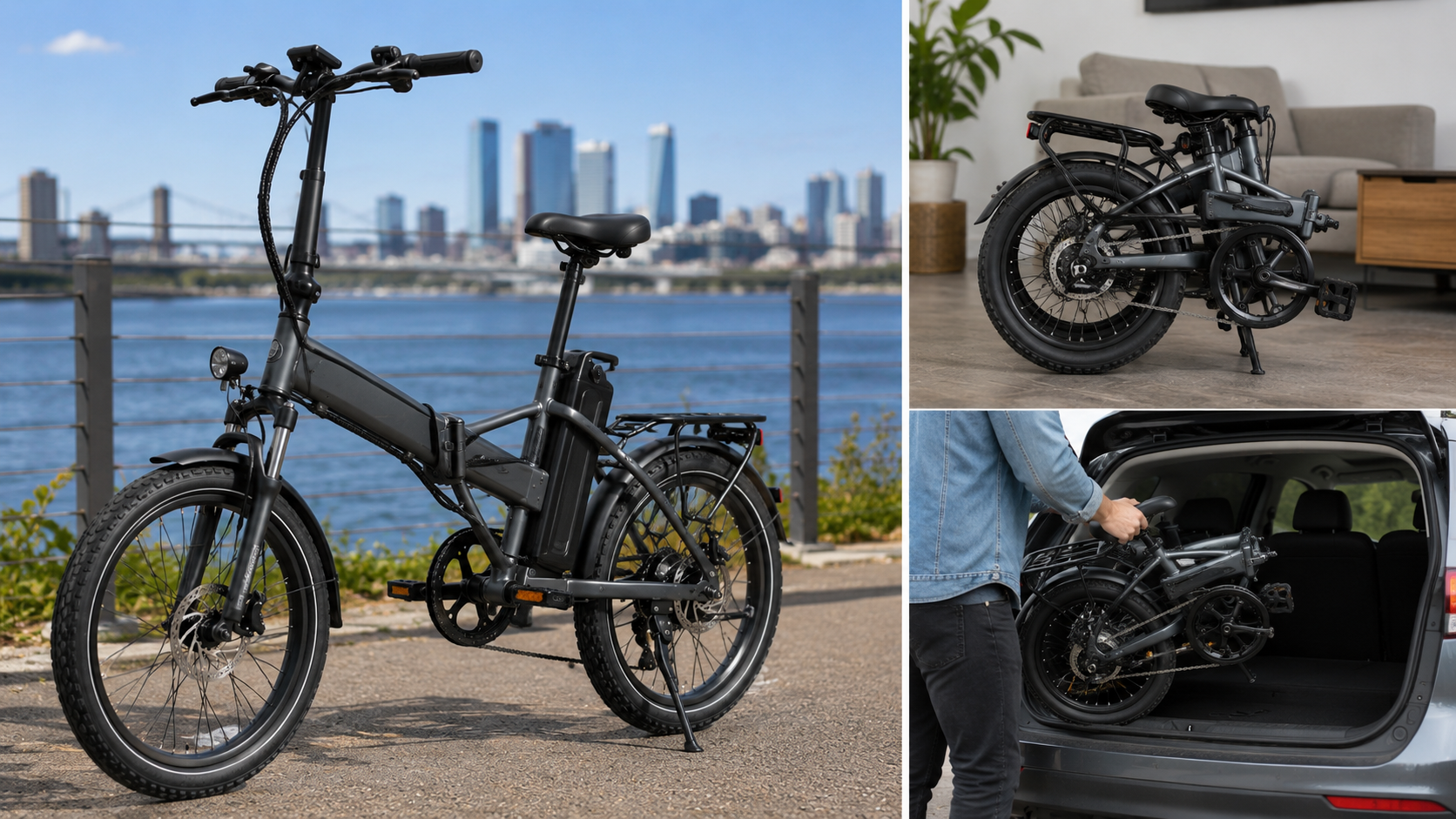
Why Foldable E Bikes Keep Showing Up In Search Results
Not everyone has a garage, a bike shed, or even a spare closet. For apartment dwellers, commuters who combine biking with a train ride, or anyone with limited storage space, a regular electric bike can feel impractical no matter how good the motor or battery is. That’s the gap a foldable e bike is built to fill.
But folding into a smaller package raises real questions. Does folding weaken the frame? Do you lose motor power or range compared to a standard e-bike? Is it actually practical to carry once folded, or does it just look compact in photos? This guide walks through what a foldable e bike actually is, how it works, and what trade-offs come with choosing one.
Direct Answer: What Is A Foldable E Bike?
A foldable e bike is an electric bicycle designed with hinges at the frame, handlebar stem, and sometimes the pedals, allowing it to collapse into a smaller, more compact shape for storage or transport. It retains a motor, battery, and pedal-assist or throttle system like a standard e-bike, but trades some structural rigidity and, in many cases, wheel size for portability.
What Makes An E Bike “Foldable”
At a basic level, a foldable e bike starts with the same core components as any electric bicycle: a frame, a motor, a battery, and a drivetrain. What sets it apart is a set of folding mechanisms built into key points of the frame.
Most foldable e-bikes use one or more of the following:
- A main frame hinge, usually in the middle of the frame, that lets the bike fold roughly in half
- A folding handlebar stem, which collapses the steering column down toward the frame
- Folding pedals, which tuck in flat against the crank arms
- A quick-release seat post, allowing the seat to drop for a more compact fold
Once folded, the bike typically takes up a footprint similar to a large suitcase, which is small enough to fit in a car trunk, an elevator, under a desk, or in a closet — spaces a full-size electric bike simply won’t fit into.
How A Foldable E Bike Works
Motor and Pedal Assist
Like other e-bikes, a foldable e bike uses a motor — typically a hub motor in the front or rear wheel, though some higher-end models use mid-drive motors — combined with a sensor system that detects when you’re pedaling. Cadence sensors detect pedaling motion, while torque sensors detect how hard you’re pedaling, adjusting motor output accordingly. Many foldable e-bikes also include a throttle, letting the motor propel the bike without pedaling at all, depending on local class regulations.
Battery Placement and Range
Because a foldable e bike has a smaller frame than a standard model, battery placement becomes more of an engineering challenge. Batteries are commonly mounted on the down tube, rear rack, or integrated into the frame itself. Range varies widely, generally between 20 and 60 miles per charge, depending on battery capacity, motor wattage, terrain, and rider weight. Smaller folding frames sometimes limit battery size compared to full-frame e-bikes, which can mean shorter range for an equivalent price point.
Wheel Size and Ride Feel
Most foldable e-bikes use smaller wheels, commonly in the 16- to 20-inch range, compared to the 26- to 29-inch wheels found on standard e-bikes. Smaller wheels contribute to the compact fold but also change how the bike rides. Smaller wheels tend to feel more responsive at low speed but can transmit more vibration from bumps and cracks in the road, since there’s less wheel radius to roll smoothly over obstacles.
The Folding Mechanism Itself
Folding typically takes anywhere from 10 seconds to about a minute, depending on the bike’s design. Higher-quality folding e-bikes use reinforced steel or aluminum hinges with locking mechanisms designed to hold firmly under normal riding stress, while lower-quality hinges can develop play or looseness over time with repeated folding and unfolding.
Why People Choose A Foldable E Bike
Limited storage space. Apartment living, small homes, and shared housing situations often leave no good place to store a full-size bike. A foldable e bike collapses down enough to fit in a closet or under a stairwell.
Multi-modal commuting. Riders who combine biking with public transit — riding to a train station, folding the bike, and carrying it onboard — need a bike that collapses small enough to meet transit authority size rules, which standard e-bikes generally can’t do.
Travel and storage in vehicles. A foldable e bike fits into a car trunk or RV storage compartment in a way a full-size e-bike often can’t, which matters for anyone combining biking with road trips or camping.
Theft and portability concerns. Being able to carry the bike inside a workplace, apartment, or store rather than locking it outside reduces theft risk, something a foldable e bike makes far more practical than a full-size model.
How To Choose A Foldable E Bike: A Step-by-Step Approach
Step 1: Define Your Primary Use Case
Commuting with a train or bus transfer, weekend recreational riding, and RV or boat storage all call for different priorities in frame size, weight, and folded dimensions.
Step 2: Check The Folded Size Against Your Storage Space
Manufacturers list folded dimensions specifically for this reason. Measuring your closet, trunk space, or under-desk area against those numbers avoids an unpleasant surprise after delivery.
Step 3: Compare Motor Wattage And Battery Range
Since folding frames sometimes constrain battery size, compare real-world range figures, not just peak wattage, against your typical commute distance and terrain.
Step 4: Evaluate Total Weight
A foldable e bike still needs to be lifted and carried once folded. Weights range from around 35 pounds on lightweight models to 70 pounds or more on rugged, higher-power versions. Matching this to your physical ability to lift and carry it matters as much as any other spec.
Step 5: Test The Fold-and-Carry Process In Person
Photos and spec sheets can’t convey how a folding mechanism actually feels to operate. Testing the fold, the locking mechanism, and the carry weight in person, if possible, gives a much clearer picture than reading reviews alone.
Common Mistakes And Misconceptions
Assuming a smaller bike means a weaker bike. Reputable foldable e-bikes use reinforced frames and hinges specifically engineered to handle regular riding stress. Frame integrity depends on build quality and materials, not simply on whether the bike folds.
Expecting the same range as a full-size e-bike at the same price. Because folding frames often limit battery size, a foldable e bike at a given price point may offer less range than a non-folding model with the same price tag. This isn’t a defect — it’s a trade-off for portability.
Underestimating the weight once folded. A bike that looks compact in marketing photos can still weigh 50 pounds or more. Buyers who plan to carry it up stairs or onto public transit regularly should check actual weight, not just folded dimensions.
Believing all folding mechanisms are equally durable. Hinge quality varies significantly between brands and price points. Lower-cost folding mechanisms are more prone to developing looseness or play after repeated use, which can affect ride stability over time.
Overlooking wheel size effects on ride comfort. Smaller wheels, common on foldable e-bikes, can make for a bumpier ride on rough pavement compared to larger-wheeled standard e-bikes, which some buyers don’t anticipate until their first ride on uneven roads.
Real-World Examples
Consider a commuter who takes a 15-minute train ride partway to work, then needs to bike the last two miles. A foldable e bike lets them fold the bike, carry it onto the train without violating size restrictions, and ride the final stretch, something a full-size e-bike parked at a train station (and left to weather or theft risk) can’t offer in the same way.
Now consider a retiree living in a small condo without a storage locker or garage. For this person, a foldable e bike that collapses to fit in a hall closet solves a real space problem that a standard e-bike, requiring a dedicated storage spot, would not.
A third example: a family that road-trips frequently in an RV with limited storage. A foldable e bike that fits into an under-bed RV storage bay lets them bring a bike along for exploring campgrounds and nearby towns, without needing a bulky bike rack mounted to the vehicle exterior.
Key Facts About Foldable E Bikes
- A foldable e bike uses hinges at the frame, stem, and sometimes the pedals to collapse into a smaller shape.
- Wheel sizes commonly range from 16 to 20 inches, smaller than the 26- to 29-inch wheels on standard e-bikes.
- Folded dimensions typically resemble a large suitcase, fitting into car trunks, closets, or under desks.
- Total weight ranges from about 35 pounds on lightweight models to 70 pounds or more on rugged, higher-power versions.
- Range generally falls between 20 and 60 miles per charge, depending on battery size, motor wattage, and terrain.
- Folding time ranges from about 10 seconds to a minute, depending on design and hinge quality.
- Most models that meet local e-bike class limits don’t require registration, insurance, or a license in the U.S.
Frequently Asked Questions
What is a foldable e bike?
A foldable e bike is an electric bicycle with hinges built into the frame, stem, and sometimes pedals, allowing it to collapse into a compact shape for easier storage and transport.
How does a foldable e bike work?
It uses the same motor, battery, and pedal-assist system as a standard e-bike, but its frame includes folding mechanisms at key points that let it collapse into a smaller footprint when not in use.
Is a foldable e bike as safe as a regular e-bike?
Reputable foldable e-bikes are built with reinforced hinges and frames designed to handle normal riding stress safely, though hinge quality varies by brand, so checking build materials and reviews matters before buying.
Is a foldable e bike legal to ride on public roads?
Legality depends on the bike’s motor wattage, top speed, and whether it includes a throttle, following the same class-based e-bike regulations that apply to standard electric bicycles in most areas.
What are the alternatives to a foldable e bike?
Alternatives include standard non-folding e-bikes, folding traditional bicycles without a motor, electric scooters, and compact electric mopeds, each offering different trade-offs in range, power, and portability.
What should someone know before buying a foldable e bike?
Buyers should check folded dimensions against their actual storage space, compare real-world range rather than peak specs, and physically test the folding mechanism and carry weight when possible.
Does folding reduce the bike’s range or power?
Not inherently, but smaller folding frames sometimes limit battery size compared to full-frame e-bikes, which can mean somewhat less range at a comparable price point.
Key Takeaways
- A foldable e bike combines standard e-bike components with hinges that let the frame collapse for storage or transport.
- Smaller wheels and a compact frame trade some ride smoothness and battery capacity for portability.
- Total weight, not just folded size, determines how practical a foldable e bike is to actually carry.
- Folding mechanism quality varies by brand, affecting long-term durability and ride stability.
- Real-world range typically falls short of maximum advertised figures, especially with hills or heavier use.
- Multi-modal commuters, apartment dwellers, and RV travelers are among the most common reasons people choose a foldable e bike over a standard model.
Conclusion
A foldable e bike solves a specific problem: getting electric-assisted riding into spaces where a standard e-bike simply won’t fit or store conveniently. That convenience comes with trade-offs in wheel size, ride smoothness, and sometimes battery capacity, which matter more or less depending on how and where someone plans to ride. Weighing those trade-offs against your actual storage situation and commute needs is the clearest way to judge whether folding is worth it for your riding style.
-
 E-Bike News4 weeks ago
What Is a Bike Stand? A Complete Guide to Types, Uses, and How to Choose One
-
 E-Bike News4 weeks ago
What Is an Elliptical Bike? A Complete Guide to How It Works, Benefits, and What to Know Before You Try One
-

 E-Bike News3 weeks ago
What Is a Beach Cruiser? A Complete Guide to Comfort Bikes for Easy Riding
-
 E-Bike Technology3 weeks ago
Pocket Rocket Folding Road Bikes: What They Are and How They Work
-
 E-Bike News4 weeks ago
Electric Commuter Bike: What It Is and How to Choose the Right One
-

 E-Bike News2 weeks ago
Sleeping on a Bike: Why It Happens and How to Stay Safe While Riding
-
 E-Bike News3 weeks ago
Types of Bikes: A Complete Guide to Choosing the Right One
-
 E-Bike Technology4 weeks ago
What Is a Sirrus Bike? A Complete Guide to the Specialized Sirrus Line