
E-Bike News
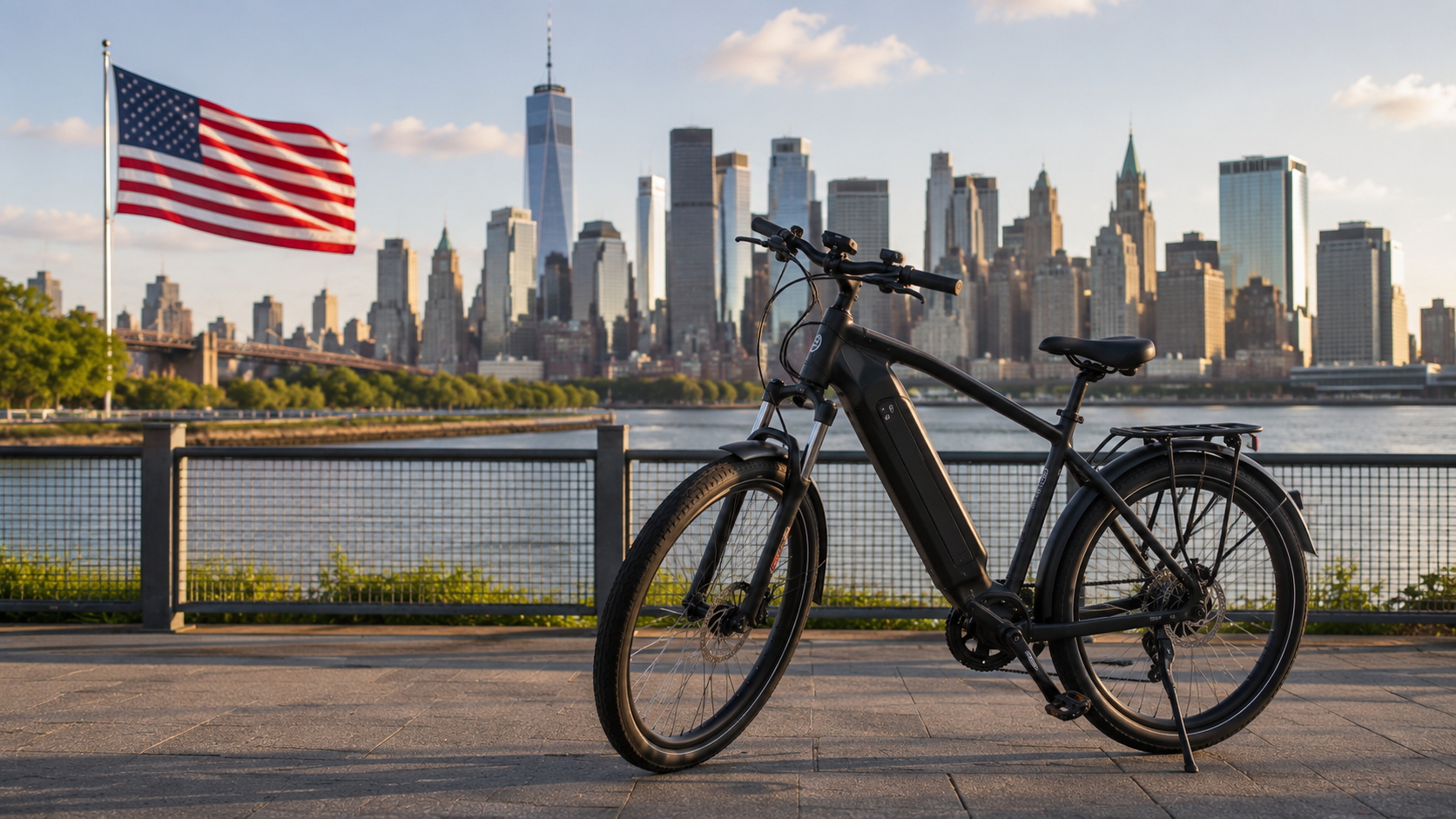
E Bike Amerika: What You Need to Know About Electric Bikes in the United States

Introduction
If you’ve been searching for e bike Amerika, you’re probably trying to understand how electric bikes work in the United States — whether that’s the laws, the classifications, the culture around riding one, or how the American market compares to what you’re used to elsewhere. The topic sounds simple on the surface, but the reality is more layered. Rules change from state to state, terminology differs from country to country, and what counts as a legal e-bike in one place might be treated differently just a few miles away.
This article breaks down exactly what e-bikes in America look like today: how they’re classified, where you can ride them, what makes the U.S. market different, and the practical details that matter most if you’re planning to buy, ride, or simply understand the landscape.
Direct Answer
E bike Amerika refers to electric bicycles used and regulated within the United States. American e-bikes are typically divided into three legal classes based on speed and pedal assistance, with rules varying by state regarding where they can be ridden. Unlike many European countries, the U.S. has no federal licensing requirement for most e-bikes, though local restrictions still apply.
What Is an E-Bike, Exactly?
An electric bike, or e-bike, is a bicycle equipped with a small electric motor that assists the rider’s pedaling or, in some cases, propels the bike without pedaling at all. The motor draws power from a rechargeable battery, usually mounted on the frame or rear rack.
E-bikes are not the same as electric mopeds or scooters, even though people sometimes use the terms loosely. The distinction matters because mopeds and scooters are typically classified as motor vehicles requiring registration, while most e-bikes are treated as bicycles under U.S. law.
How E-Bikes Are Classified in the United States
The U.S. uses a three-class system that most states have adopted, though not all states apply it identically.
Class 1
Pedal-assist only, meaning the motor only engages while you’re pedaling. Motor assistance stops at 20 mph. These are generally allowed on bike paths and multi-use trails.
Class 2
Includes a throttle that can propel the bike without pedaling, also capped at 20 mph. Access to trails can be more restricted than Class 1 in some areas.
Class 3
Pedal-assist only, but motor assistance continues up to 28 mph. These are often restricted from certain bike paths and may require a helmet depending on the state.
Because states can add their own restrictions on top of this baseline, it’s worth checking local Department of Transportation guidance before assuming a bike is allowed somewhere.
Why Classification Matters So Much
Classification affects far more than paperwork. It determines:
- Which trails and bike paths you can legally use
- Whether a helmet is legally required
- Minimum age requirements in some states
- Whether local insurance or registration rules apply
A Class 3 e-bike capable of 28 mph might be treated more like a moped in some jurisdictions, even though it pedals and looks like a standard bicycle.
How E-Bike Rules in America Differ From Other Countries
Readers searching e bike Amerika are often comparing the U.S. system to rules back home, especially in Europe. A few key differences stand out.
In much of the European Union, e-bikes are generally capped at 25 km/h (about 15.5 mph) motor assistance, with anything faster classified as a moped requiring registration and insurance. The U.S. Class 3 category allows assistance up to 28 mph without the same registration requirement, which surprises many visitors and new residents.
Additionally, the U.S. has no federal e-bike licensing requirement, whereas some countries require at least a basic license for faster e-bike classes. This makes the American system more accessible for casual riders but also less standardized from state to state.
Where You Can and Cannot Ride
Riding locations depend on the combination of e-bike class and local jurisdiction. Generally:
- City streets and bike lanes: Usually allowed for all three classes, following standard bicycle traffic laws
- Multi-use paths: Often allowed for Class 1, sometimes restricted for Class 2 and 3
- Mountain biking trails and natural surface trails: Frequently restricted or banned for all e-bike classes, especially on federal land managed by agencies like the National Park Service
- Sidewalks: Usually prohibited in urban areas, though some suburban or rural zones allow it
Because federal land, state parks, and city ordinances can each set different rules, checking signage or local regulations before riding somewhere new is always the safer approach.
Step-by-Step: How to Confirm E-Bike Rules Before You Ride
- Identify the class of your e-bike (check the manufacturer’s label or manual)
- Search your state’s Department of Transportation or state legislature website for e-bike statutes
- Check the specific trail or path’s posted rules, since local parks can add restrictions
- Confirm helmet requirements, which vary by age and by state
- Verify insurance requirements, which are rare but exist in a few jurisdictions for higher-speed classes
Common Mistakes and Misconceptions
Assuming All E-Bikes Follow the Same Rules Nationwide
There is no single nationwide e-bike law. States set their own definitions, and some haven’t formally adopted the three-class system at all.
Confusing E-Bikes With Electric Mopeds
A twist-throttle electric two-wheeler that can exceed 28 mph and doesn’t require pedaling at all is likely a moped under most state laws, not an e-bike, even if it’s marketed as one.
Believing a Driver’s License Is Always Required
Most states do not require a driver’s license for standard e-bike classes, though a few states have added age minimums or permit requirements for Class 3 specifically.
Assuming Trail Access Matches Road Access
Being legal on a public road doesn’t guarantee access to hiking or mountain biking trails, where separate land management rules often apply.
Real-World Example
Consider a rider who buys a Class 3 e-bike in one state, capable of 28 mph pedal-assist, then travels to a national park in another state for a weekend ride. Even though the bike was perfectly legal on their home city’s bike paths, many federal trails prohibit any motorized bicycle, including e-bikes, unless specifically marked otherwise. Without checking ahead, the rider could arrive only to find the trail off-limits for that specific bike class.
This kind of mismatch is common precisely because “e bike Amerika” doesn’t mean one uniform rulebook — it means fifty overlapping sets of state and local regulations layered on top of a shared federal framework.
Key Facts About E-Bikes in America
- The U.S. uses a three-class e-bike system, though adoption varies by state
- Class 3 e-bikes can assist up to 28 mph, faster than the EU’s 25 km/h cap
- No federal license is required for standard e-bike classes
- Federal land, including many national parks, often restricts e-bike trail access
- Helmet laws differ by state and sometimes by rider age
Frequently Asked Questions
What does e bike Amerika mean?
It refers to electric bicycles as used, sold, and regulated within the United States, including how they’re classified and where they can legally be ridden.
Is a license required to ride an e-bike in America?
No federal license is required for standard e-bike classes, though some states apply age restrictions or specific rules to Class 3 e-bikes.
Are e-bikes legal on hiking trails?
Not always. Many trails, especially on federal land, restrict motorized bicycles regardless of class unless specifically marked as e-bike accessible.
How fast can e-bikes go in the U.S. compared to Europe?
American Class 3 e-bikes can assist up to 28 mph, compared to roughly 15.5 mph (25 km/h) in most of the European Union before a bike is classified as a moped.
Do all U.S. states follow the same e-bike classification system?
No. Most states have adopted the three-class system, but definitions and restrictions still vary, so local rules should always be checked.
Is a helmet required to ride an e-bike in America?
It depends on the state and sometimes the rider’s age. Some states require helmets only for younger riders or only for Class 3 e-bikes.
What’s the difference between an e-bike and an electric moped in the U.S.?
E-bikes are pedal-equipped and capped at 28 mph under Class 3, while mopeds typically don’t require pedaling, can go faster, and are usually classified as motor vehicles requiring registration.
Key Takeaways
- E bike Amerika involves a three-class system based on speed and pedal-assist type
- Class 3 e-bikes allow faster motor assistance than most European equivalents
- No federal license is needed for standard e-bike classes, but state rules vary
- Trail access often depends on local and federal land management rules, separate from road laws
- Helmet and age requirements differ significantly by state
Conclusion
Understanding e-bikes in America means recognizing that there’s no single national rulebook — just a shared three-class framework that individual states adapt to their own laws. Riders coming from countries with stricter or more centralized e-bike regulations often find the American system more flexible in some ways and more fragmented in others. Knowing your bike’s class, checking your state’s specific rules, and confirming trail access before you ride are the three habits that make navigating e bike Amerika straightforward instead of confusing.
Introduction
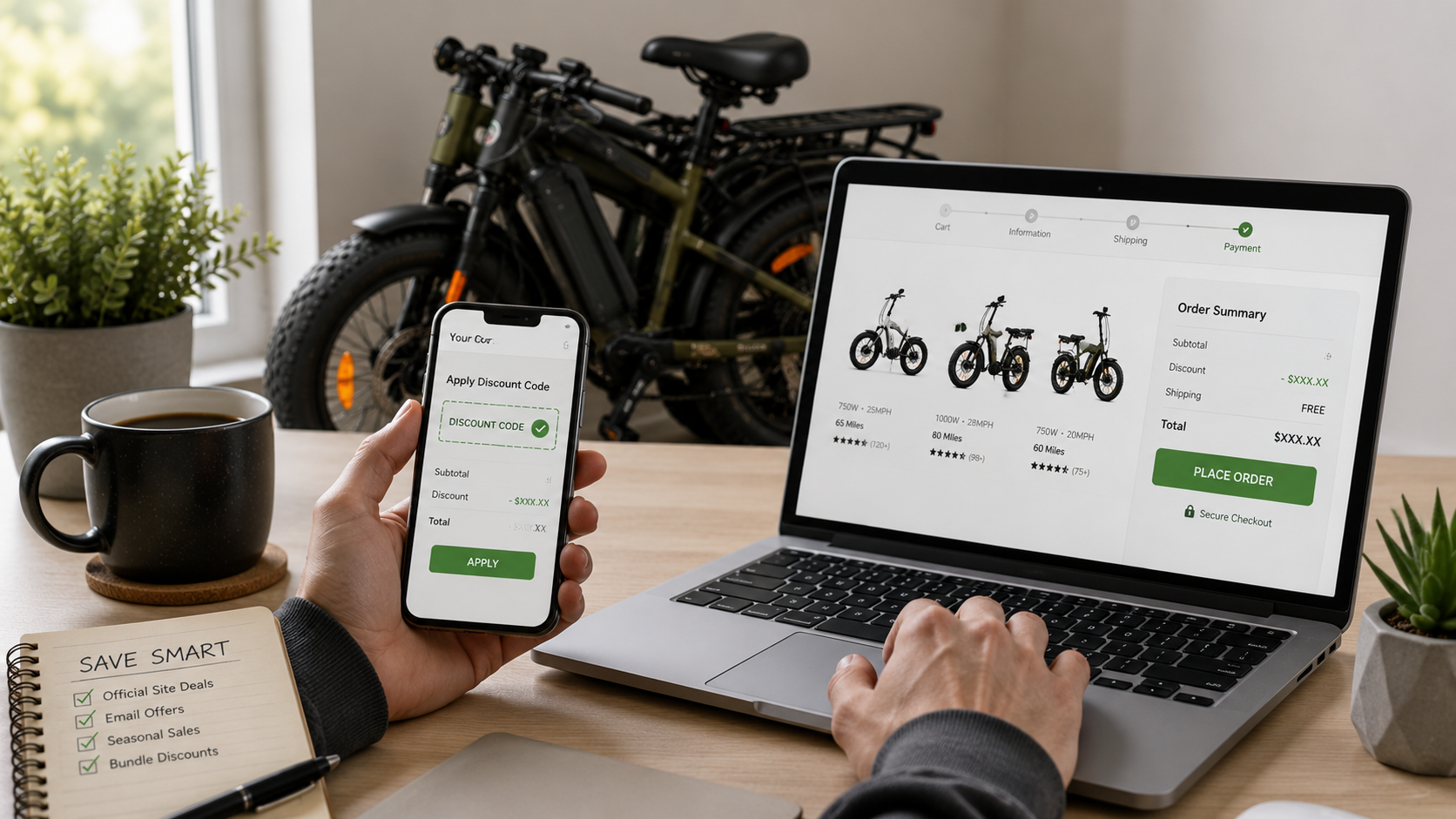
Searching for a discount code before buying an e-bike is a reasonable instinct. E-bikes are a significant purchase, and even a modest percentage off can mean real savings. The tricky part is that discount code searches tend to surface a lot of third-party coupon sites, many listing codes that are expired, unverifiable, or, in some cases, openly labeled as “probably won’t work” by the sites hosting them.
This guide focuses on how Heybike’s discount system is actually structured: where legitimate discounts typically come from, how promotional codes are usually distributed, and what to watch for when a code doesn’t behave the way a coupon site claims it will. Rather than listing a specific code that may already be expired by the time you read this, the goal here is to explain the system well enough that you can evaluate any code, from any source, with confidence.
Direct Answer: How Do Heybike Discount Codes Work?
Heybike typically offers discounts through a few consistent channels: a one-time signup discount for new newsletter subscribers, seasonal sales tied to specific dates, a rewards program that converts points into future discount codes, and occasional verified codes shared through official channels or select affiliate partners. Codes listed on third-party coupon aggregator sites are not guaranteed to be current, since expiration dates and terms change without notice.
The Main Sources of Legitimate Heybike Discounts
Discount codes for any retailer generally come from a small number of consistent sources, and understanding these makes it easier to separate reliable offers from outdated or fabricated ones.
Newsletter Signup Discounts
Many e-bike retailers, including Heybike, offer a one-time discount to new email subscribers as an incentive to join their mailing list. This type of offer is usually applied automatically or sent directly to the subscriber’s email after signing up, which makes it one of the more reliable discount sources since it comes straight from the retailer rather than being copied and redistributed across coupon sites.
Seasonal and Sale-Driven Promotions
Retailers frequently run limited-time sales tied to specific periods, such as major shopping holidays or model-year transitions when older inventory is discounted to make room for updated versions. These sales are usually reflected directly on the retailer’s website rather than requiring a separate code, though some sales do combine a site-wide discount with an additional code for extra savings.
Rewards and Loyalty Programs
Some retailers, including Heybike, operate a points-based rewards program where customers earn points through purchases or account activity, which can later be redeemed for discount codes on future orders. This system tends to reward repeat customers more than first-time buyers, since points accumulate over time.
Special Eligibility Discounts
Certain groups, such as military members, first responders, or students, are sometimes offered dedicated discount programs that require identity verification through a third-party service. These discounts are typically only accessible after completing a verification step directly through the retailer’s website, rather than through a generic code found elsewhere.
Third-Party Coupon Aggregator Sites
Coupon aggregator websites collect and list codes from many sources, including user submissions, expired promotional campaigns, and affiliate partnerships. Some of these codes are current and functional. Others are outdated, restricted to specific products, or were never valid to begin with. Because these sites are updated with varying frequency and reliability, a code appearing on one doesn’t guarantee it will work at checkout.
Why Discount Codes Expire or Fail to Work
Understanding why a code might not work helps avoid unnecessary frustration during checkout, and it isn’t always a sign of a scam or an error.
Time-limited promotions. Many codes are tied to a specific sale window, and once that window closes, the code stops functioning even if it’s still listed on a coupon site that hasn’t been updated.
Product-specific restrictions. Some codes only apply to certain models or categories, such as accessories rather than complete e-bikes, which can make a code appear broken when it’s simply being applied to an ineligible item.
One-time-use limitations. Codes tied to a specific customer, such as a newsletter signup discount, are often restricted to a single use per account or email address, meaning they won’t work for someone who already redeemed a similar offer.
Stacking restrictions. Many retailers only allow one discount code per order, so attempting to combine a percentage-off code with a separate dollar-amount code often results in only one being applied, or an error at checkout.
Regional or currency-specific codes. A code intended for one country’s version of a retailer’s website, such as a Canadian or U.S. storefront, may not carry over to a different regional site.
Step-by-Step: How to Evaluate a Heybike Discount Code Before Trusting It
- Check the source of the code. A code from Heybike’s own website, official email, or verified social account is generally more reliable than one listed anonymously on a coupon aggregator site.
- Look for a stated expiration date. If a coupon site doesn’t list when a code was last verified, treat it with more caution than one with a recent confirmation date.
- Read the terms attached to the code. Confirm whether it applies to the entire order, specific products, or has a minimum purchase requirement.
- Test the code early in checkout. Applying a code before finalizing payment information avoids any surprises if it turns out to be expired or restricted.
- Compare against the current sale price. Sometimes a listed “discount” code offers less savings than an already-active site-wide sale, making the code redundant rather than an additional discount.
- Consider signing up directly for Heybike’s own communications. This tends to be one of the more reliable ways to receive current, verified discount information directly from the source.
Common Mistakes and Misconceptions
Assuming every code listed on a coupon site is current. Many aggregator sites host large numbers of codes without consistently verifying which ones still work, and some explicitly acknowledge this by noting codes “may not work” rather than confirming them as active.
Believing a higher discount percentage is always the better deal. A 20% off code with a low order minimum can sometimes save less than a smaller flat-dollar discount on a higher-priced item, so it’s worth calculating the actual savings rather than comparing percentages directly.
Assuming discount codes can always be combined. Most retailers, including e-bike companies, generally restrict orders to a single discount code, so stacking multiple codes typically doesn’t work even if each one is individually valid.
Overlooking that sale prices and discount codes sometimes overlap. A product already marked down through a site-wide sale may not see additional savings from a separate code, since some codes are excluded from sale-priced items.
Assuming special eligibility discounts, like military or first responder offers, apply automatically. These typically require a verification step through a third-party service before the discount becomes accessible, rather than being available through a simple code alone.
Real-World Examples
A first-time buyer signing up for a newsletter. Someone shopping for their first e-bike might receive an automatic welcome discount after subscribing, which tends to be more reliably valid than searching third-party sites for a matching code.
A returning customer redeeming rewards points. A rider who purchased accessories or a second e-bike over time might accumulate enough loyalty points to redeem a discount code directly through their account, rather than relying on an external coupon site.
A shopper comparing a coupon code against a current sale. Someone finds a 10% off code online, but discovers the bike they want is already part of a site-wide sale that excludes additional codes, meaning the sale price alone offers more savings than trying to apply the code.
Benefits and Limitations
Benefits of Understanding How Discounts Work
- Helps avoid wasted time attempting expired or invalid codes at checkout
- Makes it easier to identify genuinely valuable offers versus redundant ones
- Reduces the chance of missing a better sale price by focusing only on a specific code
- Supports more informed comparison between reward-based and time-limited discounts
Limitations to Keep in Mind
- Discount availability changes frequently and isn’t guaranteed at any given time
- Coupon aggregator sites vary significantly in how often they verify listed codes
- Some discounts, like rewards points, require existing purchase history to access
- Special eligibility discounts require verification steps that add time to the shopping process
Key Facts
- Newsletter signup discounts are typically one-time offers tied to a new subscriber’s email address.
- Rewards programs generally convert accumulated points into discount codes for future purchases.
- Special eligibility discounts, such as military or first responder offers, usually require third-party identity verification.
- Most retailers restrict orders to a single discount code, limiting the ability to stack multiple offers.
- Codes listed on third-party coupon sites aren’t guaranteed to be current, since verification frequency varies by site.
- Sale-priced items are sometimes excluded from additional discount codes, depending on the retailer’s specific terms.
Frequently Asked Questions
What is a Heybike discount code?
It’s a promotional code, typically offering a percentage or flat-dollar discount, that can be applied at checkout on Heybike’s website, usually sourced from newsletter signups, seasonal sales, rewards programs, or special eligibility offers.
How do Heybike discount codes work?
Codes are generally entered in a designated field during checkout, applying a discount to the order total before payment. Most codes come with specific terms, such as expiration dates, product restrictions, or minimum purchase requirements.
Why do some Heybike discount codes not work?
Common reasons include expired promotional windows, product-specific restrictions, one-time-use limitations tied to a specific account, or attempts to combine multiple codes when only one is allowed per order.
Is it safe to use third-party coupon sites for Heybike discounts?
Using a coupon code itself is generally safe, since applying it simply adjusts the order total on the retailer’s own checkout page. The main risk is relying on outdated information, since not all third-party sites verify their listed codes regularly.
Are Heybike discount codes the same across all regions?
Not necessarily. Codes tied to a specific country’s storefront, such as a U.S. or Canadian site, may not work on a different regional version of Heybike’s website.
What are the alternatives to searching for a discount code?
Signing up directly for Heybike’s newsletter, checking the official website’s sale section, or joining a rewards program are generally more reliable ways to access current discounts than searching third-party coupon aggregator sites.
What should someone know before using a Heybike discount code?
It helps to confirm the code’s source, check whether it applies to the specific product being purchased, verify it hasn’t expired, and compare it against any existing sale price to make sure it actually adds additional savings.
Key Takeaways
- Legitimate Heybike discounts typically come from newsletter signups, seasonal sales, rewards programs, or special eligibility offers.
- Third-party coupon aggregator sites vary in reliability, and not all listed codes are current or verified.
- Most orders can only use one discount code at a time, so stacking multiple codes usually isn’t possible.
- Sale-priced items are sometimes excluded from additional discount codes, depending on specific terms.
- Signing up directly through Heybike’s own channels tends to be the most reliable way to receive current discount information.
Conclusion
Finding a working Heybike discount code comes down to understanding where legitimate offers actually originate and being able to evaluate a code’s terms before assuming it will apply cleanly at checkout. Newsletter signups, rewards programs, and official seasonal sales tend to be more reliable than codes pulled from unverified aggregator sites. Taking a few extra minutes to check a code’s source and terms, rather than assuming any listed discount is current, makes for a smoother and more informed purchase.
Introduction
Most e-bikes in this price range use hub motors, which sit inside a wheel and drive it directly. Mid-drive motors work differently, and they’re usually reserved for higher-end bikes. When a bike advertises a mid-drive system at a mid-range price, it tends to raise a specific question: does it actually perform like a mid-drive bike should, or is it a downgraded version of the real thing?
That’s the core question behind the Alpha e bike, Heybike’s mid-drive all-terrain model. It’s worth noting upfront that “Alpha” is a name used by a few different e-bike makers, including Vvolt and Murf, each with unrelated models. This guide focuses specifically on the Heybike Alpha, covering how its mid-drive motor works, what the rest of the build offers, and where its trade-offs show up.
Direct Answer: What Is the Alpha E Bike?
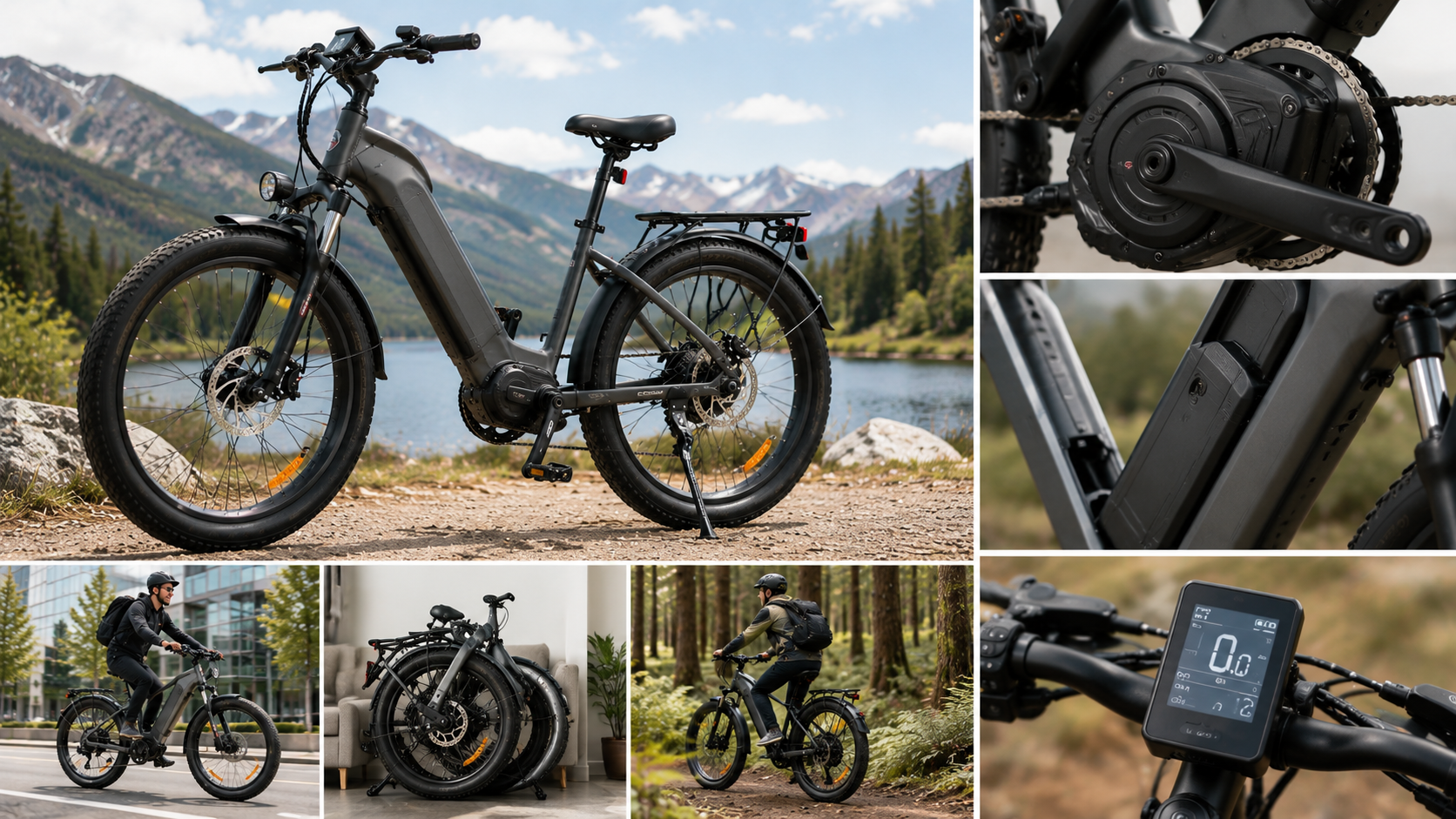
The Alpha e bike, made by Heybike, is a Class 3 all-terrain electric bike built around a 500W Mivice mid-drive motor delivering 105Nm of torque through an integrated torque and cadence sensor. It uses a 680Wh UL2271-certified battery, 26 x 4 inch fat tires, a Shimano 8-speed drivetrain, and hydraulic disc brakes. It’s available in step-through and step-over frame styles and includes a rear rack and fenders.
Why the Motor Type Is the Alpha’s Defining Feature
Most fat tire e-bikes in this price range use rear-hub motors, which spin the wheel directly and are generally cheaper to produce. The Alpha e bike instead uses a mid-drive motor, positioned near the pedals and driving the chain rather than the wheel. This is a meaningful design choice, not just a spec sheet difference.
Mid-drive motors typically offer a few practical advantages. They place weight lower and more centrally on the frame, which improves balance, particularly on uneven terrain. They also work through the bike’s existing gears, meaning the motor’s effective torque changes depending on which gear is selected, similar to how a car’s engine torque translates differently depending on gear ratio. This generally makes mid-drive systems more efficient on steep climbs compared to hub motors, which apply constant torque regardless of gearing.
Key Specifications
- Motor: 500W Mivice mid-drive motor with integrated torque and cadence sensor
- Torque: 105 N·m
- Top speed: Class 3 rated, consistent with a 28 mph pedal-assist maximum
- Battery: 680Wh, UL2271-certified, removable lithium-ion
- Tires: 26 x 4 inch fat tires
- Gearing: Shimano 8-speed drivetrain
- Brakes: Hydraulic disc brakes
- Frame: 6061 aluminum alloy, available in step-through and step-over styles
- Included accessories: Rear rack and fenders
- Lighting: LED headlight with auto-on feature, integrated taillight with brake light function
- Weight capacity: Up to 400 pounds combined rider and cargo weight
- Safety certification: Meets UL 2849 standards for the complete e-bike, with a UL 2271-certified battery
How the Torque and Cadence Sensor Changes the Ride
A torque and cadence sensor is a specific type of pedal assist technology, and it’s part of why mid-drive systems like the one on the Alpha e bike tend to feel more natural than basic cadence-only systems.
A cadence sensor alone detects whether the pedals are turning and applies a preset amount of assist based on that. A torque sensor goes further, measuring how hard the rider is actually pushing on the pedals and adjusting motor output to match. Combining both allows the Alpha’s motor to respond proportionally to effort, delivering more assist when the rider pushes harder, such as on a climb, and less when cruising on flat ground. This tends to reduce the lag some hub-motor systems experience, where assist kicks in abruptly a pedal stroke or two after starting.
Battery Safety and Capacity
The Alpha e bike’s 680Wh battery sits on the larger end for this bike category, and its UL2271 certification is worth understanding rather than skipping past. UL 2271 is a safety standard specifically for lithium-ion battery systems used in light electric vehicles, covering things like short-circuit protection, thermal stability, and charging safety. A battery meeting this standard has been independently tested against a defined set of safety criteria, which matters given ongoing concerns across the e-bike industry about battery fires from lower-quality, uncertified components.
The complete Alpha e bike also meets UL 2849 certification, a broader standard covering the electrical system of the entire bike, not just the battery. Together, these certifications indicate the bike has been tested against recognized safety benchmarks, though it’s worth noting that certification reflects a testing standard, not a guarantee against all possible issues over the bike’s lifespan.
Why the Throttle Behaves Differently on the Alpha
Unlike many e-bikes where the throttle provides power immediately from a standstill, the Alpha e bike’s throttle is designed to prevent immediate full power at start. This is a deliberate safety measure rather than a performance limitation. Instant, full-power throttle response from a stop can cause unexpected acceleration, particularly for less experienced riders, and some mid-drive systems introduce a brief ramp-up period to reduce that risk. Riders accustomed to hub-motor throttles that respond instantly may notice this difference immediately, so it’s worth expecting rather than being surprised by it.
Step-by-Step: What to Check Before Riding a Mid-Drive E-Bike Like the Alpha
Mid-drive systems interact with the drivetrain differently than hub motors, so a slightly different pre-ride check makes sense.
- Check gear selection before starting from a stop. Since the motor works through the chain and gears, starting in too high a gear can make the initial push feel harder than expected.
- Confirm the battery is securely locked in place. A removable battery needs to be fully seated to maintain a stable electrical connection.
- Test the pedal assist response at low effort. Since the system uses a torque sensor, applying light pressure should produce a proportionally lighter assist response.
- Inspect chain tension and drivetrain condition. Mid-drive motors put additional strain on the chain and cassette compared to hub-motor systems, so more frequent drivetrain checks are worthwhile.
- Verify tire pressure for the terrain planned. Lower pressure improves traction on sand or dirt, while higher pressure suits paved commuting.
Common Mistakes and Misconceptions
Assuming all fat tire e-bikes with mid-drive motors perform identically. Torque figures, sensor type, and motor brand vary between manufacturers. The Alpha’s 105Nm figure and torque-and-cadence sensor combination are specific to this model and shouldn’t be assumed to match other mid-drive bikes at a glance.
Expecting instant throttle response from a stop. The Alpha’s throttle is intentionally limited at start for safety reasons. This is a design choice, not a malfunction, though it can catch new riders off guard if they’re used to hub-motor throttles.
Overlooking drivetrain wear from mid-drive use. Because the motor drives the chain directly, mid-drive systems generally put more strain on the chain and cassette than hub motors do, which can mean more frequent replacement of these wear items over time.
Assuming UL certification means no maintenance is needed. UL 2271 and UL 2849 certification reflect safety testing standards, not exemption from normal battery care, such as avoiding extreme temperatures during storage or charging.
Confusing this Alpha with unrelated “Alpha” e-bikes from other brands. Vvolt and Murf both sell e-bikes under the same name, with entirely different motors, frames, and price points. Specs and reviews for those models don’t apply to the Heybike Alpha.
Real-World Examples
A rider climbing consistent hills on a daily commute. Someone dealing with steep grades benefits from the way a mid-drive motor’s torque changes with gear selection, generally offering better climbing efficiency than a fixed-torque hub motor in the same situation.
A new e-bike rider adjusting to throttle behavior. Someone switching from a hub-motor e-bike to the Alpha may need a short adjustment period to get used to the throttle’s gradual power delivery from a stop, rather than the instant response common on hub-motor throttles.
A rider prioritizing battery safety for indoor storage. Someone charging their e-bike battery indoors, such as in an apartment, may specifically look for UL-certified batteries like the Alpha’s, given the added assurance from third-party safety testing.
Benefits and Limitations
Benefits
- Mid-drive motor with torque and cadence sensing offers proportional, natural-feeling assist
- 105Nm torque figure supports strong hill-climbing performance
- UL 2271 and UL 2849 certifications provide independently tested safety standards
- Large 680Wh battery supports longer rides between charges
- Included rear rack and fenders add practical value without extra purchases
Limitations
- Mid-drive systems generally require more frequent drivetrain maintenance than hub motors
- Throttle response is intentionally limited at start, which may feel different from other e-bikes
- Higher price point than comparable hub-motor fat tire e-bikes
- Assembly has been reported as more involved than some other models, making professional setup worth considering
Key Facts
- The Alpha e bike uses a 500W Mivice mid-drive motor with 105 N·m of torque.
- Its 680Wh battery is UL 2271-certified, and the complete bike meets UL 2849 safety standards.
- It’s a Class 3 e-bike with 26 x 4 inch fat tires and a Shimano 8-speed drivetrain.
- The frame is available in step-through and step-over styles, both made from 6061 aluminum alloy.
- Weight capacity is rated up to 400 pounds combined rider and cargo weight.
- The throttle is intentionally limited at start as a built-in safety measure.
Frequently Asked Questions
What is the Alpha e bike?
The Alpha e bike is Heybike’s mid-drive all-terrain electric bike, built with a 500W motor, 105Nm of torque, a 680Wh UL-certified battery, and fat tires designed for both commuting and mixed-terrain riding.
How does the Alpha’s mid-drive motor work?
It uses a torque and cadence sensor to measure how hard the rider is pedaling and adjusts motor assist proportionally, driving the bike’s chain through its gears rather than spinning the wheel directly like a hub motor.
Why is a mid-drive motor different from a hub motor?
Mid-drive motors work through the bike’s gearing, which generally improves hill-climbing efficiency and balance, since the motor’s weight sits lower and more centrally on the frame compared to a hub motor’s wheel-based position.
Is the Alpha e bike safe?
Its battery is UL 2271-certified and the complete bike meets UL 2849 safety standards, both of which are independent testing benchmarks for electric vehicle safety. As with any e-bike, safe use also depends on proper maintenance and following manufacturer guidelines.
Is the Alpha e bike legal to ride on bike paths?
As a Class 3 e-bike, its top speed capability may place it under stricter access rules in some regions, since many areas classify e-bikes by motor wattage and top speed. Checking local regulations is worthwhile before assuming unrestricted access.
What are the alternatives to the Alpha e bike?
Alternatives include hub-motor fat tire e-bikes, which are generally less expensive but offer different power delivery characteristics, as well as other mid-drive e-bikes from different manufacturers, which vary in torque output, sensor type, and price.
What should someone know before buying the Alpha e bike?
Buyers should understand that the throttle is intentionally limited at start for safety, that mid-drive systems typically need more frequent drivetrain maintenance than hub-motor bikes, and that “Alpha” is a name shared with unrelated e-bikes from other brands, so specs should be confirmed against the Heybike model specifically.
Key Takeaways
- The Alpha e bike uses a mid-drive motor with a torque and cadence sensor, offering proportional assist rather than fixed cadence-based power.
- Its 105Nm torque figure and gear-dependent power delivery support strong hill-climbing performance.
- UL 2271 and UL 2849 certifications reflect independently tested safety standards for the battery and full bike system.
- The throttle’s intentional start-up limitation is a safety feature, not a malfunction.
- Mid-drive systems generally require more attention to drivetrain maintenance than hub-motor e-bikes.
Conclusion
The Alpha e bike is built around a specific design choice: a mid-drive motor with torque-based assist in a fat tire, all-terrain frame. That choice brings real advantages in hill-climbing performance and ride balance, along with trade-offs like more involved drivetrain maintenance and a throttle that behaves differently than hub-motor systems riders may be used to. Understanding how the motor, sensor system, and battery certification work together gives a clearer picture of whether the Alpha e bike fits the kind of riding someone actually plans to do.
Introduction
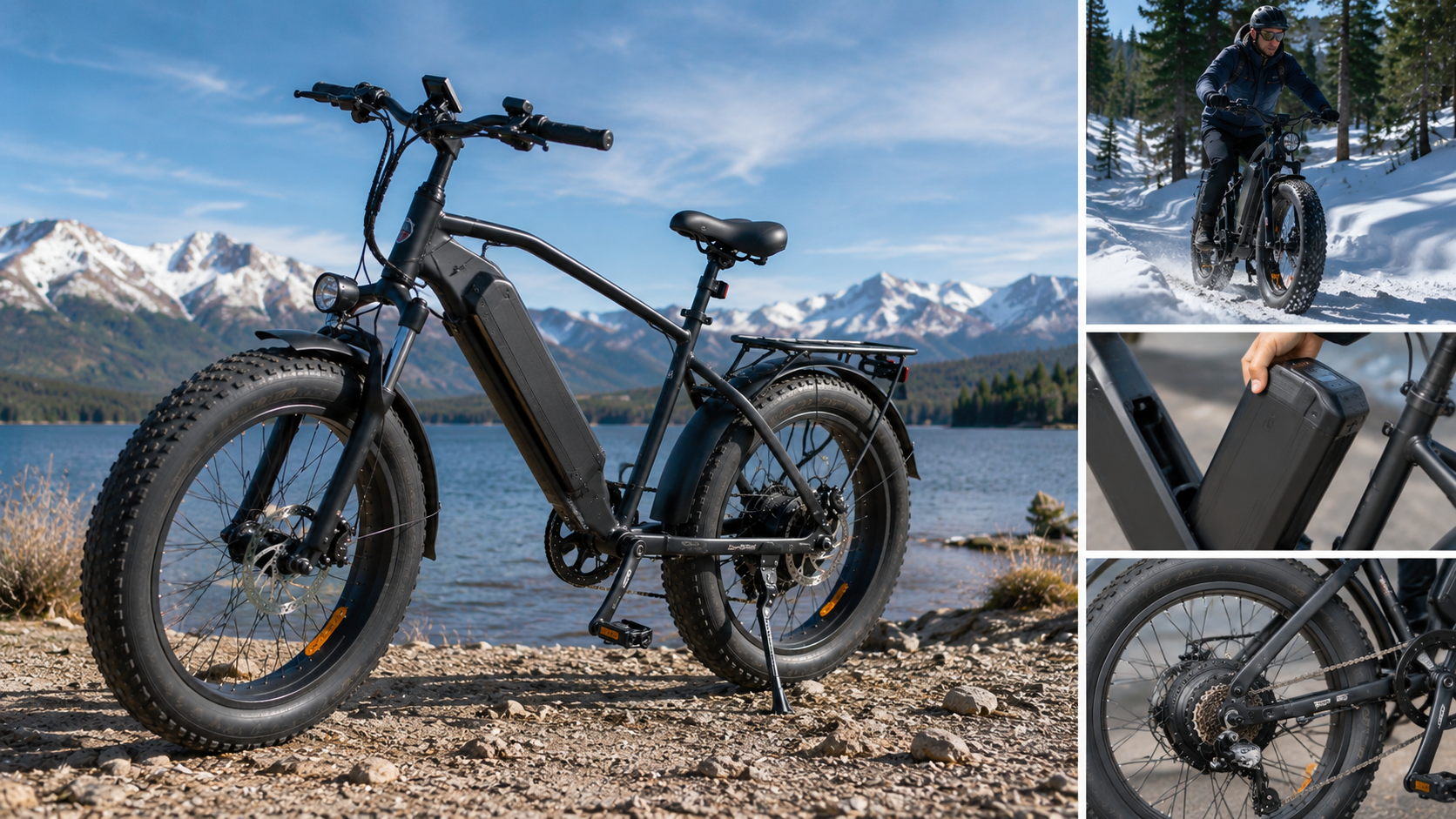
Standard bike tires do fine on pavement, but they struggle the moment the surface changes to sand, mud, snow, or loose gravel. That’s the problem a fat tire ebike is designed to solve, and it’s usually why people start researching them in the first place, whether they live somewhere with harsh winters, ride near the coast, or just want a bike that won’t get stuck on unpredictable terrain.
This guide explains what separates a fat tire ebike from a standard electric bike, how the wider tires actually change performance, and what trade-offs come with that extra width. Whether you’re comparing models or just trying to understand the category, this covers the practical details that matter before buying one.
Direct Answer: What Is a Fat Tire Ebike?
A fat tire ebike is an electric bicycle equipped with oversized tires, typically 3.8 to 5 inches wide, compared to the 1.5 to 2.5 inches common on standard bikes. The wider tires increase surface contact and stability on sand, snow, mud, and gravel. Combined with a battery-powered motor, fat tire ebikes are used for commuting, off-road riding, and all-terrain travel where standard tires would lose traction or sink.
What Makes a Tire “Fat” and Why It Matters
Tire width is measured in inches, and the difference between a standard bike tire and a fat tire is significant. A typical road or hybrid bike tire measures around 1.5 to 2.5 inches wide. A fat tire ebike usually starts around 3.8 inches and can reach up to 5 inches, nearly double the width in some cases.
That extra width changes how the tire interacts with the ground in a few specific ways. Wider tires spread the bike’s weight over a larger contact area, which reduces the pressure applied to any single point of the surface. On soft ground like sand or snow, this lower ground pressure is what keeps the tire from sinking in, similar to how snowshoes work by distributing a person’s weight across a wider area. On firmer terrain, the wider footprint also improves grip, since more rubber is in contact with the ground at any given moment.
Fat tires are usually run at lower air pressure than standard bike tires, often between 5 and 15 PSI compared to 40 to 80 PSI on road tires. Lower pressure allows the tire to flex and absorb bumps, which adds a cushioning effect similar to suspension, even on bikes that don’t have dedicated suspension components.
How a Fat Tire Ebike Works
A fat tire ebike combines two systems: the electric drivetrain and the tire and frame setup built to handle wider rubber.
The Motor and Battery
Like other ebikes, a fat tire ebike uses a battery-powered motor to assist pedaling or, on throttle-equipped models, move the bike without pedaling at all. Motors are typically located in the rear wheel hub, front wheel hub, or at the bottom bracket in mid-drive systems. Because fat tire ebikes are often heavier than standard ebikes, due to reinforced frames and larger tires, they frequently use motors in the 500W to 750W range, with some off-road models reaching higher peak outputs to handle the added rolling resistance that wide tires create.
The Frame and Fork
Frames built for fat tires need wider clearance around the fork and rear stays to accommodate the tire’s width without rubbing. This is a structural difference, not just a cosmetic one. A standard bike frame can’t simply be fitted with fat tires without modification, which is why fat tire ebikes are built from the ground up with this clearance in mind.
Suspension, If Included
Some fat tire ebikes include front suspension forks or full suspension, though many rely on the tire’s own low-pressure cushioning instead. This is a meaningful design choice: a bike without suspension components can still ride comfortably over moderate bumps because the tire itself absorbs much of the impact, though it won’t match a suspension fork’s performance on larger obstacles like roots or rocks.
Why People Choose a Fat Tire Ebike
The reasons vary, but a few practical situations come up consistently among riders.
Riding on sand or snow. Beach communities and areas with heavy snowfall are common places where fat tire ebikes are popular, since standard tires tend to sink or lose traction in both conditions.
Riding on unpaved or inconsistent terrain. Gravel paths, dirt trails, and rural roads without consistent pavement all benefit from the added stability and shock absorption a fat tire ebike provides.
Wanting a more stable ride overall. Some riders choose a fat tire ebike simply because the wider tires feel more stable and confidence-inspiring at low speeds or when starting and stopping, which matters for less experienced riders or those returning to cycling after time away.
Riding in cold or wet climates. Wider tires with more surface area can provide better traction on wet pavement and light snow, making a fat tire ebike a practical choice for riders who need reliable transportation through changing seasons.
Step-by-Step: What to Check When Evaluating a Fat Tire Ebike
For anyone comparing models, a consistent checklist helps make the differences clearer.
- Check tire width and material. Confirm the exact width, usually listed as a fraction like “26 x 4.0,” and look for puncture-resistant construction if off-road riding is planned.
- Review motor wattage and torque. Higher torque figures generally translate to better hill-climbing and acceleration, which matters more on a heavier fat tire ebike than on lighter standard models.
- Check battery capacity and estimated range. Battery size is measured in watt-hours, and larger batteries generally support longer range, though real-world results depend on terrain and riding style.
- Confirm suspension type, if any. Decide whether tire cushioning alone is sufficient, or whether a suspension fork is needed for the terrain being ridden.
- Check total bike weight and payload capacity. Fat tire ebikes are typically heavier than standard ebikes, which affects portability, and payload capacity determines whether the bike can support a specific rider weight plus cargo.
- Review brake type. Hydraulic disc brakes generally offer more consistent stopping power than mechanical disc brakes, particularly in wet or muddy conditions common with off-road riding.
Common Mistakes and Misconceptions
Assuming fat tires are only for off-road riding. While fat tire ebikes perform well off-road, many riders use them exclusively on pavement for the added stability and comfort, particularly in urban commuting or casual riding.
Believing wider tires always mean a slower bike. Rolling resistance is higher with fat tires, which can affect top-end efficiency, but a sufficiently powerful motor largely offsets this in practice, especially at the speeds most ebike riders maintain.
Overinflating fat tires. Riders accustomed to standard bike tire pressures sometimes overinflate fat tires, which reduces the cushioning effect and traction benefits that make them useful on soft or uneven terrain in the first place.
Assuming all fat tire ebikes are equally capable off-road. Motor power, suspension, tire tread pattern, and frame geometry all vary between models. A fat tire ebike designed primarily for commuting may struggle on terrain that a purpose-built off-road model handles easily.
Ignoring local ebike classification rules. Motor wattage and top speed determine how an ebike is classified in many regions, which affects where it can legally be ridden. This applies to fat tire ebikes just as much as any other electric bike, regardless of tire size.
Real-World Examples
A beach town commuter. Someone riding along sandy paths near the coast relies on a fat tire ebike’s wide tires to avoid sinking into soft sand, something a standard road or hybrid bike tire would struggle with.
A rural resident on unpaved roads. A rider commuting on gravel or dirt roads without consistent pavement benefits from the added grip and shock absorption fat tires provide, reducing fatigue on longer rides.
A winter commuter. Someone riding through light snow or icy patches often chooses a fat tire ebike for the extra traction and stability the wider tires offer compared to standard tires in the same conditions.
Benefits and Limitations
Benefits
- Increased stability and traction on sand, snow, mud, and gravel
- Lower tire pressure absorbs bumps, adding comfort even without suspension
- Wider contact area improves grip on both loose and firm surfaces
- Generally well-suited to riders who want confidence at lower speeds
- Versatile enough for both paved commuting and light off-road use
Limitations
- Heavier overall than standard ebikes, due to reinforced frames and larger tires
- Higher rolling resistance can reduce efficiency and range slightly
- Wider tires may not fit on all bike racks or in some storage spaces
- Replacement tires and tubes are typically more expensive than standard sizes
- Not all models are equally capable off-road, despite similar tire width
Key Facts
- Fat tire ebikes typically use tires between 3.8 and 5 inches wide, compared to 1.5 to 2.5 inches on standard bikes.
- Tire pressure on fat tire ebikes usually runs between 5 and 15 PSI, much lower than standard bike tire pressure.
- Motors on fat tire ebikes commonly range from 500W to 750W, with some off-road models reaching higher peak outputs.
- The wider tire footprint reduces ground pressure, which helps prevent sinking on soft surfaces like sand or snow.
- Fat tire ebikes are generally heavier than standard ebikes due to reinforced frames and larger wheels.
- Local ebike classification laws apply to fat tire ebikes based on motor wattage and speed, not tire size.
Frequently Asked Questions
What is a fat tire ebike?
A fat tire ebike is an electric bicycle with oversized tires, usually 3.8 to 5 inches wide, designed to improve stability and traction on sand, snow, mud, and uneven terrain, combined with a battery-powered motor for pedal assistance or throttle control.
How does a fat tire ebike work?
It combines a wide, low-pressure tire that increases surface contact and reduces ground pressure with an electric motor and battery system that assists pedaling, allowing the bike to handle terrain that would be difficult on standard tires.
Why do people choose a fat tire ebike
Riders choose fat tire ebikes for added stability on soft or uneven terrain, better traction in snow or sand, and the comfort that comes from lower tire pressure absorbing bumps, even on models without dedicated suspension.
Is a fat tire ebike safe to ride?
Fat tire ebikes are generally considered stable due to their wide tires and lower center of gravity, though safety also depends on proper tire pressure, regular maintenance, and choosing a model with adequate braking power for the intended terrain.
Is a fat tire ebike legal to ride everywhere?
This depends on local regulations, which typically classify ebikes by motor wattage and top speed rather than tire width. It’s worth checking local rules before assuming a fat tire ebike can be ridden on all bike paths, sidewalks, or trails.
What are the alternatives to a fat tire ebike?
Alternatives include standard tire ebikes, which are lighter and more efficient on pavement but less capable on soft terrain, and non-electric fat tire bikes, which offer similar traction benefits without motor assistance.
What should someone know before buying a fat tire ebike?
Buyers should understand that fat tire ebikes are heavier than standard models, that tire pressure needs to stay lower than typical bike tires to get the full traction and comfort benefits, and that off-road capability still depends heavily on motor power, suspension, and frame design, not tire width alone.
Key Takeaways
- A fat tire ebike uses wide, low-pressure tires to improve stability and traction on sand, snow, mud, and uneven terrain.
- The wider footprint reduces ground pressure, which helps prevent sinking on soft surfaces.
- Motor power, suspension, and frame design still matter as much as tire width when evaluating off-road capability.
- Fat tire ebikes are generally heavier than standard ebikes, which affects portability and storage.
- Local ebike classification laws apply based on motor wattage and speed, not tire size.
Conclusion
A fat tire ebike solves a specific problem: getting stable, confident traction on terrain where standard bike tires struggle. The wider tires and lower pressure change how the bike handles sand, snow, and uneven ground, while also adding some comfort benefits even on paved roads. Understanding how tire width interacts with motor power, suspension, and frame design makes it easier to judge whether a particular fat tire ebike fits the terrain and riding style someone actually plans to use it for.
-
 E-Bike News4 weeks ago
What Is a Bike Stand? A Complete Guide to Types, Uses, and How to Choose One
-
 E-Bike News4 weeks ago
What Is an Elliptical Bike? A Complete Guide to How It Works, Benefits, and What to Know Before You Try One
-

 E-Bike News3 weeks ago
What Is a Beach Cruiser? A Complete Guide to Comfort Bikes for Easy Riding
-
 E-Bike Technology3 weeks ago
Pocket Rocket Folding Road Bikes: What They Are and How They Work
-
 E-Bike News4 weeks ago
Electric Commuter Bike: What It Is and How to Choose the Right One
-

 E-Bike News2 weeks ago
Sleeping on a Bike: Why It Happens and How to Stay Safe While Riding
-
 E-Bike News3 weeks ago
Types of Bikes: A Complete Guide to Choosing the Right One
-
 E-Bike Technology4 weeks ago
What Is a Sirrus Bike? A Complete Guide to the Specialized Sirrus Line