
E-Bike Technology
Electric Bicycle: What It Is, How It Works, and What To Know Before You Ride One

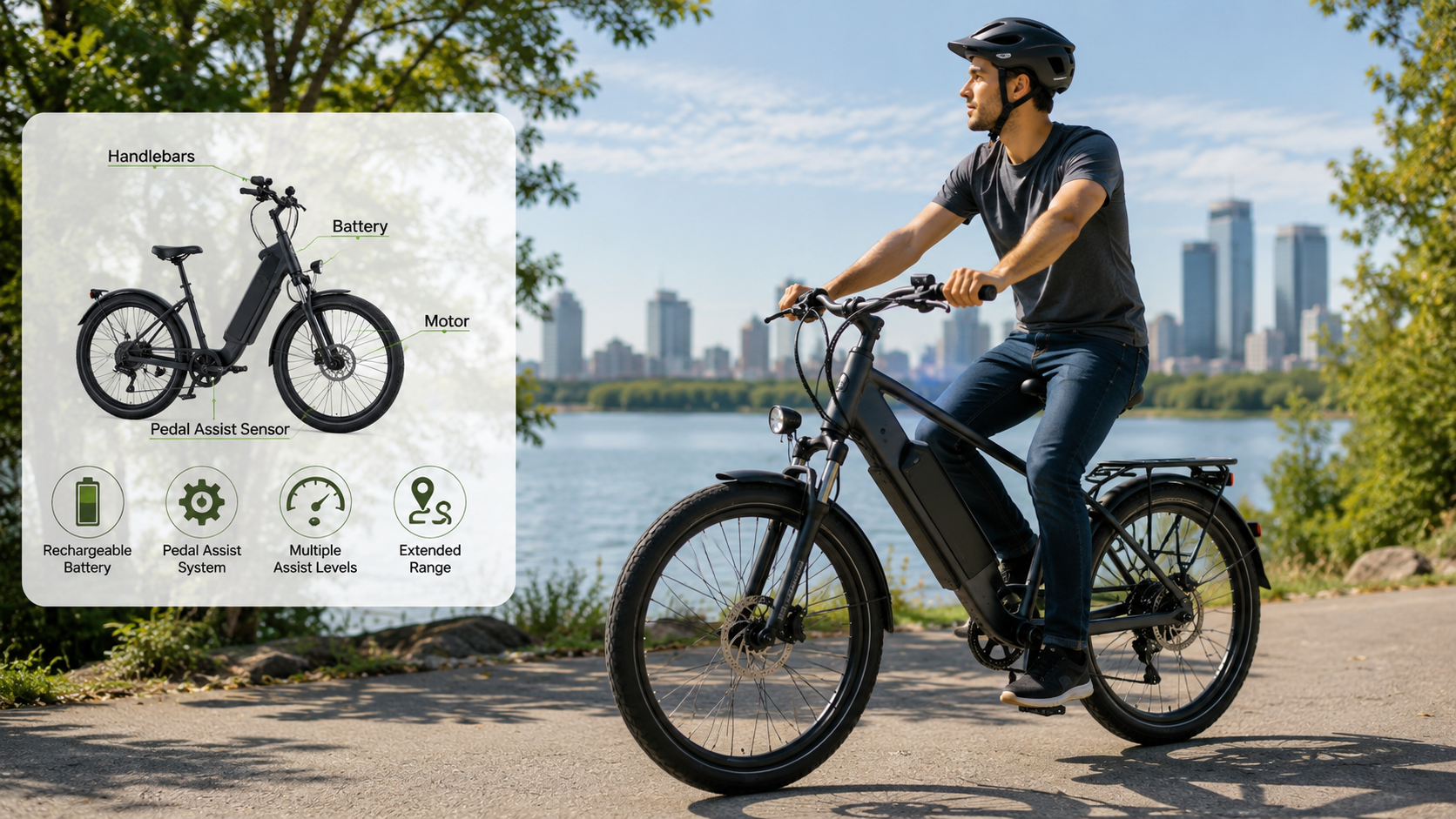
Why So Many People Are Asking About Electric Bicycles
Walk down almost any city street or bike path today and you’ll spot one within minutes: a rider cruising past traffic, barely breaking a sweat, or a parent hauling two kids up a hill that would otherwise stop most cyclists cold. The electric bicycle has moved from niche curiosity to mainstream transportation faster than almost any other consumer vehicle in recent memory.
That popularity brings a lot of questions along with it. How is an electric bicycle different from a regular bike or a moped? Do you need a license to ride one? Is it actually safe, and is it legal where you live? This guide answers those questions directly, walks through how the technology works, and covers what to consider before buying one.
Direct Answer: What Is An Electric Bicycle?
An electric bicycle, often called an e-bike, is a bicycle equipped with a battery-powered motor that assists pedaling or, in some cases, propels the bike on its own. Most models retain pedals, gears, and a standard bicycle frame, but add a motor, battery, and controller that reduce the physical effort needed to ride, especially on hills or over long distances. Electric bicycles are classified into three main types based on speed and how the motor engages.
What Makes A Bicycle “Electric”
At its core, an electric bicycle is still a bicycle. It has two wheels, a frame, a chain or belt drive, and pedals. What sets it apart is a small set of added components:
- A motor, usually mounted in the front hub, rear hub, or at the crank (mid-drive)
- A battery, typically lithium-ion, mounted on the frame or rack
- A controller, which manages how much power the motor delivers
- Sensors, which detect either pedaling motion (cadence sensors) or pedaling force (torque sensors)
When you pedal, the sensor tells the controller how much assistance to add, and the motor supplies extra power to the drivetrain or wheel. The result is that the same amount of effort that used to get you up a hill at 8 mph might now get you up at 14 mph, because the motor is doing part of the work.
How Electric Bicycle Classes Work
In the United States, most states follow a three-class system that defines what an electric bicycle legally is and where it can be ridden. Understanding these classes matters because they determine whether you need a license, whether you can ride on bike paths, and what age restrictions apply.
Class 1
A Class 1 electric bicycle provides pedal-assist only, meaning the motor only activates while you’re pedaling, and it cuts off once you reach 20 mph. There’s no throttle. This is the class most commonly allowed on shared bike paths and multi-use trails, since its behavior is closest to a traditional bicycle.
Class 2
A Class 2 electric bicycle includes a throttle that can propel the bike without pedaling at all, still capped at 20 mph. This added convenience means some trails and paths that allow Class 1 bikes restrict or exclude Class 2 models, since the throttle changes how the bike behaves in shared spaces.
Class 3
A Class 3 electric bicycle offers pedal assist up to 28 mph and typically requires a speedometer. Because of the higher speed, Class 3 bikes are often restricted from multi-use paths and limited to roads or bike lanes, and some states set a minimum rider age, commonly 16, for this class.
Laws vary by state and country, so it’s worth checking local regulations before assuming your electric bicycle can be ridden wherever a regular bicycle can.
Why Electric Bicycles Have Become So Popular
Several practical factors explain the rise of the electric bicycle, beyond just convenience.
Commuting distance and effort. A motor extends the practical range of a daily commute. A ride that would leave someone sweaty and exhausted on a standard bike becomes manageable on an electric bicycle, which opens up biking as a commute option for more people.
Hills and headwinds. Terrain and weather are the two biggest reasons people give up on cycling. An electric bicycle flattens hills and cuts through wind resistance in a way that keeps riders from getting discouraged mid-ride.
Cargo and family use. Cargo electric bicycles, built with longer frames and higher weight capacities, have become a genuine car-replacement option for parents doing school runs or grocery trips, since the motor compensates for the added weight of kids or gear.
Lower cost than a car. Compared to car ownership, maintenance, and fuel or charging, an electric bicycle costs a fraction to buy and operate, which matters for short urban trips especially.
How To Choose An Electric Bicycle: A Step-by-Step Approach
Step 1: Identify Your Primary Use
Commuting, off-road trail riding, cargo hauling, and casual recreational riding call for different frame designs, tire widths, and motor placements. Deciding this first narrows the field considerably.
Step 2: Check Local Class Restrictions
Before choosing a Class 2 or Class 3 electric bicycle, confirm that the paths, trails, or bike lanes you plan to use actually allow that class. This avoids buying a bike you can’t legally ride where you intended.
Step 3: Consider Motor Placement
Hub motors are generally simpler and cheaper, while mid-drive motors (mounted at the pedals) tend to offer better weight balance and more natural power delivery, particularly on hills. Mid-drive systems are common on higher-end electric bicycles.
Step 4: Evaluate Battery Range And Removability
Range depends on battery capacity, terrain, rider weight, and assist level used. A removable battery makes charging more convenient, especially for apartment dwellers without garage access.
Step 5: Test Ride Before Buying
Weight distribution, throttle or pedal-assist responsiveness, and frame geometry all feel different across brands. A test ride reveals things a spec sheet can’t.
Common Mistakes And Misconceptions About Electric Bicycles
Assuming an electric bicycle requires no pedaling. Only Class 2 and some hybrid electric bicycles include a throttle for motor-only propulsion. Class 1 bikes require pedaling for the motor to engage at all.
Believing all electric bicycles are legally the same as mopeds. In most jurisdictions, an electric bicycle that fits within the three-class speed and power limits is legally distinct from a moped or motorcycle and doesn’t require registration, insurance, or a license. Bikes that exceed those limits may fall under different vehicle categories entirely.
Thinking of a bigger battery always means a better bike. Battery capacity affects range, but weight, motor efficiency, and how the assist levels are tuned matter just as much for real-world performance.
Assuming maintenance is the same as a regular bicycle. An electric bicycle has additional components, like the battery and controller, that need their own care, including proper charging habits and occasional professional inspection of the electrical system.
Overlooking weight when carrying the bike. With the motor and battery included, an electric bicycle typically weighs 40 to 70 pounds, which matters for anyone needing to carry it up stairs or load it onto a car rack.
Real-World Examples
Consider a commuter living four miles from their office with one significant hill along the route. On a standard bicycle, that hill often becomes the reason the commute gets skipped on tired mornings. With a Class 1 electric bicycle, pedal assist flattens the climb enough that the rider arrives without being drenched in sweat, making the bike a realistic daily option rather than an occasional one.
Now consider a parent who previously drove two children to school, a trip too far to walk and awkward to bike with cargo. A cargo-style electric bicycle with a mid-drive motor and a reinforced frame can carry both kids and their bags, with the motor offsetting the extra weight so the ride still feels manageable.
A third example: a retiree who used to cycle regularly but stopped after knee surgery made standard riding too strenuous. An electric bicycle with adjustable assist levels lets them dial in just enough support to keep riding comfortably, extending how long they can stay active on two wheels.
Key Facts About Electric Bicycles
- Electric bicycles retain pedals, gears, and a standard bike frame, with an added motor, battery, and controller.
- The U.S. uses a three-class system: Class 1 (pedal-assist, 20 mph), Class 2 (throttle-assisted, 20 mph), and Class 3 (pedal-assist, 28 mph).
- Motors are placed at the front hub, rear hub, or crank (mid-drive).
- Most electric bicycles weigh between 40 and 70 pounds, depending on battery size and frame type.
- Batteries are typically lithium-ion and take 3 to 6 hours to charge fully.
- Most electric bicycles that meet class limits do not require registration, insurance, or a license in the U.S.
- Range varies widely, generally 20 to 60 miles per charge, depending on terrain, rider weight, and assist level.
Frequently Asked Questions
What is an electric bicycle?
An electric bicycle is a bike with a built-in motor and battery that assists pedaling or, in some models, propels the bike using a throttle, while still keeping standard bicycle features like pedals and gears.
How does an electric bicycle work?
Sensors detect pedaling motion or force, and a controller directs the motor to add power to the drivetrain or wheel, reducing the effort needed to reach and maintain speed.
Is an electric bicycle legal to ride on bike paths?
It depends on the class and local regulations. Class 1 electric bicycles are the most widely allowed on shared paths, while Class 2 and Class 3 models face more restrictions in many areas.
Is an electric bicycle safe?
Electric bicycles are generally safe when ridden according to their class speed limits and with standard safety precautions like helmets and visibility gear, though their added speed compared to regular bicycles means braking distance and reaction time deserve extra attention.
Do you need a license for an electric bicycle?
In most U.S. states, electric bcycles that meet the three-class definitions do not require a license, registration, or insurance, unlike mopeds or motorcycles.
What are the alternatives to an electric bicycle?
Alternatives include standard bicycles, electric scooters, mopeds, and public transit, each offering different trade-offs in speed, cost, physical effort, and legal requirements.
What should someone know before buying an electric bicycle?
Buyers should confirm the class restrictions for where they plan to ride, consider motor placement and battery range for their intended use, and test ride the bike before purchasing, since fit and handling vary significantly between models.
Key Takeaways
- An electric bicycle combines a standard bike frame with a motor, battery, and controller to assist pedaling.
- Three classes define speed limits and throttle availability, affecting where an electric bicycle can legally be ridden.
- Commuting distance, hills, and cargo hauling are the main reasons riders choose an electric bicycle over a standard bike.
- Motor placement, battery range, and local path restrictions are the most important factors when choosing a model.
- Most electric bicycles that meet class limits don’t require a license, registration, or insurance in the U.S.
- Maintenance includes standard bike upkeep plus battery care and occasional electrical system checks.
Conclusion
An electric bicycle isn’t a replacement for a bicycle so much as an extension of one, adding just enough motor assistance to make hills, distance, and cargo less of a barrier to riding. The class system, battery specifics, and local regulations all shape how a given model fits into daily life, which makes it worth matching the bike’s design to your actual riding needs rather than choosing based on power alone.

E-Bike Technology
When Was the Bicycle Invented? A Complete Timeline From First Design to Modern Form
Introduction
It’s a simple question with a surprisingly layered answer. Ask when the bicycle was invented, and the honest response depends on what you mean by “bicycle.” The first two-wheeled riding machine and the bicycle as we recognize it today, with pedals, gears, and a chain, are separated by nearly 70 years of incremental invention, failed designs, and competing claims.
This guide walks through that timeline in order, explaining not just the dates but why each step mattered. Understanding how the bicycle evolved makes the answer to “when was it invented” much clearer, and a lot more interesting, than a single date could capture on its own.
Direct Answer: When Was the Bicycle Invented?
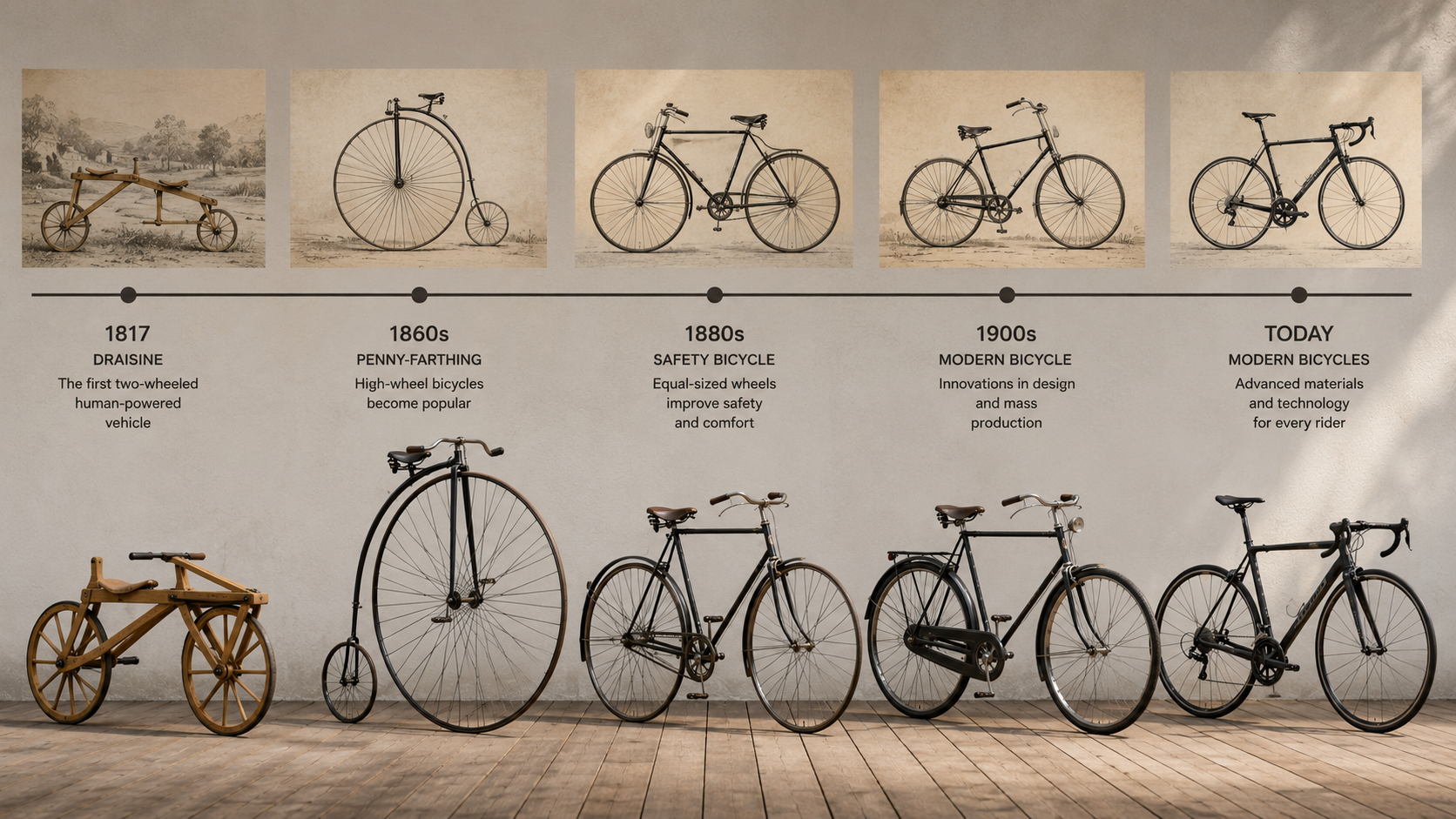
The bicycle’s direct ancestor, a two-wheeled steerable machine called the Laufmaschine, was invented by German inventor Karl von Drais in 1817. It had no pedals and was propelled by pushing the feet against the ground. Pedals weren’t added until the 1860s, and the bicycle didn’t reach its modern form, with a chain-driven rear wheel and equal-sized wheels, until the “safety bicycle” was introduced in 1885.
The First Step: Karl von Drais and the Laufmaschine (1817)
The earliest recognized ancestor of the bicycle was built by Karl von Drais, a German baron and civil servant working as a forester for the Grand Duke of Baden. On June 12, 1817, Drais rode his invention, called the Laufmaschine, or “running machine,” on a roughly 8 to 9 mile round trip between Mannheim and the nearby town of Schwetzingen, completing the ride in about an hour.
The Laufmaschine had two wheels aligned front to back, a steerable front wheel, and a wooden frame the rider straddled. It had no pedals. Instead, riders propelled themselves by pushing their feet against the ground, similar to walking or running while seated. Despite lacking pedals, this design introduced two features essential to every bicycle since: two in-line wheels and a steerable front wheel.
Drais patented his design in Baden in 1818, and the machine quickly became known by several names across Europe, including the draisine, the velocipede, and, somewhat mockingly, the “dandy horse” or “hobby horse,” a nickname referencing its popularity among wealthy young men. The craze reached the United States by 1818, where it was displayed publicly and became a novelty among riders in eastern cities.
Why the Laufmaschine Didn’t Catch On Long-Term
Despite its early popularity, the Laufmaschine faded from widespread use fairly quickly. It was expensive to produce, impractical on anything other than smooth, well-maintained paths, and physically tiring to ride over long distances, since all forward motion still relied entirely on the rider’s legs pushing against the ground. For roughly 50 years after Drais’s original ride, bicycle development largely stalled.
Adding Pedals: The Velocipede Era (1860s)
The next major leap came in the 1860s, when pedals were added directly to the front wheel of a two-wheeled machine, eliminating the need to push off the ground with the feet. This innovation is most commonly credited to Pierre Michaux, a French metalworker, who introduced his pedal-equipped “velocipede” around 1867, though the exact origin and sequence of who first attached pedals to a two-wheeler remains debated among historians, with a French inventor named Pierre Lallement also central to competing claims and patent filings from the same period.
The velocipede used pedals mounted directly to the front wheel’s axle, meaning one full rotation of the pedals equaled one full rotation of the wheel. This design became known informally as the “boneshaker,” a nickname earned from its rigid iron-and-wood frame and metal-rimmed wheels, which transmitted every bump in the road directly to the rider. Despite the discomfort, the velocipede entered mass production and became genuinely popular, marking the first time a pedal-driven two-wheeler reached a wide consumer market.
The High-Wheel Era: The Penny-Farthing (1870s)
Following the velocipede, inventors sought ways to increase speed without significantly increasing pedaling effort. Since pedals were still directly connected to the front wheel’s axle, the only practical way to travel faster per pedal rotation was to make the front wheel larger. This led to the high-wheel bicycle, commonly known today as the penny-farthing, named after the size difference between a British penny coin and the much smaller farthing coin.
Penny-farthings featured a dramatically oversized front wheel, sometimes exceeding 50 inches in diameter, with a much smaller trailing rear wheel. While faster than the velocipede, these bicycles were notoriously difficult to mount, dismount, and balance, and a forward fall over the handlebars, known at the time as “taking a header,” was a common and often serious hazard. Because of the skill and physical risk involved, penny-farthings remained mostly a pursuit of athletic young men rather than a practical transportation option for the general public.
The Modern Form: The Safety Bicycle (1885)
The design that finally resembles a modern bicycle arrived with the “safety bicycle,” widely credited to English inventor John Kemp Starley, who introduced his Rover Safety Bicycle in 1885. This design abandoned the oversized front wheel entirely in favor of two similarly sized wheels, with power transmitted from the pedals to the rear wheel through a chain-and-sprocket system rather than a direct pedal-to-wheel connection.
This change mattered enormously. It allowed for meaningful speed and mechanical efficiency without requiring an enormous, unstable front wheel, dramatically lowering the center of gravity and making the bicycle far safer and easier to ride for a general audience, hence the name. The safety bicycle’s chain-drive system is the same basic mechanical principle used in bicycles today.
The Final Piece: Pneumatic Tires (1888)
Shortly after the safety bicycle’s introduction, Scottish inventor John Boyd Dunlop developed a practical pneumatic, or air-filled, rubber tire in 1888. Earlier bicycles used solid rubber or metal-rimmed wheels, which transmitted significant road vibration to the rider. Pneumatic tires absorbed shock far more effectively, dramatically improving comfort and making longer rides more practical. Combined with the safety bicycle’s frame design, this innovation essentially completed the transition to the bicycle recognized today.
Why the Timeline Matters: Separating Precursor From Invention
A common point of confusion is treating “when was the bicycle invented” as a single moment rather than a sequence of connected innovations. Each stage solved a specific limitation of the version before it:
- Drais’s 1817 Laufmaschine introduced the two-wheeled, steerable concept, but required foot-powered propulsion.
- The 1860s velocipede added pedals, but connected them directly to the front wheel, limiting speed and comfort.
- The 1870s penny-farthing increased speed through wheel size, but sacrificed safety and accessibility.
- The 1885 safety bicycle introduced chain-driven rear-wheel propulsion with two similarly sized wheels, solving both the safety and mechanical efficiency problems.
- The 1888 pneumatic tire addressed the remaining comfort issue, completing the modern bicycle’s core design.
Understanding this sequence explains why different sources sometimes give different answers to “when was the bicycle invented.” A source focused on the concept of a two-wheeled personal vehicle will point to 1817. A source focused on the recognizable modern bicycle will point to 1885 or later.
Common Mistakes and Misconceptions
Assuming a single person invented the bicycle. The bicycle developed through contributions from multiple inventors across roughly seven decades, including Karl von Drais, Pierre Michaux, Pierre Lallement, John Kemp Starley, and John Boyd Dunlop, each solving a different limitation of earlier designs.
Believing Drais’s 1817 machine had pedals. The Laufmaschine was propelled entirely by the rider’s feet pushing against the ground. Pedals weren’t added to a two-wheeled design until roughly 50 years later, in the 1860s.
Confusing the penny-farthing with the first bicycle. While iconic, the high-wheel penny-farthing was a mid-development stage, appearing decades after Drais’s original design and roughly a decade before the safety bicycle that established the modern form.
Overlooking the pneumatic tire’s role. Many timelines focus only on frame and drivetrain design, but Dunlop’s 1888 pneumatic tire was essential to making bicycles genuinely comfortable and practical for everyday use, not just fast or mechanically efficient.
Assuming velocipede and safety bicycle are the same thing. The velocipede used direct pedal-to-wheel power on the front wheel, while the safety bicycle introduced chain-driven rear-wheel propulsion. These are distinct mechanical systems separated by roughly two decades of development.
Real-World Examples
A museum exhibit tracing bicycle evolution. Exhibits marking the anniversary of Drais’s original ride, such as those held in Mannheim, Germany, typically display the progression from the Laufmaschine through the velocipede, penny-farthing, and safety bicycle, illustrating how each design addressed a specific limitation of the one before it.
A cyclist researching why modern bikes use chain drives. Someone curious why bicycles use a chain rather than direct pedal-to-wheel power can trace that design choice directly back to the 1885 safety bicycle, which solved the speed and stability limitations of earlier direct-drive designs like the velocipede and penny-farthing.
A student researching invention timelines. Someone tracing the history of transportation innovation would find the bicycle’s development as a useful example of how a single invention often results from many incremental improvements rather than one isolated breakthrough.
Key Facts
- Karl von Drais rode the first recorded two-wheeled steerable vehicle on June 12, 1817, covering roughly 8 to 9 miles.
- Drais’s Laufmaschine had no pedals and was propelled by pushing the feet against the ground.
- Pedals were added to the front wheel in the 1860s, most notably by Pierre Michaux, creating the “velocipede,” also called the boneshaker.
- The penny-farthing high-wheel bicycle emerged in the 1870s to increase speed through a larger front wheel.
- John Kemp Starley introduced the chain-driven “safety bicycle” in 1885, establishing the frame design used in modern bicycles.
- John Boyd Dunlop developed a practical pneumatic tire in 1888, completing the core design still used today.
Frequently Asked Questions
When was the bicycle invented?
The bicycle’s direct ancestor, Karl von Drais’s Laufmaschine, was invented in 1817. The modern bicycle form, with pedals, a chain drive, and two similarly sized wheels, developed gradually and reached its recognizable shape with the 1885 safety bicycle.
How does the bicycle’s early design work?
The first design, the Laufmaschine, used two in-line wheels with a steerable front wheel, propelled by the rider pushing their feet against the ground rather than pedaling.
Why is the bicycle’s invention important?
It represented the first practical form of independent personal transportation that didn’t rely on animals, later evolving into a low-cost, efficient mode of transport still widely used worldwide today.
Was the early bicycle safe to ride?
Not particularly. The velocipede’s rigid frame earned it the nickname “boneshaker,” and the later penny-farthing’s oversized front wheel made falls, sometimes serious ones, a common risk. The 1885 safety bicycle was specifically designed to address these safety concerns.
Is the modern bicycle design still based on 19th-century inventions?
Yes. The chain-driven rear wheel and roughly equal-sized wheels introduced by the 1885 safety bicycle, combined with the pneumatic tire introduced in 1888, remain the core mechanical principles used in most bicycles today.
What came before the bicycle?
Before Drais’s 1817 Laufmaschine, personal transportation relied on animals, such as horses, or vehicles pulled by animals. There was no earlier self-propelled, two-wheeled personal vehicle recognized as a direct predecessor to the bicycle.
What should someone know about the bicycle’s invention history?
It’s useful to understand that no single date fully answers the question, since the bicycle evolved through distinct stages, from Drais’s pedal-less 1817 design to the pedal-equipped velocipede, the high-wheel penny-farthing, and finally the chain-driven safety bicycle that established the modern form.
Key Takeaways
- Karl von Drais’s 1817 Laufmaschine is considered the bicycle’s earliest direct ancestor, though it lacked pedals.
- Pedals were added to the front wheel in the 1860s, creating the velocipede, also known as the boneshaker.
- The 1870s penny-farthing increased speed through an oversized front wheel but sacrificed safety and accessibility.
- The 1885 safety bicycle introduced chain-driven rear-wheel propulsion, establishing the modern bicycle’s core design.
- The 1888 pneumatic tire, developed by John Boyd Dunlop, completed the transition to the bicycle recognized today.
Conclusion
The bicycle wasn’t invented in a single moment, but built gradually across nearly seven decades, from Karl von Drais’s pedal-less 1817 Laufmaschine to the chain-driven safety bicycle of 1885 and the pneumatic tire that followed shortly after. Each stage solved a specific problem left by the version before it, and that steady sequence of improvements is really the more accurate answer to when the bicycle was invented than any single date could offer on its own.
Introduction
A battery is the part of an e-bike that determines almost everything about how it performs day to day: how far it goes, how it charges, and eventually, what it costs to keep the bike running once the original battery starts to wear down. For anyone who owns a Heybike Mars or is troubleshooting a range or charging issue, understanding the battery itself is usually more useful than reading generic e-bike advice.
This guide covers what the Heybike Mars battery is, how it’s built, what separates the original Mars from the Mars 2.0 version, and what to know about charging, maintenance, and eventual replacement.
Direct Answer: What Is the Heybike Mars Battery?
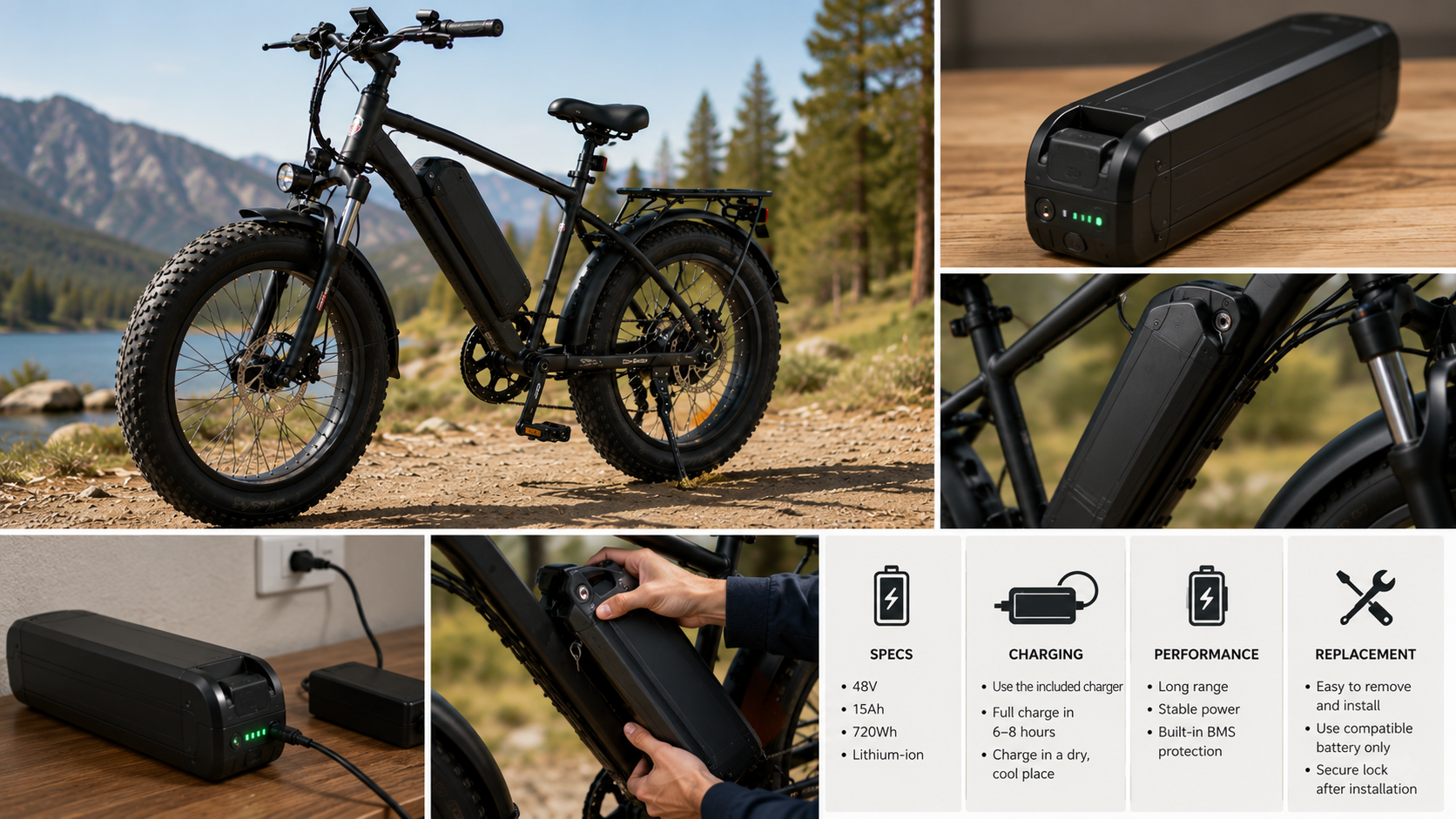
The Heybike Mars battery is a removable, lockable 48V lithium-ion battery pack that powers the Heybike Mars and Mars 2.0 e-bikes. The original Mars uses a 48V, 13Ah battery (roughly 624Wh), while the Mars 2.0 uses a 48V, 12.5Ah battery (600Wh). Both include a USB charging port and a physical lock, and both are designed to be charged either on or off the bike frame.
Why the Battery Differs Between Mars Generations
Heybike has released multiple versions of the Mars over time, and the battery specifications have shifted slightly between them. This matters because batteries from different Mars generations, and from other Heybike models entirely, aren’t necessarily interchangeable, even when the voltage matches.
The original Mars uses a 48V, 13Ah battery, translating to roughly 624 watt-hours of capacity. The Mars 2.0 uses a slightly smaller 48V, 12.5Ah battery, or 600 watt-hours. While the difference in capacity is minor, the physical size and shape of the battery housing can differ enough between models that a battery built for one won’t fit securely in another, even if the voltage is identical. Heybike has specifically noted this kind of mismatch between models like the Mars and Ranger, where similar voltage batteries still can’t be swapped due to differences in height and housing shape.
Key Specifications
- Mars (original) battery: 48V, 13Ah, approximately 624Wh
- Mars 2.0 battery: 48V, 12.5Ah, 600Wh
- Weight: Approximately 9.35 lbs (Mars 2.0 battery)
- Charging: Removable, can be charged on or off the bike frame
- Security: Lockable with an included key
- Extra feature: Built-in USB charging port for phones or small devices
- Charge indicator: Built-in level indicator on the battery itself
How the Battery and Charging System Work
Understanding a few basic concepts makes it easier to get accurate information when troubleshooting or comparing replacement options for the Heybike Mars battery.
Voltage, Amp-Hours, and Watt-Hours
Battery capacity for e-bikes is usually described using three related numbers: voltage (V), amp-hours (Ah), and watt-hours (Wh). Voltage reflects the electrical pressure the battery delivers, amp-hours reflect how much current it can supply over time, and watt-hours, calculated by multiplying voltage by amp-hours, represent the total energy capacity. A 48V, 12.5Ah battery equals 600Wh, which is the figure most directly tied to how far the bike can travel on a full charge.
Removable and Lockable Design
The Heybike Mars battery is designed to be removed from the frame, which serves two purposes. First, it allows the battery to be charged indoors or in a more convenient location rather than requiring the entire bike to be near an outlet. Second, the built-in lock reduces the risk of theft, since the battery can be secured to the frame separately from the bike’s main lock. Removing the battery for charging or storage is a normal part of regular use rather than something reserved for troubleshooting.
The USB Charging Port
Batteries used across several current Heybike models, including the Mars and Mars 2.0, include a built-in USB port that allows riders to charge a phone or similar device directly from the battery. This is a convenience feature separate from the bike’s main charging process and doesn’t affect the battery’s range or charging time in any meaningful way.
Charging the Heybike Mars Battery
Charging times for lithium-ion e-bike batteries generally depend on the charger’s output and the battery’s total capacity. Larger batteries, like the 12.5Ah to 13Ah packs used in the Mars and Mars 2.0, typically take longer to charge fully than smaller batteries found on lighter e-bikes, often in the range of several hours from empty to full, depending on the specific charger provided.
A few general charging practices apply to lithium-ion batteries like the one in the Heybike Mars:
- Avoid letting the battery sit fully depleted for extended periods, since this can shorten its long-term lifespan.
- Store the battery at a partial charge, rather than fully empty or fully charged, if it won’t be used for an extended time.
- Charge in a moderate temperature environment, since extreme heat or cold can affect both charging efficiency and battery longevity.
- Use the charger that came with the bike or a verified compatible replacement, since mismatched chargers can affect charging speed or, in some cases, battery safety.
Step-by-Step: How to Check and Maintain the Heybike Mars Battery
- Check the battery’s charge level using the built-in indicator before starting a ride, particularly for longer trips.
- Remove the battery using the key if charging it separately from the bike frame.
- Connect the charger to the battery, confirming a secure connection before leaving it to charge.
- Monitor charging progress periodically rather than assuming a full charge without checking, especially with an unfamiliar or replacement charger.
- Reinstall and lock the battery securely onto the frame once charging is complete, confirming it clicks or locks into place properly.
- Periodically inspect the battery housing and contacts for dirt, corrosion, or damage, particularly if the bike is ridden in wet conditions.
When to Consider Replacing the Heybike Mars Battery
Like all lithium-ion batteries, the one in the Heybike Mars has a limited lifespan measured in charge cycles, generally in the range of hundreds to over a thousand full charge cycles before capacity noticeably declines. A few signs typically indicate it may be time to consider a replacement:
- Noticeably shorter range than when the bike was new, even under similar riding conditions
- The battery failing to hold a charge for more than a short period after reaching full
- Visible damage to the battery housing, connectors, or wiring
- Inconsistent power delivery or unexpected shutoffs during riding
Replacement batteries are available both through Heybike directly and through third-party sellers offering Mars-compatible batteries. When buying a replacement, confirming the exact model, either the original Mars or Mars 2.0, along with matching voltage and physical dimensions, is necessary to ensure proper fit and safe operation.
Common Mistakes and Misconceptions
Assuming any 48V battery will fit the Heybike Mars. Voltage matching alone isn’t enough. Physical dimensions and connector types vary between Heybike models, and even between the Mars and Mars 2.0, so a battery needs to be confirmed as model-specific before purchase.
Believing higher amp-hour third-party batteries are always a safe upgrade. While some aftermarket batteries offer higher capacity than the original, compatibility with the bike’s controller and charging system matters more than raw capacity numbers, and mismatched components can create safety risks.
Ignoring battery storage practices during long periods of non-use. Leaving a lithium-ion battery fully depleted or fully charged for extended periods can accelerate capacity loss, which is a common and avoidable cause of reduced battery lifespan.
Assuming reduced range always means a battery replacement is needed. Range can also be affected by tire pressure, cold weather, higher assist levels, or rider weight, so it’s worth ruling out these factors before assuming the battery itself has degraded.
Using a charger not designed for the specific battery. Even chargers with similar voltage output can differ in current and charging profile, which may affect charging speed or, in some cases, battery safety over time.
Real-World Examples
A rider noticing reduced range after a year of daily use. Someone who previously rode 30 miles on a charge but now gets closer to 20 might reasonably suspect battery degradation, particularly if riding conditions and habits haven’t changed significantly.
A buyer confirming battery compatibility before ordering a replacement. Someone shopping for a replacement Heybike Mars battery would need to confirm whether they own the original Mars or the Mars 2.0, since the two use different capacity batteries that aren’t universally interchangeable.
A commuter charging the battery indoors overnight. Since the Heybike Mars battery is removable, a rider without convenient outdoor bike storage can bring the battery inside to charge separately from the bike itself.
Benefits and Limitations
Benefits
- Removable design allows convenient indoor charging
- Built-in lock adds a layer of theft protection
- USB port provides a useful secondary charging option for small devices
- Charge level indicator makes it easy to check status before riding
Limitations
- Not interchangeable with batteries from other Heybike models, even at matching voltage
- Mars and Mars 2.0 batteries differ slightly in capacity and are not universally interchangeable with each other
- Like all lithium-ion batteries, capacity gradually declines with use and age
- Charging time is longer than smaller-capacity e-bike batteries due to the larger pack size
Key Facts
- The original Heybike Mars uses a 48V, 13Ah battery (approximately 624Wh).
- The Mars 2.0 uses a slightly smaller 48V, 12.5Ah battery (600Wh).
- Both batteries are removable, lockable, and include a USB charging port.
- Batteries are model-specific and generally not interchangeable across different Heybike e-bike models, even at matching voltage.
- Lithium-ion battery lifespan is typically measured in hundreds to over a thousand charge cycles before capacity noticeably declines.
- Replacement batteries are available both directly through Heybike and through verified third-party sellers.
Frequently Asked Questions
What is the Heybike Mars battery?
It’s the removable, lockable 48V lithium-ion battery pack that powers the Heybike Mars and Mars 2.0 e-bikes, with capacities of roughly 624Wh and 600Wh respectively.
How does the Heybike Mars battery charge?
It can be charged either while attached to the bike frame or after being removed using the included key, giving riders flexibility to charge indoors or in a more convenient location.
Why do Mars and Mars 2.0 batteries have different specs?
Heybike updated the battery slightly between model generations, resulting in a small capacity difference. The two are generally not interchangeable due to differences in physical size, even though both use 48V systems.
Is the Heybike Mars battery safe?
The battery includes standard lithium-ion safety features common to e-bike batteries, though safe use also depends on using the correct charger, avoiding extreme storage temperatures, and replacing the battery if physical damage occurs.
Is it legal to replace an e-bike battery with a third-party option?
Generally, yes, though using a battery not designed specifically for the bike’s voltage and physical dimensions can create safety or performance issues, so confirming compatibility before purchase matters more than legality in most cases.
What are the alternatives if the Heybike Mars battery needs replacing?
Alternatives include purchasing a replacement directly from Heybike, which guarantees compatibility, or a verified third-party battery specifically listed as compatible with the Mars or Mars 2.0, confirming voltage, capacity, and physical dimensions before buying.
What should someone know before buying a Heybike Mars battery?
Buyers should confirm whether their bike is the original Mars or Mars 2.0, since the batteries differ slightly in capacity and aren’t universally interchangeable, and should verify that any replacement battery matches the original’s voltage, dimensions, and connector type.
Key Takeaways
- The Heybike Mars battery is a removable, lockable 48V lithium-ion pack, with slightly different capacities between the original Mars and Mars 2.0.
- Batteries are model-specific, and matching voltage alone doesn’t guarantee compatibility across different Heybike models.
- Proper charging and storage habits, like avoiding full depletion for long periods, help extend battery lifespan.
- Reduced range can result from factors other than battery degradation, including tire pressure, weather, and assist level.
- Replacement batteries are available directly from Heybike or through verified third-party sellers, provided the exact model is confirmed.
Conclusion
The Heybike Mars battery is a fairly standard removable lithium-ion pack, but the details, like the difference between Mars and Mars 2.0 capacities, or the importance of matching physical dimensions rather than just voltage, matter for anyone troubleshooting range issues or shopping for a replacement. Understanding how the battery charges, stores energy, and degrades over time makes it easier to maintain the bike’s performance and make an informed decision if a replacement eventually becomes necessary.
E-Bike Technology
Folding Electric Bikes: A Buyer’s Guide to Types, Prices, and What Actually Matters
Introduction
Once someone decides a folding e-bike makes sense for their situation, the next problem shows up fast: there are hundreds of options, and the specs sheets don’t always explain what actually matters day to day. Two bikes can look nearly identical on paper and ride completely differently once you’re carrying groceries up a hill or folding it for the third time that week.
This guide is built for that stage of the decision. Instead of explaining the general concept of a folding e-bike, it focuses on how different types compare, what price actually buys you at different tiers, and which specs are worth paying attention to versus which ones are mostly marketing. The goal is to leave you able to compare two folding electric bikes side by side and understand what the differences actually mean.
Direct Answer: What Should You Look for in Folding Electric Bikes?
The most important factors in folding electric bikes are motor type and torque, battery capacity, wheel size, and build quality of the folding hinge. A 500-750W motor with 40-80Nm of torque handles most hills and cargo comfortably. Battery capacity above 400Wh generally supports commuting distances. Wheel size affects ride comfort more than portability, and hinge quality affects long-term reliability more than any single spec on the sheet.
The Main Categories of Folding Electric Bikes
Not all folding electric bikes are built for the same job, and understanding the main categories makes comparison shopping much faster.
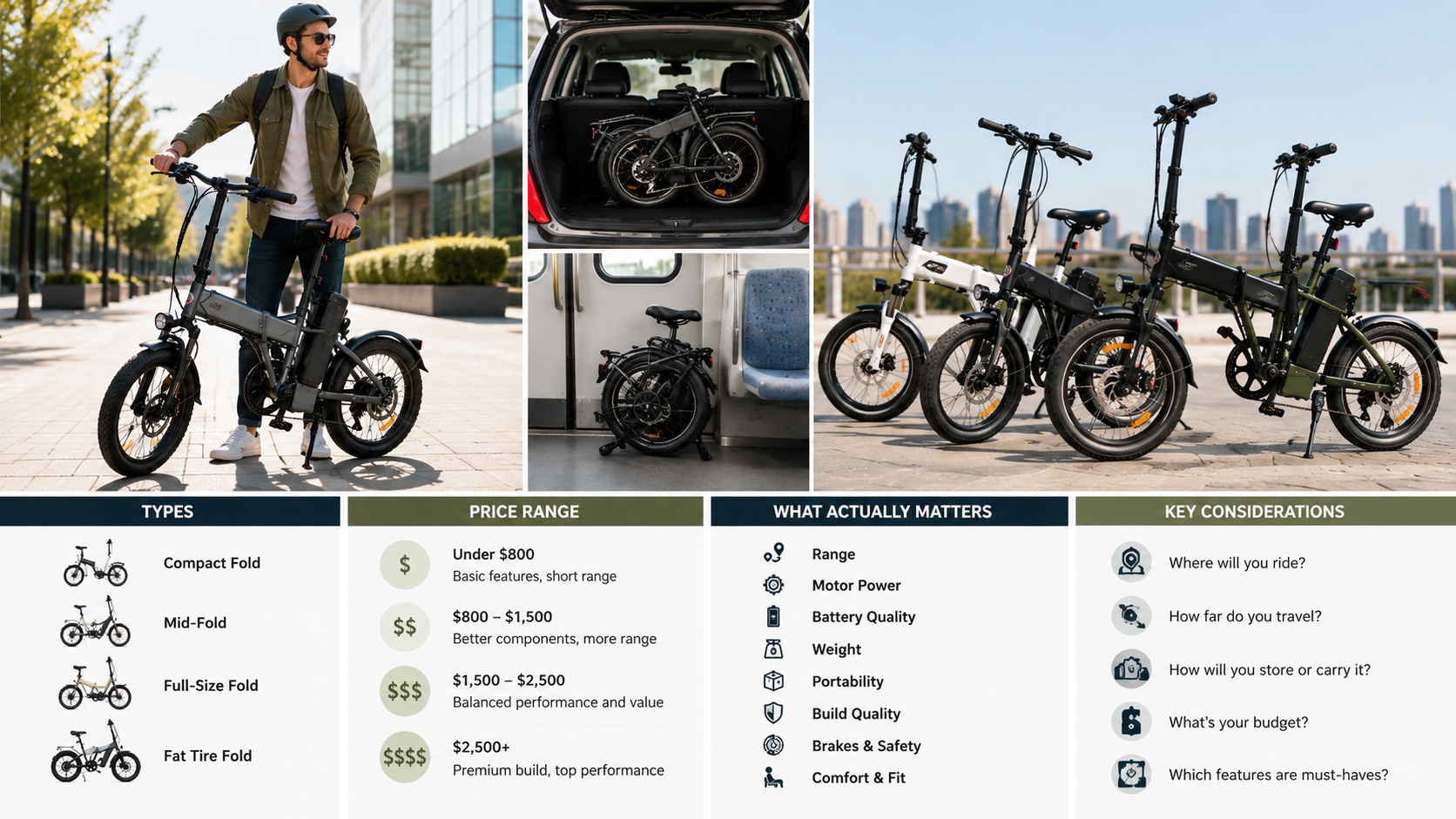
Compact Commuter Models
These are built around minimizing folded size and weight, usually using 16 to 20-inch wheels and smaller batteries. They’re designed for riders combining biking with transit, or those with very limited storage space. The trade-off is typically a shorter range and a firmer ride, since smaller wheels transmit more road vibration.
Fat Tire Folding Models
These use wider tires, often 20 x 4 inches, for better stability on rough terrain, sand, or light snow. They tend to be heavier and bulkier when folded compared to compact commuter models, but offer a smoother, more stable ride. This category has grown quickly in recent years as manufacturers found ways to fit wider tires into folding frames without sacrificing too much portability.
Cargo-Capable Folding Models
Some folding electric bikes prioritize a stronger rear rack and higher payload capacity, aimed at riders who need to carry groceries, tools, or gear regularly. These usually have a heavier-duty frame and folding mechanism to support the added weight, which can make them bulkier once folded.
Budget vs. Mid-Range vs. Premium Models
Price tiers roughly break down like this:
- Budget (under $800): Smaller batteries, less powerful motors (often 250-350W), simpler folding mechanisms, and shorter component lifespans. Fine for short, flat commutes.
- Mid-range ($800-$1,800): This is where most folding electric bikes land. Expect 500-750W motors, 400-600Wh batteries, hydraulic or mechanical disc brakes, and reasonably durable folding hinges.
- Premium ($1,800+): Better build materials, often lighter frames using aluminum alloys, more refined folding mechanisms, larger batteries, and sometimes mid-drive motors instead of hub motors.
How to Compare Motor and Battery Specs Without Getting Misled
Spec sheets often lead with big numbers, but not all of them translate to real-world performance the way buyers assume.
Motor Wattage Isn’t the Full Story
A 750W motor sounds more powerful than a 500W motor, and generally it is, but torque matters just as much for how a bike actually feels when climbing or accelerating. Torque, measured in Newton-meters (Nm), reflects the rotational force the motor produces. A motor with lower wattage but higher torque can outperform a higher-wattage, lower-torque motor on hills. When comparing folding electric bikes, checking both figures together gives a more accurate picture than wattage alone.
Peak Power vs. Continuous Power
Many listings advertise a “peak” wattage figure that’s significantly higher than the motor’s continuous rated output. Peak power represents a brief burst under load, not what the motor sustains during normal riding. A bike listed as “500W (peak 750W)” is rated to run at 500W continuously, with occasional bursts to 750W. Comparing peak figures across different bikes can be misleading if one listing uses peak numbers and another uses continuous numbers.
Battery Capacity and Real-World Range
Battery capacity is measured in watt-hours (Wh), calculated by multiplying voltage by amp-hours. A 48V, 10Ah battery equals 480Wh. Larger batteries generally mean longer range, but advertised range figures almost always reflect ideal conditions: flat terrain, moderate rider weight, and lower assist levels. A more realistic estimate is usually 50-70% of the advertised maximum range for mixed riding conditions.
What Actually Affects Fold Quality and Durability
Two folding electric bikes can have nearly identical specs and still differ significantly in how well they hold up over time, mostly due to differences in the folding mechanism itself.
Hinge material and design. Steel hinges tend to be more durable than aluminum in high-stress folding points, though they add weight. Look for hinges with a solid locking lever rather than a simple clip, since locking levers generally hold tighter over repeated use.
Number of fold points. Some models fold only at the main frame, while others also fold the handlebar stem, pedals, and seat post. More fold points mean a smaller folded size but also more mechanical parts that can wear out or loosen over time.
Weight distribution. Bikes with the battery mounted low and centered tend to feel more stable both while riding and while carrying the bike folded, compared to models with a battery mounted high or off to one side.
Step-by-Step: How to Evaluate a Folding Electric Bike Before Buying
- Check motor wattage and torque together, not wattage alone, to get a realistic sense of hill performance.
- Convert battery specs to watt-hours if listed only in voltage and amp-hours, and treat advertised range as a best-case number.
- Confirm wheel size and tire width, since this affects ride comfort more than most buyers expect going in.
- Inspect the folding mechanism design, ideally through photos or video, checking for a locking lever rather than a simple clip.
- Check the bike’s folded and unfolded weight, since a lighter unfolded weight sometimes means a lighter-duty frame overall.
- Review brake type, prioritizing hydraulic disc brakes for more consistent stopping power, especially in wet conditions.
- Check warranty length and what it covers, since this often reveals how confident a manufacturer is in their own build quality.
Common Mistakes and Misconceptions
Assuming higher wattage always means a better bike. Torque, battery quality, and build durability often matter more than motor wattage alone, especially for typical commuting use rather than steep off-road climbing.
Trusting advertised range figures at face value. These numbers almost always reflect ideal riding conditions. Real-world range, particularly with throttle use or hilly terrain, is often notably lower.
Ignoring the folding mechanism until after purchase. Buyers often focus entirely on motor and battery specs, then discover the hinge feels loose or the fold process is more cumbersome than expected, once the bike arrives.
Assuming all folding electric bikes are equally portable. Fold size and weight vary significantly between compact commuter models and fat tire or cargo-focused models, even within similar price ranges.
Overlooking local e-bike classification when comparing top speeds. A bike capable of higher speeds may fall into a stricter regulatory class in some regions, which can affect where it’s legally allowed to ride, regardless of how portable it is.
Real-World Examples
A buyer comparing two similarly priced bikes. One lists a 750W peak motor with a 400Wh battery, while another lists a 500W continuous motor with a 600Wh battery. The second bike likely offers more real-world range and comparable hill performance, despite the lower headline wattage number.
A renter with limited storage space prioritizing size. Someone in a small apartment might choose a compact commuter model with smaller wheels over a fat tire model, accepting a firmer ride in exchange for a smaller folded footprint.
A buyer researching folding mechanism durability. Someone comparing owner reviews might notice one model consistently mentioned for hinge looseness after a year of use, prompting them to prioritize a model with a more robust locking mechanism instead.
Benefits and Limitations
Benefits of Comparing Categories Before Buying
- Avoids paying for cargo or off-road capability that won’t actually be used
- Helps match battery size to realistic commuting distance rather than advertised maximums
- Reduces the chance of ending up with a folding mechanism that wears out quickly
- Makes it easier to compare bikes across different price tiers on equal terms
Limitations to Keep in Mind
- Spec sheets alone can’t fully predict ride comfort or long-term durability
- Advertised range and peak power figures vary in how manufacturers report them, making direct comparisons imperfect
- Higher price doesn’t automatically guarantee a better fit for a specific use case
- Local regulations may limit which bikes are practical to ride in certain areas, regardless of specs
Key Facts
- Motor torque, measured in Newton-meters, often matters more for hill performance than wattage alone.
- Peak power figures represent brief bursts under load, not the motor’s continuous output.
- Battery capacity in watt-hours is calculated by multiplying voltage by amp-hours.
- Real-world range is typically 50-70% of advertised maximum figures under mixed riding conditions.
- Folding mechanisms with locking levers generally hold up better over time than simple clip-style hinges.
- Price tiers for folding electric bikes generally range from under $800 for budget models to over $1,800 for premium options.
Frequently Asked Questions
What should you look for in folding electric bikes?
Key factors include motor torque alongside wattage, actual battery capacity in watt-hours, wheel size and tire width, and the quality of the folding hinge mechanism, since these affect real-world performance more than headline spec numbers alone.
How do folding electric bikes compare in price?
Budget models generally cost under $800 with smaller motors and batteries, mid-range models between $800 and $1,800 offer the most balanced specs, and premium models above $1,800 typically include better materials and more refined folding mechanisms.
Why does torque matter more than motor wattage?
Torque reflects the rotational force a motor produces, which directly affects hill-climbing and acceleration. A lower-wattage motor with higher torque can outperform a higher-wattage motor with lower torque in real-world riding.
Are folding electric bikes safe to ride regularly?
When properly maintained, including regular checks of the folding hinge and brake system, folding electric bikes are generally as safe as standard e-bikes. Mechanical wear at fold points is the main long-term consideration.
Are all folding electric bikes legal to ride in the same places?
No. Local regulations typically classify e-bikes by motor wattage and top speed rather than by whether the frame folds, so a faster folding electric bike may face different access restrictions than a slower one.
What are the alternatives to folding electric bikes?
Alternatives include full-size e-bikes, which usually offer more range and stability but far less portability, non-electric folding bikes, which are lighter but require more physical effort, and electric scooters, which are more compact but generally less stable over longer distances.
What should someone know before buying a folding electric bike?
Buyers should understand that advertised range and peak power figures often overstate real-world performance, that the folding mechanism’s build quality matters as much as the motor or battery specs, and that price tier doesn’t automatically guarantee the right fit for their specific use case.
Key Takeaways
- Comparing torque alongside wattage gives a more accurate picture of hill performance than wattage alone.
- Battery capacity in watt-hours and realistic range estimates matter more than advertised maximum figures.
- Folding mechanism quality, including hinge material and locking design, affects long-term durability significantly.
- Price tiers roughly correlate with motor quality, battery size, and build materials, but the right fit depends on intended use.
- Local e-bike classification rules apply based on motor power and speed, not portability.
Conclusion
Choosing among folding electric bikes gets easier once the comparison shifts from headline numbers to how those numbers translate into daily use. Torque matters as much as wattage, real-world range rarely matches the advertised maximum, and the folding mechanism’s build quality often determines how well a bike holds up over time. Weighing these factors against actual riding needs, rather than the most impressive-looking spec sheet, leads to a choice that holds up well past the first few rides.
-
 E-Bike News4 weeks ago
What Is a Bike Stand? A Complete Guide to Types, Uses, and How to Choose One
-
 E-Bike News4 weeks ago
What Is an Elliptical Bike? A Complete Guide to How It Works, Benefits, and What to Know Before You Try One
-

 E-Bike News3 weeks ago
What Is a Beach Cruiser? A Complete Guide to Comfort Bikes for Easy Riding
-
 E-Bike Technology3 weeks ago
Pocket Rocket Folding Road Bikes: What They Are and How They Work
-
 E-Bike News4 weeks ago
Electric Commuter Bike: What It Is and How to Choose the Right One
-

 E-Bike News2 weeks ago
Sleeping on a Bike: Why It Happens and How to Stay Safe While Riding
-
 E-Bike News3 weeks ago
Types of Bikes: A Complete Guide to Choosing the Right One
-
 E-Bike Technology4 weeks ago
What Is a Sirrus Bike? A Complete Guide to the Specialized Sirrus Line