
E-Bike News
Specialized Rockhopper: The Complete Guide to This Entry-Level Mountain Bike

Introduction
If you’ve spent any time browsing mountain bikes at a local shop, you’ve probably come across the Specialized Rockhopper. It’s one of those names that keeps showing up on recommendation lists, and there’s a reason for that. Riders search for information on this bike because they’re trying to answer a simple question: is this the right first mountain bike, or the right upgrade from a cheaper department-store bike?
That question isn’t always easy to answer, because “mountain bike” covers a huge range of intentions — from casual gravel path rides to technical singletrack. This guide breaks down what the Rockhopper actually is, how the different trim levels compare, and what you should know before deciding whether it fits your riding goals.
Direct Answer
The Specialized Rockhopper is an aluminum-frame hardtail mountain bike designed for cross-country trails and everyday off-road riding. It comes in several trim levels — Rockhopper, Sport, Comp, Elite, and Expert — with prices generally ranging from around $700 to $1,600 depending on components. It suits beginner to intermediate riders who want a reliable, trail-capable bike without paying for full-suspension or race-level parts.
What Is the Specialized Rockhopper?
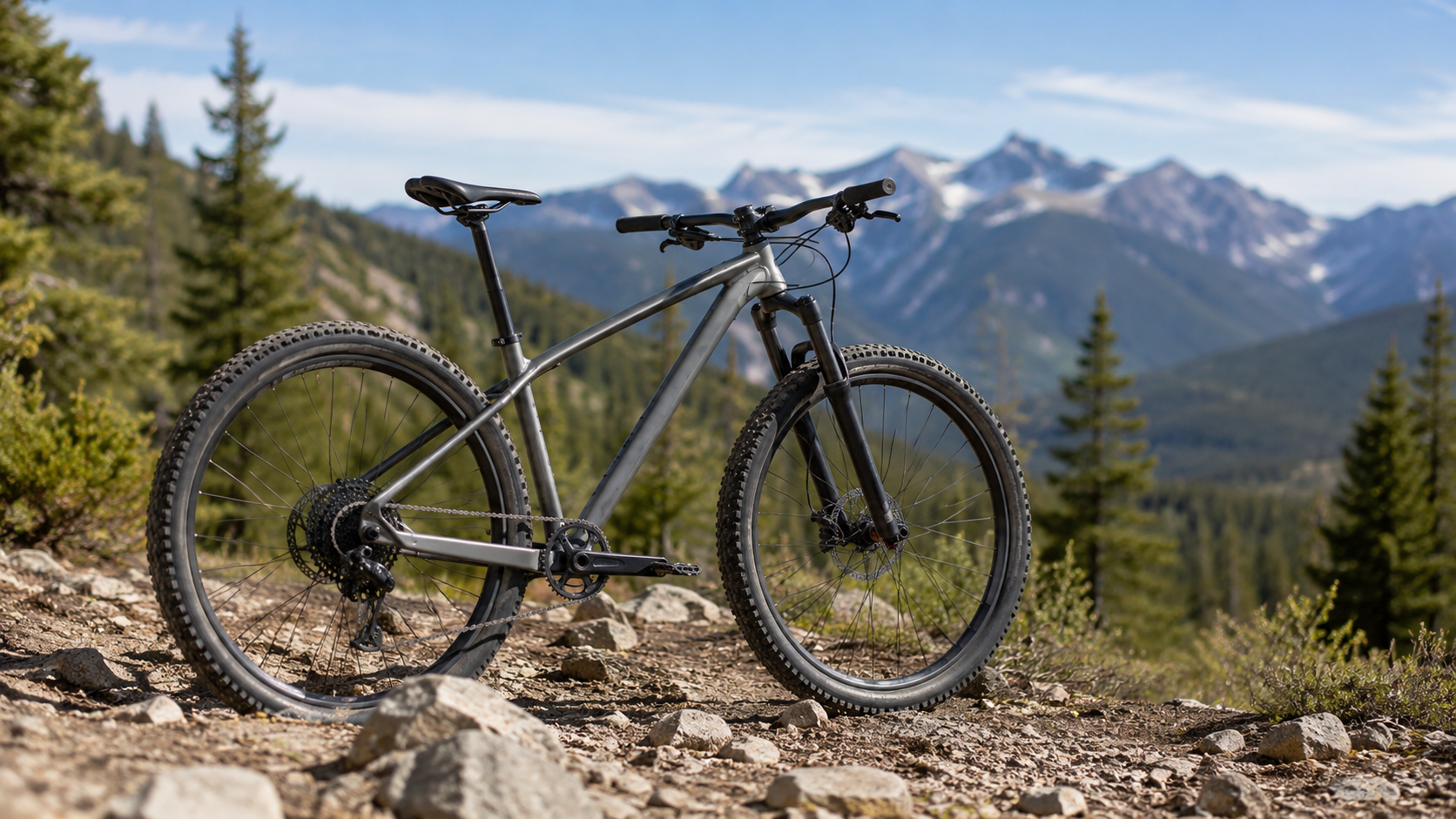
The Rockhopper is a hardtail mountain bike, meaning it has front suspension but no rear shock. Specialized has kept this bike in its lineup for decades, positioning it as an entry point into serious off-road riding rather than a big-box store bike that just looks like a mountain bike.
The frame is made from butted aluminum, which means the tube walls vary in thickness along their length. Thicker walls sit near the welded joints, where stress is highest, while thinner sections appear in the middle of the tube to save weight. This construction method lets Specialized build a frame that’s light enough for real trail riding but strong enough to handle repeated impacts from roots, rocks, and drops.
Wheel size depends on the frame size. Smaller frames typically come with 27.5-inch wheels, while larger frames use 29-inch wheels. This isn’t arbitrary — smaller wheels fit better on smaller frames without creating toe overlap or awkward handling, while larger wheels roll over obstacles more smoothly and suit taller riders on bigger frames.
Key Concepts: Understanding the Trim Levels
One thing that confuses a lot of first-time buyers is that “Rockhopper” isn’t one bike — it’s a family of bikes sharing a similar frame but built up with different components. Here’s a general breakdown of how the range is organized, from most basic to most capable:
- Rockhopper: The base model, with a coil-spring fork and a simpler drivetrain. Good for casual trail riding and commuting on rough surfaces.
- Rockhopper Sport: A step up in component quality, often with a smoother-shifting drivetrain and a slightly better fork.
- Rockhopper Comp: Mid-range build with hydraulic disc brakes and a more capable suspension fork, suited to riders tackling varied terrain regularly.
- Rockhopper Elite: Improved wheels, drivetrain, and fork performance compared to the Comp.
- Rockhopper Expert: The top of the range, with the lightest components and best-performing suspension fork in the lineup.
Exact specs shift from year to year, so it’s worth checking the current model year’s build sheet rather than relying on last year’s numbers.
How It Works: Suspension, Drivetrain, and Brakes
A hardtail’s front fork is doing most of the work when it comes to comfort and control. Entry-level Rockhopper models often use a coil-spring fork, which is simple and durable but heavier and less adjustable. Higher-tier models step up to air-sprung forks with features like lockout switches, which let you firm up the fork for smooth climbs and open it back up for descents.
The drivetrain — the chain, cassette, derailleur, and shifters — determines how many gear combinations you have and how smoothly you can shift under load. Base Rockhopper models typically use a 2×9 or similar setup, while higher trims often move to a 1x drivetrain with a wide-range cassette, which simplifies shifting by removing the front derailleur entirely.
Braking is another area where trim level matters. Entry-level models sometimes use mechanical (cable-actuated) disc brakes, while mid-to-upper trims use hydraulic disc brakes, which generally offer more consistent stopping power and require less hand force.
Why It Matters: Who the Rockhopper Is Actually For
The Rockhopper occupies a specific niche. It’s not designed to compete with downhill bikes or long-travel trail bikes meant for aggressive, technical terrain. Instead, it’s built for:
- Riders new to mountain biking who want a bike that can actually handle real trails, not just a hybrid bike dressed up as one.
- Commuters who ride on a mix of pavement, gravel, and light singletrack.
- Budget-conscious riders who want to try cross-country trail riding before investing in a more expensive full-suspension bike.
- Parents or students looking for a durable bike that can take a beating without needing constant maintenance.
If you’re planning to ride steep, rocky, technical trails regularly, or you’re interested in racing at a competitive level, you’ll likely outgrow a hardtail like this fairly quickly and should look at bikes with more advanced suspension and lighter frame materials.
Benefits of Choosing a Rockhopper
Durability. Aluminum hardtail frames are generally more forgiving of rough handling than carbon frames, and they don’t have rear suspension pivots that can wear out or need servicing.
Lower maintenance. With no rear shock, there’s one less system to maintain, service, or eventually replace.
Efficient pedaling. Hardtails transfer pedaling power to the rear wheel more directly than full-suspension bikes, since there’s no rear shock absorbing some of that energy. This matters most on smoother trails and climbs.
Value. Because you’re not paying for a rear shock and the linkage hardware that goes with it, more of the price goes toward the fork, drivetrain, and brakes.
Limitations and Considerations
Ride comfort on rough terrain. Without rear suspension, bumps and roots transmit more directly through the frame to the rider. This isn’t a dealbreaker for cross-country riding, but it’s noticeable on rocky, technical trails.
Weight of entry-level builds. Base models with coil forks and heavier wheelsets tend to weigh more than higher-tier models or dedicated race bikes, which can matter if you’re doing long climbs.
Component upgrades add up. It’s tempting to upgrade a base-model Rockhopper piece by piece, but by the time you’ve replaced the fork, wheels, and drivetrain, you may have spent more than if you’d bought a higher trim level from the start.
Step-by-Step: How to Choose the Right Rockhopper Model
- Define how you’ll actually use the bike. Commuting and light trails call for a base or Sport model. Regular singletrack riding justifies a Comp or Elite.
- Set a realistic budget, including a small buffer for a helmet, pedals (many bikes ship without them), and basic maintenance tools.
- Get sized properly at a shop. Standover height and reach matter more than the number on the frame size sticker.
- Test ride if possible. Fork feel and brake response vary noticeably between trims.
- Check wheel size for your frame size, since this affects standover height and handling characteristics.
- Ask about warranty and local service support, since a nearby dealer makes future tune-ups and part replacements easier.
Common Mistakes and Misconceptions
Myth: A hardtail can’t handle real trails. Hardtails, including the Rockhopper, are used on genuine singletrack every day. They’re just less forgiving on very rough, rocky descents than full-suspension bikes.
Myth: More gears always means a better bike. A wide-range 1x drivetrain with fewer total gears can offer a more useful spread than an older 2x setup with more total combinations but more overlap between them.
Mistake: Skipping proper sizing. Buying based on general height charts without checking standover clearance and reach can lead to discomfort or poor handling, regardless of how good the components are.
Mistake: Assuming all Rockhopper years and trims are identical. Specifications change by model year, so a Comp from one year might have a different fork or drivetrain than the Comp from two years earlier.
Real-World Example
Imagine a rider who’s been using a heavy hybrid bike for a mix of commuting and weekend fire-road rides. They want to start riding actual singletrack on weekends but don’t want to commit to a $2,500+ full-suspension bike before knowing if they’ll stick with the sport. A Rockhopper Sport or Comp gives them a bike capable of handling moderate singletrack, technical enough to build skills on, and light enough that the switch from their old hybrid feels like a real upgrade — without the expense of chasing every feature at once.
Another common scenario: a parent buying a first “real” mountain bike for a teenager who’s outgrown a kids’ bike. The base Rockhopper’s durability and lower price point make it a practical choice for someone still developing riding skills and likely to crash occasionally while learning.
Key Facts
- The Rockhopper is a hardtail (front suspension only) mountain bike from Specialized.
- Frames are built from butted aluminum for a balance of weight and durability.
- Wheel size is typically 27.5 inches on smaller frames and 29 inches on larger frames.
- Trim levels generally include Rockhopper, Sport, Comp, Elite, and Expert.
- Braking systems range from mechanical disc brakes on base models to hydraulic disc brakes on higher trims.
- Drivetrains range from multi-chainring setups on entry models to simplified 1x setups on higher trims.
- It’s positioned as a cross-country and everyday trail bike, not a downhill or aggressive trail bike.
FAQ
What is the Specialized Rockhopper?
It’s a hardtail mountain bike line from Specialized, built with an aluminum frame and designed for cross-country and everyday trail riding.
How does the Rockhopper compare to full-suspension mountain bikes?
It has no rear shock, which makes it lighter, easier to maintain, and more efficient for pedaling, but less comfortable and controlled on very rough or technical descents.
Why is the Rockhopper a popular choice for beginners?
It’s durable, relatively affordable, and capable enough to handle real trails, which makes it a practical way to start mountain biking without a large upfront investment.
Is the Rockhopper safe for technical trails?
It can handle moderate technical terrain, but riders tackling steep, rocky, or jump-heavy trails regularly may find a full-suspension trail bike more appropriate and more comfortable.
Are there alternatives to the Rockhopper?
Yes. Other manufacturers offer comparable entry-level hardtails, and Specialized itself offers other hardtail and full-suspension lines aimed at different riding styles and budgets.
What should I know before buying one?
Confirm the trim level’s components match your riding goals, get properly sized at a shop, and budget for essentials like pedals, a helmet, and basic tools that often aren’t included with the bike.
Does the wheel size matter for how the bike rides?
Yes. Smaller wheels (27.5-inch) tend to accelerate and maneuver quickly, while larger wheels (29-inch) roll over obstacles more smoothly and hold speed better, which is part of why Specialized matches wheel size to frame size.
Key Takeaways
- The Rockhopper is a hardtail mountain bike built for cross-country and everyday trail riding, not aggressive downhill terrain.
- Trim levels range from basic to Expert, with differences mainly in fork quality, drivetrain, wheels, and brakes.
- It suits beginners, commuters, and budget-conscious riders looking for a durable, low-maintenance bike.
- Proper sizing and a test ride matter more than chasing the highest trim level you can afford.
- Component specifications change by model year, so always check current-year details before buying.
Conclusion
The Specialized Rockhopper has stuck around for a reason: it does a straightforward job well. It gives riders a durable, capable way to get onto real trails without the cost and complexity of full-suspension bikes, while still offering room to move up through trim levels as skills and budgets grow. Whether it’s the right bike for you comes down to how and where you plan to ride — and matching that honestly against what a hardtail can and can’t do.
Introduction
Folding e-bikes have a reputation for being a compromise: fine for a short, flat commute, but not much else. The Heybike Mars comes up in searches so often because it challenges that idea, offering a folding fat-tire bike with motor options and suspension that sound more like a full-size trail e-bike than a compact folder. Readers usually want to know which version of the Mars they’re actually looking at, since Heybike has released more than one, and whether the specs hold up once you get past the marketing copy.
Direct Answer
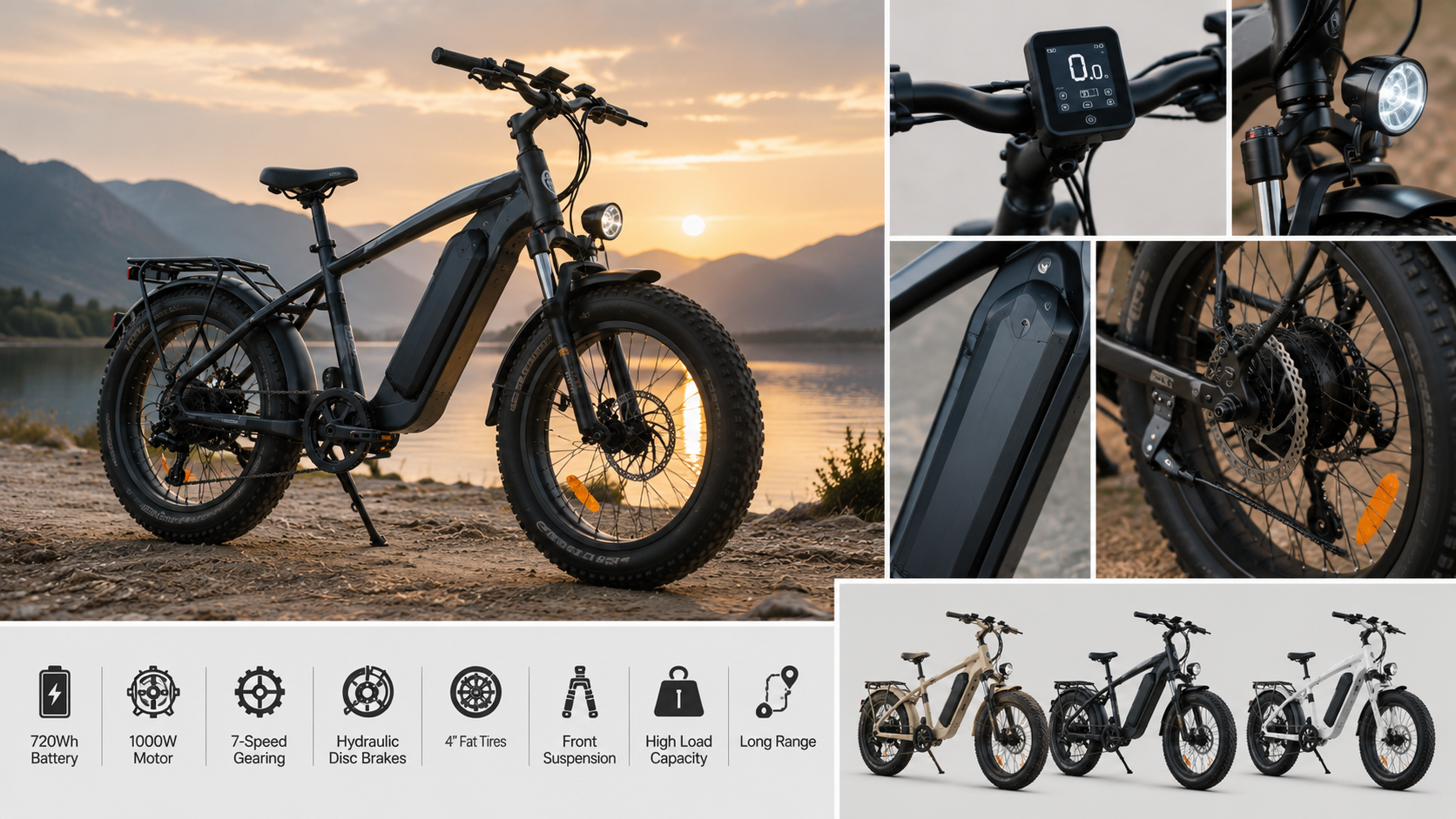
The Heybike Mars is a line of folding, fat-tire electric bikes from Heybike, offered across multiple generations including the original Mars, Mars 2.0, and Mars 3.0. Depending on the version, motors range from 750W to 1000W with peak outputs up to 1800W, batteries range from roughly 600Wh to 624Wh, and advertised range spans 45 to 65 miles. Later versions add full suspension, hydraulic disc brakes, and smart theft-protection features.
What Is the Heybike Mars?
The Mars is Heybike’s folding, fat-tire e-bike series, built for riders who want a bike that stores compactly but still performs on uneven terrain, gravel, or moderate hills. Unlike ultra-compact folding e-bikes built mainly for flat pavement commuting, the Mars uses wide tires and, in later versions, front and rear suspension to handle rougher ground.
Heybike has updated the Mars more than once. The original Mars established the folding fat-tire formula. Mars 2.0 followed with a stronger motor option and improved brakes. Mars 3.0, part of Heybike’s newer X Series, added full suspension and additional smart features, positioning it as a more serious upgrade rather than a minor refresh.
Because model names and specs vary across these versions, it’s worth confirming which generation a specific listing refers to before comparing prices or reviews.
Mars Generations and Key Specifications
Original Mars
The first-generation Mars established the core concept: a folding frame, fat tires, and enough motor power to handle light trail riding. It generally used a 750W motor and a top speed around 28 mph, with mechanical disc brakes in most configurations.
Mars 2.0
Mars 2.0 is offered in two motor configurations:
- 750W version: 80Nm torque, 750W sustained, 1400W peak
- 1000W version: 100Nm torque, 1000W sustained, 1800W peak, top speed around 32 mph
Shared specs across Mars 2.0 configurations include:
- Battery: 600Wh removable lithium-ion battery
- Range: Up to 45 miles per charge, recharging in roughly 5 to 6 hours
- Tires: 20 x 4 inch fat tires
- Suspension: Front spring fork with 65mm of travel, preload adjustment, and lock-out
- Brakes: Mechanical disc brakes standard, with hydraulic disc brakes on the 1000W version
- Drivetrain and cargo: Rear rack and pegboard rated for up to 120 pounds
- Weight: Reported between roughly 72 and 75 pounds depending on source and configuration
- Payload capacity: Around 300 pounds total combined rider and cargo weight
- App connectivity: Heybike smart app for ride tracking and settings
Mars 3.0
Mars 3.0 represents a more significant redesign, aimed at closing the gap between folding convenience and full-size trail e-bike performance.
- Motor: 750W with a torque sensor for responsive pedal assist
- Battery: 48V, 624Wh, integrated into the down tube
- Range: Advertised up to 65 miles, though independent testing suggests riders should treat this as a ceiling rather than a typical result
- Suspension: Full suspension, a front fork with 65mm of travel and a rear shock with 30mm of stroke, uncommon on folding e-bikes
- Drivetrain: 8-speed Shimano Altus
- Weight: Approximately 72 pounds including a roughly 9-pound battery
- Folded dimensions: Roughly 40 inches long, 21 inches wide, and 32.5 inches tall
- Cargo: Rear rack rated for up to 100 pounds, plus compatibility with panniers and a cargo basket
- Extras: Turn signals, an electronic horn, color LCD display, and passcode or NFC-based theft protection
How the Mars Series’ Components Work Together
Motor and Torque Sensing
Later Mars versions use a torque sensor rather than a simple cadence sensor. A torque sensor measures how hard the rider is actually pressing on the pedals and adjusts motor output accordingly, which tends to feel more natural than a cadence sensor that only detects that the pedals are turning, regardless of effort.
Suspension Differences Across Versions
The jump from a front-only spring fork on Mars 2.0 to full front-and-rear suspension on Mars 3.0 is a meaningful change for ride comfort. A rear shock absorbs impacts the front fork alone can’t handle, which matters more on rougher trails or repeated small bumps like gravel washboard.
Battery Placement and Capacity
Newer Mars versions integrate the battery into the frame’s down tube instead of mounting it externally, which improves the bike’s balance and appearance but also means the battery and frame are more tightly linked, so replacement parts may be more specific to that generation.
Brakes
Mechanical disc brakes remain common on the lower-powered Mars configurations, largely to keep cost down and to avoid the risk of hydraulic brake lines being pinched during folding. Hydraulic disc brakes, standard on higher-powered versions, generally offer stronger and more consistent stopping power, which matters more as top speed and bike weight increase.
Why These Differences Matter
Choosing between Mars generations isn’t just about picking the newest model. A rider mainly interested in short trips around a flat neighborhood may not need Mars 3.0’s full suspension or higher-torque motor, and could be well served by an older or lower-powered Mars 2.0 configuration at a lower price. A rider planning to ride gravel roads, moderate trails, or longer distances would benefit more from the added suspension travel, larger battery, and stronger torque of newer versions.
Benefits of the Mars Series
Fat tires and suspension that extend usefulness beyond pavement into gravel and light trail conditions, more so than most folding e-bikes.
Multiple motor configurations across the lineup, allowing buyers to match power level to their actual riding needs rather than overpaying for capability they won’t use.
Folding design that allows storage in smaller homes, garages, or vehicle trunks despite the bike’s substantial power and tire size.
Expanding feature set over generations, including improved brakes, added suspension, and smart security features on newer models.
Limitations and Considerations
Heavier than most folding e-bikes. Across generations, the Mars line generally weighs between 72 and 75 pounds, which limits how easily it can be carried up stairs or lifted into a vehicle regularly.
Advertised range reflects best-case conditions. Figures like 45 or 65 miles typically come from low assist levels on flat terrain with a lighter rider; real-world range on hills or higher assist settings will be lower.
Brake type varies by configuration. Not every Mars version includes hydraulic disc brakes, so it’s important to check the specific listing rather than assuming all versions share identical stopping power.
Higher-powered versions demand more rider attention. Motors with 1000W sustained output and higher torque accelerate faster, which requires more careful braking distance and awareness, especially in traffic or on shared paths.
Model confusion is common. Because Heybike has released multiple Mars generations with different specs, reviews and marketplace listings can reference different versions without always making that clear.
Step-by-Step: Setting Up a Mars Ebike
- Identify the exact model version from the listing or manual, since parts and accessories are often generation-specific.
- Unbox and unfold the frame, confirming the central hinge locks securely before attaching remaining components.
- Attach the front wheel, handlebars, and pedals, following manufacturer torque guidance where available.
- Charge the battery fully before the first ride to confirm the charger and battery are functioning properly.
- Check brake engagement and tire pressure, particularly important on higher-power versions with greater stopping demands.
- Test the fold and unfold mechanism while stationary to build familiarity before relying on it in public.
- Take a short test ride on flat, open ground to get a feel for throttle response, pedal assist levels, and braking before riding in traffic or on trails.
Common Mistakes and Misconceptions
Assuming all Mars versions share the same specs. Motor wattage, battery capacity, suspension, and brakes differ meaningfully between the original Mars, Mars 2.0, and Mars 3.0, so comparing reviews without confirming the version can lead to inaccurate expectations.
Treating peak motor wattage as sustained output. Peak figures like 1800W represent short bursts of power, not what the motor delivers continuously during a long climb.
Expecting the advertised top range on every ride. Real-world range depends heavily on terrain, rider weight, and assist level, and will typically fall short of the advertised ceiling under harder use.
Underestimating the bike’s weight when planning to carry it regularly. Folding doesn’t mean lightweight; riders without ground-level or elevator access should factor in the 72-to-75-pound range before assuming daily carrying will be easy.
Assuming fat tires alone qualify a bike for serious trail riding. Tire width helps with traction, but suspension travel, frame geometry, and braking power also determine how well a bike handles genuine trail conditions.
Real-World Example
Consider a rider living in a small apartment who wants a bike mainly for short errands on paved roads, with the option to explore local gravel paths occasionally. A Mars 2.0 in its 750W configuration would likely meet those needs without paying for features like full suspension that wouldn’t get much use on mostly flat terrain.
Now consider a rider who plans to ride regularly on rougher forest roads or moderate trails and wants a longer range for weekend trips. Mars 3.0’s full suspension, larger battery, and torque-sensing motor would better match that use case, even at a higher price point, since the added suspension travel and torque response matter more once terrain gets rougher.
Key Facts
- The Heybike Mars line includes the original Mars, Mars 2.0, and Mars 3.0, each with different specs.
- Motors range from 750W to 1000W sustained output, with peak outputs up to 1800W depending on version.
- Battery capacity ranges from roughly 600Wh to 624Wh across generations.
- Advertised range spans from 45 miles (Mars 2.0) up to 65 miles (Mars 3.0), depending on conditions.
- Mars 3.0 is the only version in the line with full front-and-rear suspension.
- Weight across the lineup generally falls between 72 and 75 pounds.
- Brake type, mechanical or hydraulic disc, varies by motor configuration and generation.
FAQ
What is the Heybike Mars ebike?
It’s a line of folding, fat-tire electric bikes from Heybike, spanning several generations with different motor, battery, suspension, and brake specifications.
How does the Mars differ across its versions?
The original Mars established the folding fat-tire format, Mars 2.0 added a stronger motor option and improved brakes, and Mars 3.0 introduced full front-and-rear suspension along with additional smart features.
Why do people choose a folding fat-tire e-bike like the Mars?
It combines compact storage with tires and suspension capable of handling gravel, trails, or rough pavement, which most folding e-bikes built for flat commuting can’t offer.
Is the Mars safe to ride at higher speeds?
Higher-powered Mars configurations reach speeds up to 32 mph, which calls for more attentive braking distance and traffic awareness, along with confirming the bike uses hydraulic disc brakes if riding regularly at higher speeds.
Is it legal to ride on all trails and bike paths?
That depends on local e-bike classification rules, which are based on motor wattage and top speed. Higher-powered Mars configurations may exceed limits allowed on certain bike paths or trails.
What are the alternatives to the Mars?
Alternatives include other Heybike folding models like the Ranger S, lighter folding e-bikes built purely for pavement commuting, and competing fat-tire folding e-bikes from other direct-to-consumer brands.
What should buyers know before purchasing?
Buyers should confirm which Mars generation and motor configuration they’re considering, understand that real-world range and weight differ from advertised figures, and check local e-bike classification rules before riding on trails or bike paths.
Key Takeaways
- The Heybike Mars is a folding, fat-tire e-bike line spanning multiple generations with different specs.
- Motor power ranges from 750W to 1000W sustained output, with peak power up to 1800W.
- Mars 3.0 is the only version with full front-and-rear suspension, aimed at rougher terrain.
- Advertised range varies by version, from 45 miles up to 65 miles, and real-world results depend on conditions.
- Weight across the lineup generally falls between 72 and 75 pounds, which affects how easily it can be carried.
- Confirming the exact model version before buying or comparing reviews avoids confusion between generations.
Conclusion
The Heybike Mars line gives folding e-bike buyers a genuine option for gravel and light trail riding, something most compact folders aren’t built for, but the right version depends on how demanding the terrain and distance actually are. Comparing motor power, suspension, and battery capacity across the original Mars, Mars 2.0, and Mars 3.0 will help match the bike to real riding needs rather than just the newest release.

Introduction
Searching for a discount code before buying an e-bike is a reasonable instinct. E-bikes are a significant purchase, and even a modest percentage off can mean real savings. The tricky part is that discount code searches tend to surface a lot of third-party coupon sites, many listing codes that are expired, unverifiable, or, in some cases, openly labeled as “probably won’t work” by the sites hosting them.
This guide focuses on how Heybike’s discount system is actually structured: where legitimate discounts typically come from, how promotional codes are usually distributed, and what to watch for when a code doesn’t behave the way a coupon site claims it will. Rather than listing a specific code that may already be expired by the time you read this, the goal here is to explain the system well enough that you can evaluate any code, from any source, with confidence.
Direct Answer: How Do Heybike Discount Codes Work?
Heybike typically offers discounts through a few consistent channels: a one-time signup discount for new newsletter subscribers, seasonal sales tied to specific dates, a rewards program that converts points into future discount codes, and occasional verified codes shared through official channels or select affiliate partners. Codes listed on third-party coupon aggregator sites are not guaranteed to be current, since expiration dates and terms change without notice.
The Main Sources of Legitimate Heybike Discounts
Discount codes for any retailer generally come from a small number of consistent sources, and understanding these makes it easier to separate reliable offers from outdated or fabricated ones.
Newsletter Signup Discounts
Many e-bike retailers, including Heybike, offer a one-time discount to new email subscribers as an incentive to join their mailing list. This type of offer is usually applied automatically or sent directly to the subscriber’s email after signing up, which makes it one of the more reliable discount sources since it comes straight from the retailer rather than being copied and redistributed across coupon sites.
Seasonal and Sale-Driven Promotions
Retailers frequently run limited-time sales tied to specific periods, such as major shopping holidays or model-year transitions when older inventory is discounted to make room for updated versions. These sales are usually reflected directly on the retailer’s website rather than requiring a separate code, though some sales do combine a site-wide discount with an additional code for extra savings.
Rewards and Loyalty Programs
Some retailers, including Heybike, operate a points-based rewards program where customers earn points through purchases or account activity, which can later be redeemed for discount codes on future orders. This system tends to reward repeat customers more than first-time buyers, since points accumulate over time.
Special Eligibility Discounts
Certain groups, such as military members, first responders, or students, are sometimes offered dedicated discount programs that require identity verification through a third-party service. These discounts are typically only accessible after completing a verification step directly through the retailer’s website, rather than through a generic code found elsewhere.
Third-Party Coupon Aggregator Sites
Coupon aggregator websites collect and list codes from many sources, including user submissions, expired promotional campaigns, and affiliate partnerships. Some of these codes are current and functional. Others are outdated, restricted to specific products, or were never valid to begin with. Because these sites are updated with varying frequency and reliability, a code appearing on one doesn’t guarantee it will work at checkout.
Why Discount Codes Expire or Fail to Work
Understanding why a code might not work helps avoid unnecessary frustration during checkout, and it isn’t always a sign of a scam or an error.
Time-limited promotions. Many codes are tied to a specific sale window, and once that window closes, the code stops functioning even if it’s still listed on a coupon site that hasn’t been updated.
Product-specific restrictions. Some codes only apply to certain models or categories, such as accessories rather than complete e-bikes, which can make a code appear broken when it’s simply being applied to an ineligible item.
One-time-use limitations. Codes tied to a specific customer, such as a newsletter signup discount, are often restricted to a single use per account or email address, meaning they won’t work for someone who already redeemed a similar offer.
Stacking restrictions. Many retailers only allow one discount code per order, so attempting to combine a percentage-off code with a separate dollar-amount code often results in only one being applied, or an error at checkout.
Regional or currency-specific codes. A code intended for one country’s version of a retailer’s website, such as a Canadian or U.S. storefront, may not carry over to a different regional site.
Step-by-Step: How to Evaluate a Heybike Discount Code Before Trusting It
- Check the source of the code. A code from Heybike’s own website, official email, or verified social account is generally more reliable than one listed anonymously on a coupon aggregator site.
- Look for a stated expiration date. If a coupon site doesn’t list when a code was last verified, treat it with more caution than one with a recent confirmation date.
- Read the terms attached to the code. Confirm whether it applies to the entire order, specific products, or has a minimum purchase requirement.
- Test the code early in checkout. Applying a code before finalizing payment information avoids any surprises if it turns out to be expired or restricted.
- Compare against the current sale price. Sometimes a listed “discount” code offers less savings than an already-active site-wide sale, making the code redundant rather than an additional discount.
- Consider signing up directly for Heybike’s own communications. This tends to be one of the more reliable ways to receive current, verified discount information directly from the source.
Common Mistakes and Misconceptions
Assuming every code listed on a coupon site is current. Many aggregator sites host large numbers of codes without consistently verifying which ones still work, and some explicitly acknowledge this by noting codes “may not work” rather than confirming them as active.
Believing a higher discount percentage is always the better deal. A 20% off code with a low order minimum can sometimes save less than a smaller flat-dollar discount on a higher-priced item, so it’s worth calculating the actual savings rather than comparing percentages directly.
Assuming discount codes can always be combined. Most retailers, including e-bike companies, generally restrict orders to a single discount code, so stacking multiple codes typically doesn’t work even if each one is individually valid.
Overlooking that sale prices and discount codes sometimes overlap. A product already marked down through a site-wide sale may not see additional savings from a separate code, since some codes are excluded from sale-priced items.
Assuming special eligibility discounts, like military or first responder offers, apply automatically. These typically require a verification step through a third-party service before the discount becomes accessible, rather than being available through a simple code alone.
Real-World Examples
A first-time buyer signing up for a newsletter. Someone shopping for their first e-bike might receive an automatic welcome discount after subscribing, which tends to be more reliably valid than searching third-party sites for a matching code.
A returning customer redeeming rewards points. A rider who purchased accessories or a second e-bike over time might accumulate enough loyalty points to redeem a discount code directly through their account, rather than relying on an external coupon site.
A shopper comparing a coupon code against a current sale. Someone finds a 10% off code online, but discovers the bike they want is already part of a site-wide sale that excludes additional codes, meaning the sale price alone offers more savings than trying to apply the code.
Benefits and Limitations
Benefits of Understanding How Discounts Work
- Helps avoid wasted time attempting expired or invalid codes at checkout
- Makes it easier to identify genuinely valuable offers versus redundant ones
- Reduces the chance of missing a better sale price by focusing only on a specific code
- Supports more informed comparison between reward-based and time-limited discounts
Limitations to Keep in Mind
- Discount availability changes frequently and isn’t guaranteed at any given time
- Coupon aggregator sites vary significantly in how often they verify listed codes
- Some discounts, like rewards points, require existing purchase history to access
- Special eligibility discounts require verification steps that add time to the shopping process
Key Facts
- Newsletter signup discounts are typically one-time offers tied to a new subscriber’s email address.
- Rewards programs generally convert accumulated points into discount codes for future purchases.
- Special eligibility discounts, such as military or first responder offers, usually require third-party identity verification.
- Most retailers restrict orders to a single discount code, limiting the ability to stack multiple offers.
- Codes listed on third-party coupon sites aren’t guaranteed to be current, since verification frequency varies by site.
- Sale-priced items are sometimes excluded from additional discount codes, depending on the retailer’s specific terms.
Frequently Asked Questions
What is a Heybike discount code?
It’s a promotional code, typically offering a percentage or flat-dollar discount, that can be applied at checkout on Heybike’s website, usually sourced from newsletter signups, seasonal sales, rewards programs, or special eligibility offers.
How do Heybike discount codes work?
Codes are generally entered in a designated field during checkout, applying a discount to the order total before payment. Most codes come with specific terms, such as expiration dates, product restrictions, or minimum purchase requirements.
Why do some Heybike discount codes not work?
Common reasons include expired promotional windows, product-specific restrictions, one-time-use limitations tied to a specific account, or attempts to combine multiple codes when only one is allowed per order.
Is it safe to use third-party coupon sites for Heybike discounts?
Using a coupon code itself is generally safe, since applying it simply adjusts the order total on the retailer’s own checkout page. The main risk is relying on outdated information, since not all third-party sites verify their listed codes regularly.
Are Heybike discount codes the same across all regions?
Not necessarily. Codes tied to a specific country’s storefront, such as a U.S. or Canadian site, may not work on a different regional version of Heybike’s website.
What are the alternatives to searching for a discount code?
Signing up directly for Heybike’s newsletter, checking the official website’s sale section, or joining a rewards program are generally more reliable ways to access current discounts than searching third-party coupon aggregator sites.
What should someone know before using a Heybike discount code?
It helps to confirm the code’s source, check whether it applies to the specific product being purchased, verify it hasn’t expired, and compare it against any existing sale price to make sure it actually adds additional savings.
Key Takeaways
- Legitimate Heybike discounts typically come from newsletter signups, seasonal sales, rewards programs, or special eligibility offers.
- Third-party coupon aggregator sites vary in reliability, and not all listed codes are current or verified.
- Most orders can only use one discount code at a time, so stacking multiple codes usually isn’t possible.
- Sale-priced items are sometimes excluded from additional discount codes, depending on specific terms.
- Signing up directly through Heybike’s own channels tends to be the most reliable way to receive current discount information.
Conclusion
Finding a working Heybike discount code comes down to understanding where legitimate offers actually originate and being able to evaluate a code’s terms before assuming it will apply cleanly at checkout. Newsletter signups, rewards programs, and official seasonal sales tend to be more reliable than codes pulled from unverified aggregator sites. Taking a few extra minutes to check a code’s source and terms, rather than assuming any listed discount is current, makes for a smoother and more informed purchase.
Introduction
Most e-bikes in this price range use hub motors, which sit inside a wheel and drive it directly. Mid-drive motors work differently, and they’re usually reserved for higher-end bikes. When a bike advertises a mid-drive system at a mid-range price, it tends to raise a specific question: does it actually perform like a mid-drive bike should, or is it a downgraded version of the real thing?
That’s the core question behind the Alpha e bike, Heybike’s mid-drive all-terrain model. It’s worth noting upfront that “Alpha” is a name used by a few different e-bike makers, including Vvolt and Murf, each with unrelated models. This guide focuses specifically on the Heybike Alpha, covering how its mid-drive motor works, what the rest of the build offers, and where its trade-offs show up.
Direct Answer: What Is the Alpha E Bike?
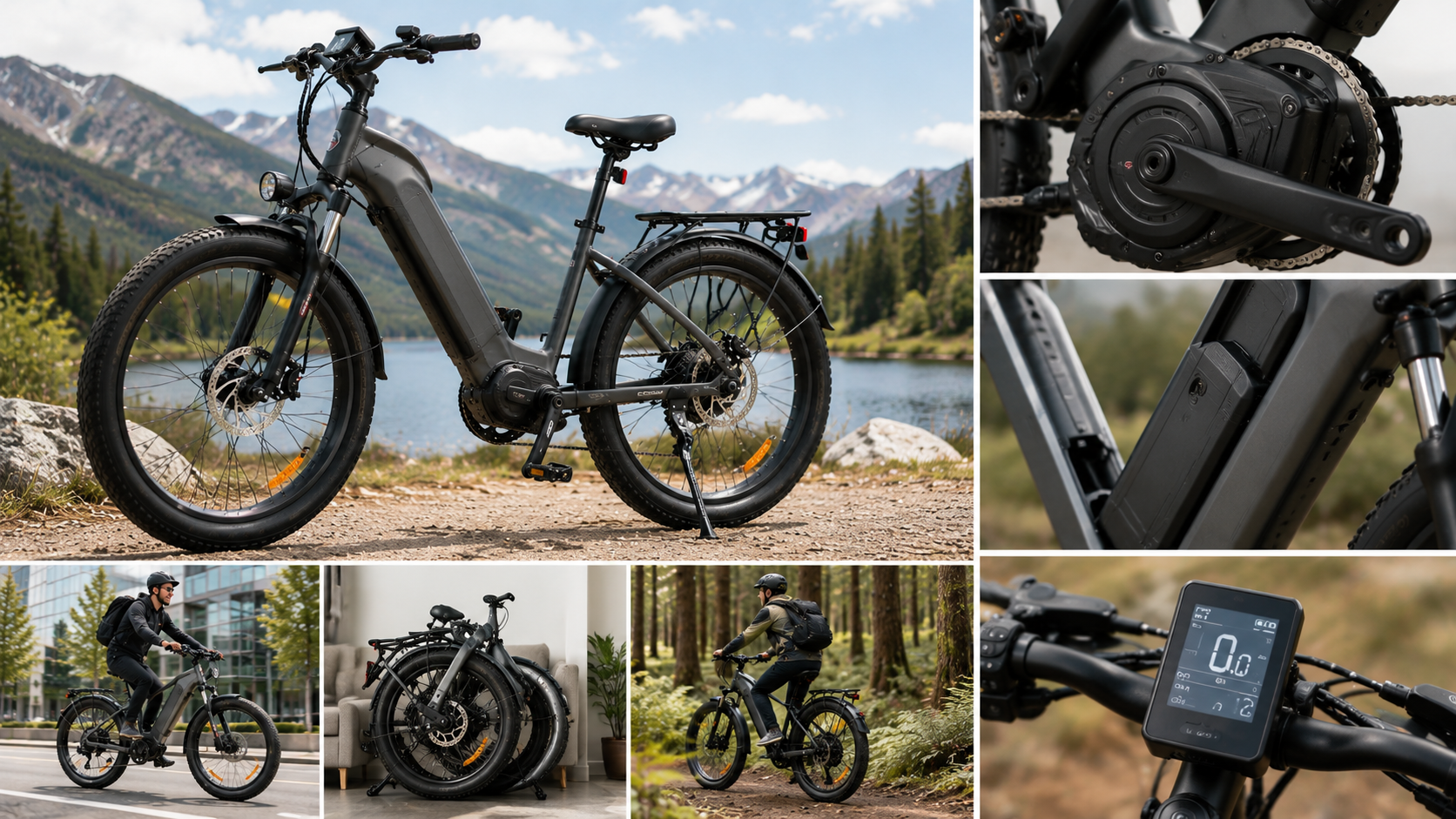
The Alpha e bike, made by Heybike, is a Class 3 all-terrain electric bike built around a 500W Mivice mid-drive motor delivering 105Nm of torque through an integrated torque and cadence sensor. It uses a 680Wh UL2271-certified battery, 26 x 4 inch fat tires, a Shimano 8-speed drivetrain, and hydraulic disc brakes. It’s available in step-through and step-over frame styles and includes a rear rack and fenders.
Why the Motor Type Is the Alpha’s Defining Feature
Most fat tire e-bikes in this price range use rear-hub motors, which spin the wheel directly and are generally cheaper to produce. The Alpha e bike instead uses a mid-drive motor, positioned near the pedals and driving the chain rather than the wheel. This is a meaningful design choice, not just a spec sheet difference.
Mid-drive motors typically offer a few practical advantages. They place weight lower and more centrally on the frame, which improves balance, particularly on uneven terrain. They also work through the bike’s existing gears, meaning the motor’s effective torque changes depending on which gear is selected, similar to how a car’s engine torque translates differently depending on gear ratio. This generally makes mid-drive systems more efficient on steep climbs compared to hub motors, which apply constant torque regardless of gearing.
Key Specifications
- Motor: 500W Mivice mid-drive motor with integrated torque and cadence sensor
- Torque: 105 N·m
- Top speed: Class 3 rated, consistent with a 28 mph pedal-assist maximum
- Battery: 680Wh, UL2271-certified, removable lithium-ion
- Tires: 26 x 4 inch fat tires
- Gearing: Shimano 8-speed drivetrain
- Brakes: Hydraulic disc brakes
- Frame: 6061 aluminum alloy, available in step-through and step-over styles
- Included accessories: Rear rack and fenders
- Lighting: LED headlight with auto-on feature, integrated taillight with brake light function
- Weight capacity: Up to 400 pounds combined rider and cargo weight
- Safety certification: Meets UL 2849 standards for the complete e-bike, with a UL 2271-certified battery
How the Torque and Cadence Sensor Changes the Ride
A torque and cadence sensor is a specific type of pedal assist technology, and it’s part of why mid-drive systems like the one on the Alpha e bike tend to feel more natural than basic cadence-only systems.
A cadence sensor alone detects whether the pedals are turning and applies a preset amount of assist based on that. A torque sensor goes further, measuring how hard the rider is actually pushing on the pedals and adjusting motor output to match. Combining both allows the Alpha’s motor to respond proportionally to effort, delivering more assist when the rider pushes harder, such as on a climb, and less when cruising on flat ground. This tends to reduce the lag some hub-motor systems experience, where assist kicks in abruptly a pedal stroke or two after starting.
Battery Safety and Capacity
The Alpha e bike’s 680Wh battery sits on the larger end for this bike category, and its UL2271 certification is worth understanding rather than skipping past. UL 2271 is a safety standard specifically for lithium-ion battery systems used in light electric vehicles, covering things like short-circuit protection, thermal stability, and charging safety. A battery meeting this standard has been independently tested against a defined set of safety criteria, which matters given ongoing concerns across the e-bike industry about battery fires from lower-quality, uncertified components.
The complete Alpha e bike also meets UL 2849 certification, a broader standard covering the electrical system of the entire bike, not just the battery. Together, these certifications indicate the bike has been tested against recognized safety benchmarks, though it’s worth noting that certification reflects a testing standard, not a guarantee against all possible issues over the bike’s lifespan.
Why the Throttle Behaves Differently on the Alpha
Unlike many e-bikes where the throttle provides power immediately from a standstill, the Alpha e bike’s throttle is designed to prevent immediate full power at start. This is a deliberate safety measure rather than a performance limitation. Instant, full-power throttle response from a stop can cause unexpected acceleration, particularly for less experienced riders, and some mid-drive systems introduce a brief ramp-up period to reduce that risk. Riders accustomed to hub-motor throttles that respond instantly may notice this difference immediately, so it’s worth expecting rather than being surprised by it.
Step-by-Step: What to Check Before Riding a Mid-Drive E-Bike Like the Alpha
Mid-drive systems interact with the drivetrain differently than hub motors, so a slightly different pre-ride check makes sense.
- Check gear selection before starting from a stop. Since the motor works through the chain and gears, starting in too high a gear can make the initial push feel harder than expected.
- Confirm the battery is securely locked in place. A removable battery needs to be fully seated to maintain a stable electrical connection.
- Test the pedal assist response at low effort. Since the system uses a torque sensor, applying light pressure should produce a proportionally lighter assist response.
- Inspect chain tension and drivetrain condition. Mid-drive motors put additional strain on the chain and cassette compared to hub-motor systems, so more frequent drivetrain checks are worthwhile.
- Verify tire pressure for the terrain planned. Lower pressure improves traction on sand or dirt, while higher pressure suits paved commuting.
Common Mistakes and Misconceptions
Assuming all fat tire e-bikes with mid-drive motors perform identically. Torque figures, sensor type, and motor brand vary between manufacturers. The Alpha’s 105Nm figure and torque-and-cadence sensor combination are specific to this model and shouldn’t be assumed to match other mid-drive bikes at a glance.
Expecting instant throttle response from a stop. The Alpha’s throttle is intentionally limited at start for safety reasons. This is a design choice, not a malfunction, though it can catch new riders off guard if they’re used to hub-motor throttles.
Overlooking drivetrain wear from mid-drive use. Because the motor drives the chain directly, mid-drive systems generally put more strain on the chain and cassette than hub motors do, which can mean more frequent replacement of these wear items over time.
Assuming UL certification means no maintenance is needed. UL 2271 and UL 2849 certification reflect safety testing standards, not exemption from normal battery care, such as avoiding extreme temperatures during storage or charging.
Confusing this Alpha with unrelated “Alpha” e-bikes from other brands. Vvolt and Murf both sell e-bikes under the same name, with entirely different motors, frames, and price points. Specs and reviews for those models don’t apply to the Heybike Alpha.
Real-World Examples
A rider climbing consistent hills on a daily commute. Someone dealing with steep grades benefits from the way a mid-drive motor’s torque changes with gear selection, generally offering better climbing efficiency than a fixed-torque hub motor in the same situation.
A new e-bike rider adjusting to throttle behavior. Someone switching from a hub-motor e-bike to the Alpha may need a short adjustment period to get used to the throttle’s gradual power delivery from a stop, rather than the instant response common on hub-motor throttles.
A rider prioritizing battery safety for indoor storage. Someone charging their e-bike battery indoors, such as in an apartment, may specifically look for UL-certified batteries like the Alpha’s, given the added assurance from third-party safety testing.
Benefits and Limitations
Benefits
- Mid-drive motor with torque and cadence sensing offers proportional, natural-feeling assist
- 105Nm torque figure supports strong hill-climbing performance
- UL 2271 and UL 2849 certifications provide independently tested safety standards
- Large 680Wh battery supports longer rides between charges
- Included rear rack and fenders add practical value without extra purchases
Limitations
- Mid-drive systems generally require more frequent drivetrain maintenance than hub motors
- Throttle response is intentionally limited at start, which may feel different from other e-bikes
- Higher price point than comparable hub-motor fat tire e-bikes
- Assembly has been reported as more involved than some other models, making professional setup worth considering
Key Facts
- The Alpha e bike uses a 500W Mivice mid-drive motor with 105 N·m of torque.
- Its 680Wh battery is UL 2271-certified, and the complete bike meets UL 2849 safety standards.
- It’s a Class 3 e-bike with 26 x 4 inch fat tires and a Shimano 8-speed drivetrain.
- The frame is available in step-through and step-over styles, both made from 6061 aluminum alloy.
- Weight capacity is rated up to 400 pounds combined rider and cargo weight.
- The throttle is intentionally limited at start as a built-in safety measure.
Frequently Asked Questions
What is the Alpha e bike?
The Alpha e bike is Heybike’s mid-drive all-terrain electric bike, built with a 500W motor, 105Nm of torque, a 680Wh UL-certified battery, and fat tires designed for both commuting and mixed-terrain riding.
How does the Alpha’s mid-drive motor work?
It uses a torque and cadence sensor to measure how hard the rider is pedaling and adjusts motor assist proportionally, driving the bike’s chain through its gears rather than spinning the wheel directly like a hub motor.
Why is a mid-drive motor different from a hub motor?
Mid-drive motors work through the bike’s gearing, which generally improves hill-climbing efficiency and balance, since the motor’s weight sits lower and more centrally on the frame compared to a hub motor’s wheel-based position.
Is the Alpha e bike safe?
Its battery is UL 2271-certified and the complete bike meets UL 2849 safety standards, both of which are independent testing benchmarks for electric vehicle safety. As with any e-bike, safe use also depends on proper maintenance and following manufacturer guidelines.
Is the Alpha e bike legal to ride on bike paths?
As a Class 3 e-bike, its top speed capability may place it under stricter access rules in some regions, since many areas classify e-bikes by motor wattage and top speed. Checking local regulations is worthwhile before assuming unrestricted access.
What are the alternatives to the Alpha e bike?
Alternatives include hub-motor fat tire e-bikes, which are generally less expensive but offer different power delivery characteristics, as well as other mid-drive e-bikes from different manufacturers, which vary in torque output, sensor type, and price.
What should someone know before buying the Alpha e bike?
Buyers should understand that the throttle is intentionally limited at start for safety, that mid-drive systems typically need more frequent drivetrain maintenance than hub-motor bikes, and that “Alpha” is a name shared with unrelated e-bikes from other brands, so specs should be confirmed against the Heybike model specifically.
Key Takeaways
- The Alpha e bike uses a mid-drive motor with a torque and cadence sensor, offering proportional assist rather than fixed cadence-based power.
- Its 105Nm torque figure and gear-dependent power delivery support strong hill-climbing performance.
- UL 2271 and UL 2849 certifications reflect independently tested safety standards for the battery and full bike system.
- The throttle’s intentional start-up limitation is a safety feature, not a malfunction.
- Mid-drive systems generally require more attention to drivetrain maintenance than hub-motor e-bikes.
Conclusion
The Alpha e bike is built around a specific design choice: a mid-drive motor with torque-based assist in a fat tire, all-terrain frame. That choice brings real advantages in hill-climbing performance and ride balance, along with trade-offs like more involved drivetrain maintenance and a throttle that behaves differently than hub-motor systems riders may be used to. Understanding how the motor, sensor system, and battery certification work together gives a clearer picture of whether the Alpha e bike fits the kind of riding someone actually plans to do.
-
 E-Bike News4 weeks ago
What Is a Bike Stand? A Complete Guide to Types, Uses, and How to Choose One
-
 E-Bike News4 weeks ago
What Is an Elliptical Bike? A Complete Guide to How It Works, Benefits, and What to Know Before You Try One
-

 E-Bike News3 weeks ago
What Is a Beach Cruiser? A Complete Guide to Comfort Bikes for Easy Riding
-
 E-Bike Technology3 weeks ago
Pocket Rocket Folding Road Bikes: What They Are and How They Work
-
 E-Bike News4 weeks ago
Electric Commuter Bike: What It Is and How to Choose the Right One
-

 E-Bike News2 weeks ago
Sleeping on a Bike: Why It Happens and How to Stay Safe While Riding
-
 E-Bike News3 weeks ago
Types of Bikes: A Complete Guide to Choosing the Right One
-
 E-Bike Technology4 weeks ago
What Is a Sirrus Bike? A Complete Guide to the Specialized Sirrus Line